
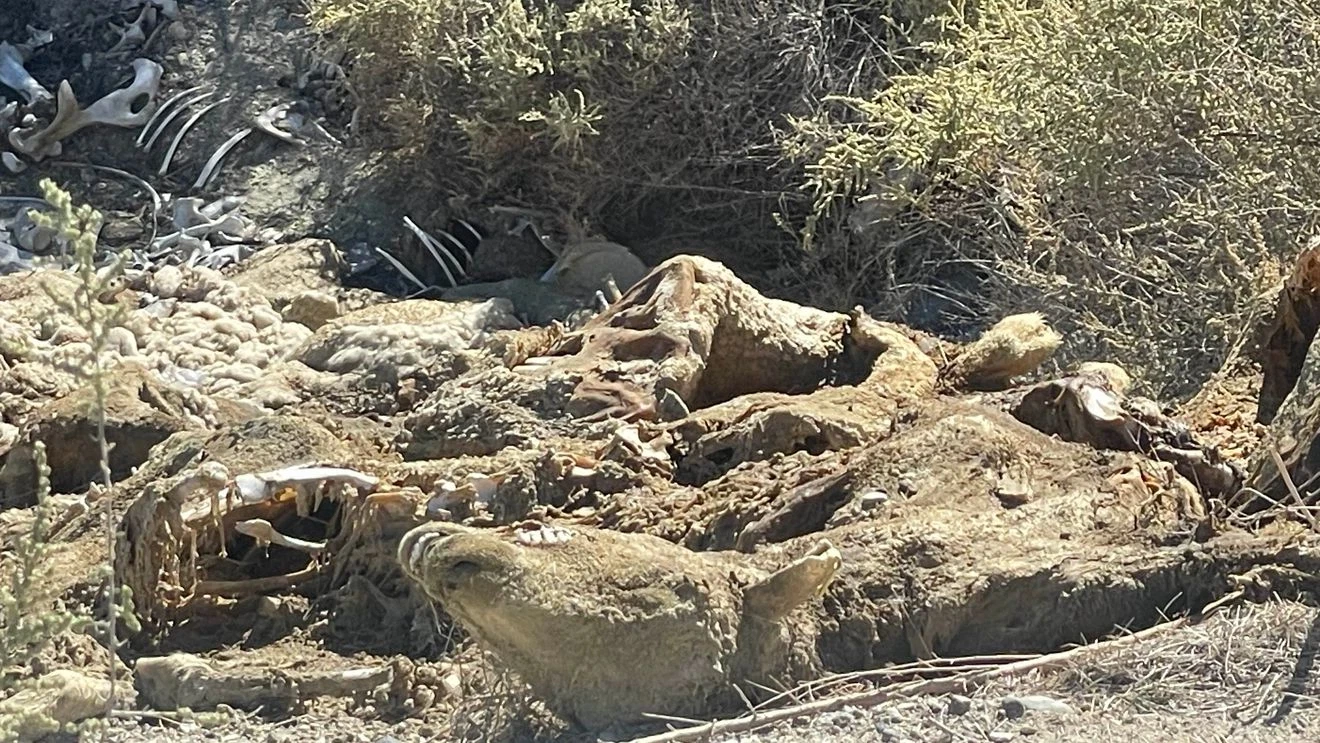

As Lesotho grapples with a surge in livestock disease outbreaks, health experts are cautioning against the long-standing practice of consuming animals that die from unknown causes. This tradition, they warn, could expose communities to dangerous zoonotic diseases—illnesses transmissible from animals to humans.
For generations, many Basotho have adhered to the proverb “Lebitla la khomo ke molomo” (literally, “the grave of a cow is the mouth”). This saying reflects a cultural value where every part of an animal is utilised, minimising waste.
However, veterinarians and nutrition specialists now contend that this tradition is clashing with a new reality.
The country is currently battling outbreaks of Foot-and-Mouth Disease, Lumpy Skin Disease, and rabies, while veterinary authorities monitor other livestock diseases threatening both animal production and public health. In this context, experts view the consumption of meat from animals that die without veterinary inspection as a growing public health concern.
Makamohelo Semoli, Director of Nutrition and Home Economics, emphasises that evolving disease patterns necessitate a reevaluation of practices once deemed acceptable.
“There are rising animal diseases that are not always visible to the eye but can seriously affect human life,” she said
She charged that food should promote health, not become a source of illness; thus, anything that causes illness is a threat.
“Protecting our families starts with the food choices we make. We eat food to live and to be healthy. Consuming meat from dead animals can have many side effects. If certain diseases are harmful to animals, imagine what they can do to the human body.”
Semoli believes that sustained public education is crucial for changing attitudes.
“Public health messages should spread nationwide through radio, television, newspapers, and all platforms that can enable communities to understand the harmfulness of improper food consumption.”
Health officials highlight that a significant challenge is the inability to detect many diseases simply by examining an animal carcass.
Farmers, particularly in remote areas with limited veterinary services, often rely solely on appearance to determine if meat is safe. Yet, experts warn that an apparently healthy carcass can still harbour dangerous pathogens capable of causing human illness.
Dr Pabolo Muso, Senior Veterinary Officer, advises communities never to consume animals that die before veterinary officers can ascertain the cause of death.
“Many diseases cannot affect human life immediately, but their effects may only become visible later. It is therefore important for farmers to report cases of dead animals before attempting to consume the meat.”
She acknowledges that access to veterinary services remains a challenge in some parts of the country due to limited personnel.
“As veterinarians are few in the country, trained district administration officers are working in communities to assist farmers with cases of dead animals.”
Dr Muso stresses that veterinary inspection remains one of the most effective safeguards against disease transmission.
“Under normal circumstances, where abattoirs sell meat on a large scale, veterinarians should inspect the state of the meat being sold.”
“It is very important to look deeply into health because some diseases may not appear immediately but may manifest later in a person’s life.”
However, for many rural households, this decision is rarely simple.
“The loss of a cow, sheep, or goat in this country represents a significant financial blow. Rather than burying or safely disposing of the carcass, families often choose to recover some value by consuming or sharing the meat with neighbours; this economic reality is further reinforced by cultural practices.
“In many communities, sharing meat from an animal that has died unexpectedly is considered an act of solidarity. Refusing such meat can be seen as wasteful or even disrespectful. This practice often stems from the belief that thorough cooking eliminates all harmful organisms, a notion that is both outdated and dangerous,” Dr Muso said.
Khotso Lepheana, Executive Director of the Lesotho National Farmers’ Union (LENAFU), stated that the organisation continues to urge farmers to report livestock deaths before making any decisions about the carcass.
“Some farmers still report to veterinarians but then proceed to eat the meat,” Lepheana explained. “Later, through tracing, these communities are found to be experiencing disease outbreaks associated with consuming unsafe meat, with some individuals becoming seriously ill.”
Lepheana noted that delayed responses from veterinary services can discourage farmers from reporting livestock deaths.
“Some farmers get discouraged from reporting because reports take a long time, and veterinarians delay their response.”
He added that staffing shortages remain a major obstacle, with some districts relying on only one veterinarian to serve large farming communities.
Despite these challenges, Lepheana commended local councils and health workers for their ongoing efforts to educate communities about safe livestock management.
“I would like to acknowledge councils and health workers for their ongoing public health awareness campaigns, often conducted during community gatherings,” he said.
Lepheana emphasised that reducing risks will require stronger veterinary outreach, faster disease reporting systems, and closer cooperation between farming communities and government institutions.
“Strengthening veterinary outreach services, improving livestock disease surveillance, and building trust between communities and authorities are critical steps, as well as encouraging the safe disposal of animal carcasses and ensuring farmers can easily report livestock deaths with immediate responses are equally important measures,” he said.
The World Organisation for Animal Health (WOAH) has repeatedly warned that diseases transmitted from animals to people cannot be managed by the health sector alone.
Instead, WOAH advocates a One Health approach, which recognises the close relationship between human health, animal health, and the environment. Under this approach, preventing livestock diseases is considered not only an agricultural responsibility but also a public health priority.