


Experts urged producers to connect soil health, seed choice, water and nutrient management before investing in the next crop.
Buying seed and fertiliser commits a farmer’s money before there is any certainty of a harvest.
Experts stressed that whether that investment pays off depends partly on conditions beneath the surface and on how well the crop’s needs are met throughout the season.
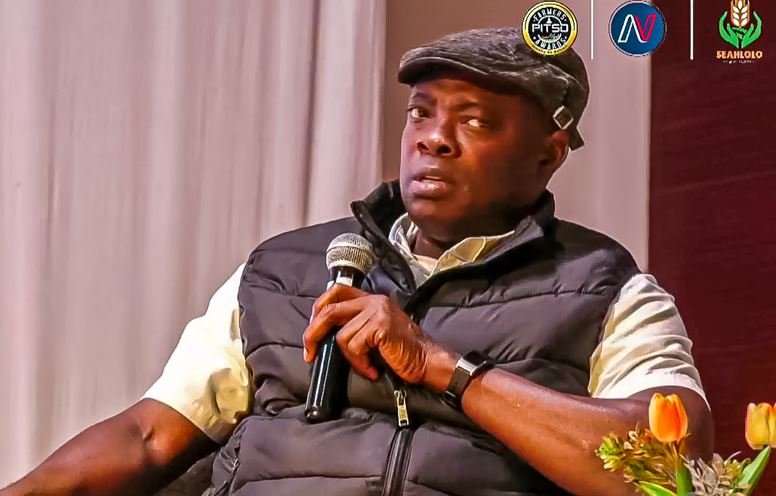
At the grain-production session of the National Farmers Knowledge Exchange, specialists from the National University of Lesotho, the Ministry of Agriculture and agriculture stakeholder businesses urged Basotho farmers to make those decisions together.
“Suitable seed needs healthy soil, available nutrients and adequate moisture to reach its potential,” Soil scientist Botle Mapeshoane identified declining soil health and fertility as major concerns.
“While farmers often prioritise land suitability, greater attention must be given to the quality and health of the soil itself. We cannot increase grain production without fixing soil structure, water and seed,” she said.
Her message challenged the assumption that land traditionally regarded as productive will remain so without attention. Farmers need to understand their fields’ present condition.
“No matter where you are in the country, you should take care of soil and ignore the stereotype that in a certain area soil for planting is fertile,” she said.
Mapeshoane cautioned against applying fertiliser without first establishing what the soil needs. Both fertiliser and organic manure can support soil management, but the choice and application should match the field and intended crop.
Soil acidity was another focus. She explained that soil pH influences nutrient availability, so testing is important before deciding whether corrective measures are needed.
“Farmers need to work towards correcting soil pH where necessary, and soil testing is an essential first step,” she said.
Mapeshoane pointed farmers towards testing services at the Ministry of Agriculture’s Department of Agricultural Research and the National University of Lesotho. Testing, interpreted alongside appropriate advice, can guide nutrient management and help farmers avoid spending on unsuitable applications.
“Soil testing is an essential first step, and farmers can have their soil tested through the Ministry of Agriculture’s Department of Agricultural Research for M30, while testing at the National University of Lesotho is more expensive, but soil testing services are available in the country,” she added.
According to Mapeshoane, soil testing gives farmers crucial insights into their soil’s condition, helping them choose appropriate fertilisers, suitable crops, optimal application times, and the best planting season. “Soil testing will also detect the pH, guide on using lime to adjust pH, and specify the required quantities,” she concluded.
NUL agriculture professor Peter Toyin explained that even a well-managed soil cannot compensate for every other production constraint, stressing the importance of irrigation.
“Irrigation is very important if you want to achieve the desired yield because sometimes rain does not come, and this could be at the most crucial stage when crops need water,” he said.
He connected water with the crop’s ability to obtain nutrients.
“Water dissolves the nutrients in the soil, creating a solution that our crops can absorb; without these nutrients, the crop cannot yield as expected,” he said.
Toyin urged farmers to seek assistance when choosing seed and fertiliser, particularly as changing climatic conditions complicate production decisions.
He also emphasised that irrigation must respond to the crop being grown.
“Different crops have different water requirements, meaning farmers need to manage irrigation according to the crop being produced rather than applying the same amount of water across all crops,” he said.
His remarks placed efficient water management alongside the need for sufficient supply. “Farmers must understand when water is needed and use resources carefully.”
Marankoe Selikane, a Ministry of Agriculture research officer, turned attention to seed.
She described it as the backbone of food security while cautioning that farmers must understand what they are purchasing or saving for another season.
“Farmers should understand the type of seed they are using before deciding whether it can be reused in subsequent seasons because we have different types of seeds, and reusing seeds depends on which seed variety was used,” she said.
“Farmers should know if a particular seed can still produce effectively when reused and what yield they can reasonably expect from it.”
Location also matters, “Seed and crop choices must suit the conditions in which farmers intend to produce.
“Farmers must consider their location when selecting crops because different crops perform better under different conditions,” Selikane said.
She returned to the session’s central connection.
“Yield does not only rely on good seeds, but also on good soil, on irrigation, fertilizers, planting seasons, and many more factors.”
For Lesotho’s grain farmers, the discussion offered a reason to begin planning before inputs are bought and fields are planted. Understanding the soil, selecting appropriate seed and considering water availability can help producers make better-informed investments.
It also identified a responsibility for agricultural support services: make testing, interpretation and practical guidance accessible. Stronger harvests require farmers to have both the knowledge to make decisions and the support to carry them out.