

…As the government reviews the Livestock Identification and Theft Prevention Bill, farmers welcome stronger protection but question the practicality, affordability, and efficacy of the proposed system in delivering the sector’s much-needed transformation.
By Thoboloko Ntšonyane & Topollo Tlali
“If the government wants us to implant microchips in our livestock, who is going to pay?”
Motsamai Ralejoe from Alet Farm posed this question, cutting through the room during a national stakeholder consultation on the proposed Livestock Identification and Theft Prevention Bill.
His question wasn’t from an economist or policymaker; it came from a livestock farmer contemplating the everyday realities beyond legislation.
“I understand the idea of microchips, but who is going to pay for them? If the government wants us to adopt this system, there must be subsidies or assistance.”
Around him, stakeholders discussed traceability, livestock registration, disease surveillance and modern identification technologies. However, farmers consistently returned to more immediate concerns: Would the new system be affordable? Would services finally reach rural communities? Could technology succeed where previous efforts had struggled? And, most importantly, would it stop stock thieves?
Ralejoe articulated these frustrations: “These types of events are hosted in Maseru, where a few farmers make decisions for many in rural areas. How are these beneficial for the country’s farming? In districts, farmers are always challenged when we require services; we are told to wait for Maseru offices. Services need to be decentralised.”
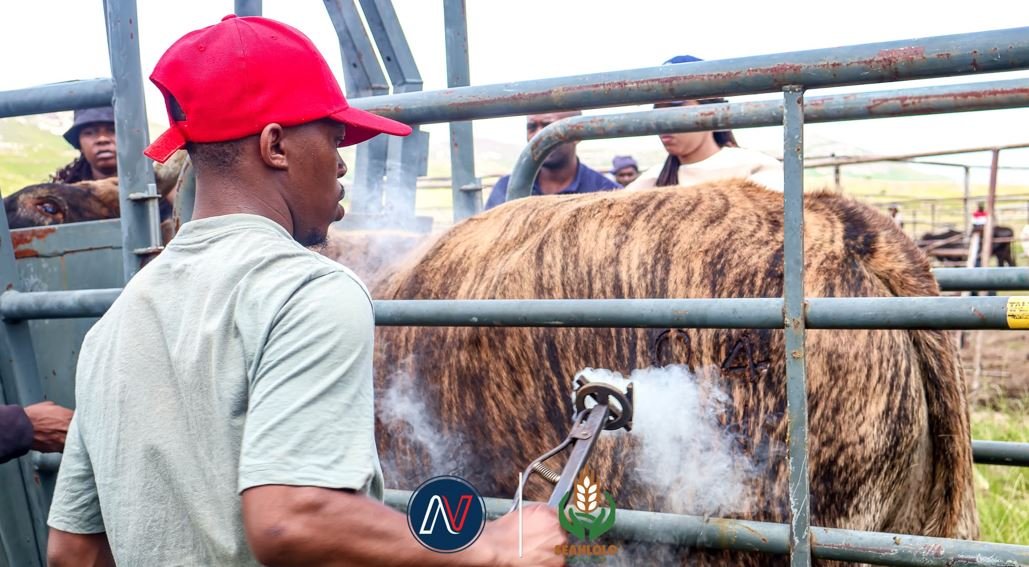
“Also, thieves will always be ahead of us. Once they noticed we mark our animals in their ears, they found ways to circumvent it, often selling meat to abattoirs without proper procedures. The mere act of Police officers asking for animal documents is highly insufficient and meaningless since marked heads and skins are often discarded,” Ralejoe charged.
These questions reflect a much larger national conversation.
For many Basotho, livestock is more than just an agricultural commodity; Pitso Ramokoatsi, National Livestock Registrar with the Ministry of Home Affairs, notes that it represents a family’s savings account, a source of school fees, a retirement plan, a cultural asset, and often the only reliable form of wealth in rural communities.
“…Yet, every year, this investment remains vulnerable to stock theft, disease outbreaks, and weak livestock information systems.”
Ramokoatsi explained that the proposed Livestock Identification and Theft Prevention Bill seeks to change this.
While much public attention has focused on its potential to reduce stock theft, experts from the Ministry of Home Affairs say the legislation could also become one of the most significant reforms in Lesotho’s livestock sector.
“The Bill aims to strengthen disease control, improve national livestock statistics, support commercialisation, and position farmers for better access to domestic and international markets,” Ramokoatsi explained.
The challenge now is to ensure that the law works not only on paper but also for the farmers whose livelihoods depend on it.
Livestock at the Heart of Rural Livelihoods
Although agriculture contributes less than 10 per cent of Lesotho’s Gross Domestic Product, its importance extends far beyond economic statistics.
According to the Agriculture Public Expenditure Review, agriculture contributed approximately 5.2 per cent of Lesotho’s GDP in 2016. Yet, more than half of Lesotho’s population lives in rural areas and depends directly or indirectly on agriculture for survival.
Within the agricultural sector itself, the review noted that livestock is the dominant contributor, accounting for approximately 52 per cent of agricultural GDP, compared to crops at 28 per cent and forestry at 20 per cent.
Most rural households farm on less than one hectare of land, making livestock one of the few productive assets capable of generating cash income. Sheep and goats remain particularly important due to Lesotho’s internationally recognised wool and mohair industry.
Pitso Ramokoatsi, National Livestock Registrar with the Ministry of Home Affairs, states that approximately 80 per cent of rural households keep livestock.
Historically, agriculture was the backbone of Lesotho’s economy.
“In the 1960s, agriculture contributed around 88 per cent of the country’s GDP,” Ramokoatsi stated.
Today, however, the sector faces significant challenges, including land degradation, climate change, outdated production systems, limited irrigation access, inadequate extension services, poor rural infrastructure, and restricted access to finance.
The Agriculture Public Expenditure Review highlights that Lesotho imports nearly ten times more agro-food products than it exports, despite agriculture’s crucial role in rural livelihoods and poverty reduction.
Against this backdrop, protecting livestock has evolved beyond merely preventing theft. It is now seen as integral to a broader strategy to restore agricultural productivity and strengthen rural economies.
A Crime Affecting the Entire Economy
Stock theft has long been recognised as a major challenge for the livestock sector.
The 1999 National Livestock Development Study Phase I described stock theft as having reached epidemic proportions, warning that it threatened livelihoods, fueled community conflict, and discouraged investment in livestock production.
Historical records show that in 1993 alone, approximately 15,000 sheep, 5,000 cattle, and thousands of goats were stolen.
Although these figures are decades old, farmers report that the problem remains widespread.
According to the 2025-2026 Lesotho Mounted Police Service Livestock Theft Unit report, Lesotho recorded over 1900 cases of stolen animals.
Reports of stolen livestock regularly appear in police reports and radio broadcasts, particularly in communities bordering South Africa.
For individual farmers in the room, the loss of even one animal can erase years of investment, and nationally, as per Ramokoatsi, repeated theft erodes confidence in livestock farming and weakens industries dependent on a reliable supply of sheep, goats, and cattle.
Ramokoatsi believes the consequences extend far beyond individual farmers.
“When livestock is protected, agriculture and the nation become stronger,” he affirmed, warning that continued stock theft directly undermines the government’s ambition to commercialise agriculture.
“Can we realise the Ministry of Agriculture’s vision for commercialisation if livestock theft persists?” he questioned.
A Bill Beyond Stock Theft
Advocate Fumane Tholoana Mareli from the Ministry of Home Affairs noted that the government believes the solution lies in establishing a modern livestock identification system.
“The proposed Livestock Identification and Theft Prevention Bill aims to create a comprehensive livestock registration, marking, and information system capable of identifying every registered animal and linking it to its rightful owner.
“Under the proposed legislation, anyone acquiring livestock would be required to notify the local chief within seven days before registering ownership with the National Livestock Registrar.”
Advocate Mareli said the Bill further provides for the registration of livestock owners and other livestock actors, licensing of livestock identification technology service providers, and tighter regulation of livestock movement nationwide.
“Modern identification technologies, including electronic identification systems, could also be introduced to improve traceability.”
To date, 3 million animals have already been registered under the existing system.
“We are moving to where an internet search will reveal who the owner of the animal is,” Ramokoatsi stated, noting he believes stronger traceability would improve police investigations while simultaneously strengthening disease surveillance, livestock planning, and national agricultural data.
“Without reliable data, our ability to respond to animal health threats is limited. This Bill will help establish a more robust and traceable livestock database,” he concluded.
Veterinary experts believe the proposed reforms could also strengthen disease management.
Dr Pabalo Monyane, from the Department of Livestock Services within the Ministry of Agriculture, Food Security, and Nutrition, said proper identification would enhance the country’s ability to manage livestock movement during disease outbreaks.
She emphasised the need for “zoning” the country, where animals would bear marks indicating they do not belong to a specific area.
Such systems are increasingly becoming international requirements for livestock trade, food safety and animal health management.
Farmers Support Reform—But Not at Any Cost
Despite broad agreement on the necessity of stronger livestock protection, farmers repeatedly challenged aspects of the proposed legislation during consultations.
One of the most debated issues was the government’s suggestion that private companies could play a role in livestock identification, with the government retaining responsibility for regulation and oversight.
Minister of Home Affairs and Police, Voeswa Tseka, explained that the government was exploring different delivery models.
“I would like to know whether it would be good to invite the private sector to work in livestock identification, with the government acting as the monitoring and assessing body,” she said.
She clarified that the consultation process aimed to gather farmers’ views before final decisions were made.
The Minister also acknowledged concerns about the inaccessibility of legislation to ordinary citizens.
“I have heard many complaints from Basotho about the law being written in English, yet it is for Basotho farmers,” she stated.
She announced that once the Bill is finalised, it will also be made available in Sesotho.
“This Bill must therefore be practical, accessible, and responsive to the needs of farmers on the ground.”
However, many farmers questioned whether involving private companies would improve the situation.
Sebabatso Makoanyane, founder of Phallo Beef Limited and president of the Thabeng ea Senai Breeders’ Community, asked whether private sector participation would create another tender-driven process.
“If private sector involvement becomes approved, will that transition come in the form of tenders?” he asked.
He also questioned whether the proposed law adequately addresses practical challenges experienced during livestock disease outbreaks, when responsibility for controlling animal movement was often unclear.
Makoanyane recounted, “Animal movement during foot and mouth has been a big challenge for the task team working on foot and mouth issues. It was difficult to manage the movement of animals in the presence of the Lesotho Mounted Police, NSS, Livestock Department, and Home Affairs, as none of them took responsibility for the movement of livestock during the pandemic. Can these kinds of issues be addressed?”
He added, “Lack of mabeisi (registration documents) is a big issue; may the responsible body act upon it.”
Makoanyane further noted farmers’ worries about stock theft, particularly as police officers, whom the nation is told to trust, are often implicated.
Other farmers expressed concerns about affordability.
Dairy farmer Tumisang Lesesa highlighted existing resistance to animal marking systems among livestock owners in Mokhotlong.
“If the private sector becomes involved and each farmer has to pay for their animal, I don’t see them doing that at all,” he stated.
Lesesa elaborated, “I do not know how other communities are, but where I come from, farmers already hesitate to mark and tattoo their animals freely. I highly doubt they would comply if the private sector were involved and required payment for each animal.”
He urged, “Before we consider certain decisions, let’s think about real Basotho men in the mountains and their way of thinking.”
Commercial farmer Rantelane Shela argued that introducing private companies could increase costs without improving services, asserting that private sector involvement in livestock identification would not be equitable.
“Entrepreneurs involved in politics will be the ones who get such offers, and they will not change the situation at all,” he claimed.
Shela strongly recommended, “May we completely remove the idea of the private sector; it will cause more challenges for us as farmers. Farmers already bear many service costs. I highly encourage the ministry to limit services requiring expenditure while prioritising efficient and accessible options.
Modernisation Must Include Farmers
The consultations revealed that farmers are not resisting change; rather, they question whether the proposed reforms reflect the realities of livestock production in Lesotho.
Recurring concerns throughout the discussions included affordability, service delivery, veterinary support, infrastructure, and trust. These issues mirror broader challenges already identified within the agricultural sector.
The Agriculture Public Expenditure Review highlights outdated farming technologies, weak extension services, inadequate investment in agricultural research, environmental degradation, and climate change as major barriers to agricultural transformation.
Therefore, improving livestock identification alone will not solve every challenge facing the sector.
However, experts argue it could become an important building block.
A reliable identification system would improve traceability, strengthen disease surveillance, generate better livestock statistics, support market access, and foster greater confidence among farmers, buyers, and investors.
Monethi Mafetha from Mafetha Farm pointed out that farmers experience long waits for services. “Sometimes our lives stand still as the ministry fails to provide us with livestock services,” he said. “Our plea is for these kinds of things to be resolved and implemented.”
Mafetha also questioned, “Before deciding on tattooing animals, did the ministry ever consider those of us who do business by selling animal skin? Was such a thing looked at before implementing tattooing?”
Alice Adotsi emphasised that Lesotho, as a member of world organisations, should adhere to all rules. “We should align with livestock registration and veterinary committee rules.”
She stated, “We should correct the bill, looking at all sides for the better. If we only focus on livestock marking and stock theft, leaving veterinary services out, the country will be poor for too long as there are rising diseases.”
Mamariha Mohale from the Lesotho Wool and Mohair Growers Association noted that the bill primarily addresses stock theft.
“There is a rising tendency of animals being slaughtered along the way, making them difficult to trace as the skin and heads will be removed. Will the bill involve the resolution of meat being eaten without being traced?” Mohale challenged.
The deliberations uncovered sectoral challenges which Ramokoatsi stressed would be solved by the proposed Bill.
The day ended with all stakeholders’ views recorded, and the Ministry of Home Affairs promised to have more decentralised sessions at district level.