

Lungile Maseela
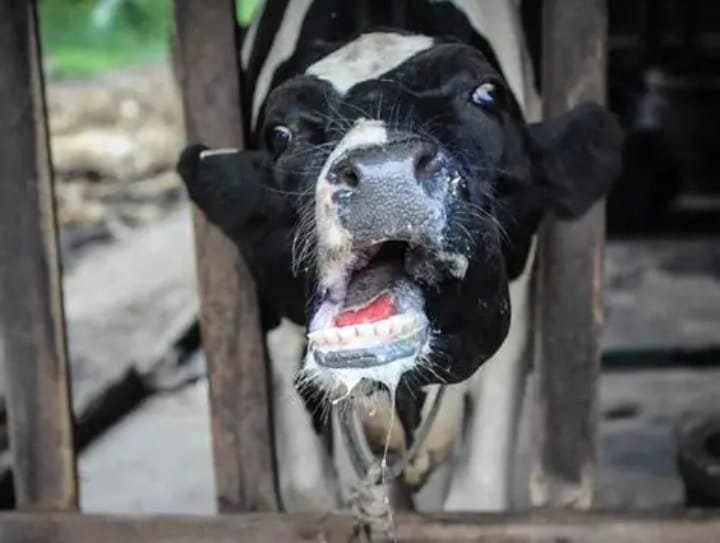
The Ministry of Agriculture and Food Security has announced a nationwide action plan to contain an outbreak of Foot and Mouth Disease (FMD), which has so far infected more than 10 cattle across Lesotho.
Speaking at a recent press conference, Minister of Agriculture and Food Security, Thabo Mofosi, said the country had not recorded any cases of FMD since 2013 until the recent outbreak.
“On 5 February 2026, in Letlapeng, Qacha’s Nek, six cattle presented with symptoms of FMD. Blood tests confirmed two positive cases. On 18 February 2026, in Mahlasela, Butha-Buthe, 17 cattle showed symptoms, of which six tested positive,” he said.
Mofosi said authorities are still awaiting results from a laboratory in Botswana to determine the specific strain of the virus, which will inform the selection or development of an appropriate vaccine.
To contain the outbreak, the ministry has established a national task team and is preparing to issue a circular outlining strict control measures for farmers and livestock stakeholders.
“In the meantime, there will be no livestock shows or auctions. Compliance with these measures and cooperation with the task force will be critical to containing the disease before it spreads further,” he said.
The minister reaffirmed the government’s commitment to supporting farmers during the outbreak and dismissed allegations circulating on social media that the ministry is selling farmers’ livestock products for its own benefit. He warned that action would be taken against those spreading misinformation.
Director General of Veterinary Services, Relebohile Lepheana, said the ministry had anticipated the risk of an outbreak following reports of FMD cases in neighbouring South Africa in 2025.
“Given the close movement of livestock between Lesotho and South Africa, the risk of transmission was high,” she said.
Lepheana noted that the ministry had already incorporated FMD response measures into its 2025 budget, conducted awareness campaigns among farmers, and researched vaccination options, including costs and potential suppliers.
Senior State Veterinarian Pabalo Nonyane urged farmers to fully comply with upcoming regulations.
“Farmers should avoid buying or selling livestock or livestock products from South Africa, as these may contribute to the spread of the disease,” she said.
She added that border post personnel have been trained to monitor livestock movements and prevent potentially infected animals and products from entering the country.
Director of Veterinary Field Operations, Mookho Ntiea, said Lesotho conducts annual disease surveillance in partnership with the World Organisation for Animal Health, including routine blood testing for diseases such as FMD.
“This year, we were still awaiting laboratory results when reports of symptomatic animals began to emerge,” he said.
Meanwhile, Director of Livestock Services, Keneuoe Lebenya, said the outbreak should serve as a wake-up call for farmers to strengthen local breeding systems.
“This situation highlights the need to reduce reliance on livestock imports from South Africa. Dependence on external markets exposes farmers to risks such as disease outbreaks,” she said.
Foot and Mouth Disease is a highly contagious viral infection affecting cloven-hoofed animals, including cattle, sheep, goats and pigs. It spreads rapidly through direct contact, contaminated equipment, feed, clothing and vehicles. While it rarely kills adult animals, it significantly reduces productivity and can trigger severe economic losses due to movement restrictions and trade bans.
The disease has become a growing regional concern in southern Africa due to frequent cross-border livestock movement. Several countries, including South Africa, Botswana, Zimbabwe and Eswatini, have experienced recurring outbreaks in recent years.
Reports indicate that South Africa recorded more than 24,000 FMD cases in domestic livestock in 2025, one of the country’s largest outbreaks in recent history. The spread prompted strict movement controls and vaccination campaigns, with authorities also implementing quarantine zones to curb transmission.
Experts warn that Lesotho’s close trade and economic ties with South Africa make it particularly vulnerable to transboundary animal diseases if strict biosecurity measures are not enforced.
Chairperson of the National Wool and Mohair Growers Association, Mokoenehi Thinyane, said farmers are already feeling the effects of the outbreak.
“The suspension of district livestock shows has disrupted a key part of farmers’ annual business activities,” he said.
He added that movement restrictions have halted livestock sales, forcing farmers to keep animals at home.
“This limits farmers’ ability to conduct business, but it is necessary to reduce the risk of infection,” he said.
Thinyane also called on the government to strengthen border control measures to prevent illegal movement of animals.
“One key intervention is to deploy officials along border areas to stop illegal crossings of stolen or potentially infected livestock,” he said.
The confirmed cases in Qacha’s Nek and Butha-Buthe mark Lesotho’s first FMD outbreak in over a decade. As authorities move to contain the disease through restrictions, surveillance and possible vaccination, cooperation from farmers and livestock traders will be essential.
Strengthening local breeding systems, enhancing disease monitoring, and tightening controls on cross-border livestock movement will be critical in preventing future outbreaks and safeguarding Lesotho’s livestock sector.