

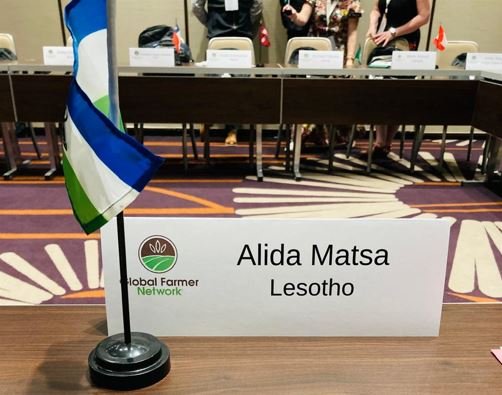

Alida Matsa, a poultry farmer from Ha Mptipa, Kolonyama in the Leribe district, has emerged as one of Lesotho’s rising agricultural voices at the prestigious Global Farmer Network (GFN) Roundtable.
Her journey, from raising chickens in a small backyard shack in Leribe to participating in the prestigious Global Farmer Network (GFN) Roundtable and Training Programme in São Paulo, Brazil, reflects not only personal resilience but also the growing visibility of African women farmers in international agricultural leadership spaces.
In a year officially recognised by the United Nations as the International Year of the Woman Farmer, Matsa was selected to join the highly competitive 2026 Global Farmer Network cohort after being nominated by a fellow African farmer she had previously met through a farming programme.
“Receiving an invitation from the Global Farmer Network, I was shocked but at the same time very proud of myself. I was nominated by a Zambian farmer I met some years back in a farming programme, and we built a good relationship. She nominated me, believing that I am a good farmer who can be invited,” Matsa stated.
For her, the nomination reinforced the importance of networking and collaboration within agriculture. Matsa praised the power of professional relationships among farmers, saying agricultural businesses cannot grow in isolation.
Following her nomination, Matsa underwent an intensive interview process with the Global Farmer Network, an experience she describes as both intimidating and transformative.
“After being nominated, I was invited for an interview by the Global Farmer Network. It was a very hard and scary interview,” she reflected.
“After the interview, I waited for some time, and eventually I got the final invitation to the roundtable, proving that I passed the interview.”
The scale of the competition only became clear later.
“Out of 360 nominees from across the globe, I was among 20 farmers who were selected for the 2026 cohort,” she said.
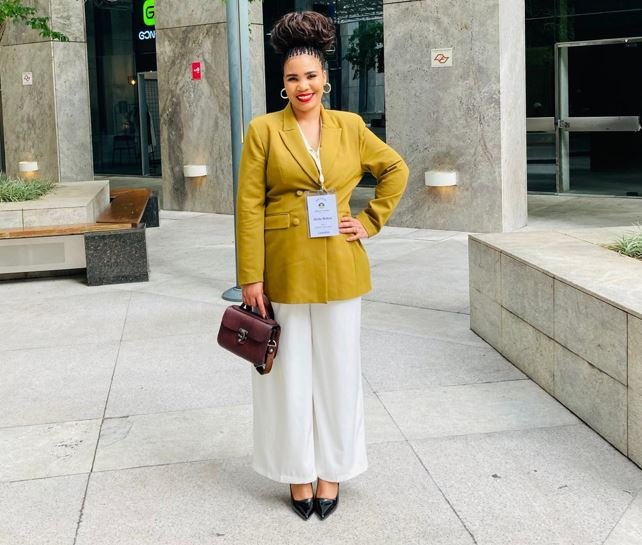
Even after being selected, self-doubt initially followed her achievement.
“After being selected, I was still in disbelief. I searched and viewed all the other selected farmers’ profiles and found that they are really successful and their farming journeys are well presented, and I began to panic, but I put myself down and accepted that maybe it is God’s call and decision for me to interact with such successful farmers.”
Travelling to Brazil exposed Matsa to a world of highly advanced agricultural systems, multinational agribusinesses, and large-scale commercial farming operations.
“Upon my arrival in Brazil, I found myself in a room with farmers from Uruguay, the United Kingdom, Brazil, Rwanda, Nepal, Canada, Chile, Bulgaria, Romania, Turkey, Morocco, the Netherlands, Japan and Mexico, and that exposed me to one key lesson that stood out strongly; many of their agricultural businesses are intentionally built with succession planning in mind from the beginning.”
She described interactions with farmers managing thousands of hectares while integrating advanced agricultural technology and biotechnology into production systems.
Yet despite initially feeling overwhelmed, Matsa says she quickly found common ground with farmers from across the world; “…despite the feeling of being small and not belonging in a roundtable discussion, I quickly remembered a universal language spoken by farmers worldwide, resilience and innovation.”
The Global Farmer Network programme focused heavily on communication, leadership, and agricultural policymaking, areas Matsa now believes are often overlooked within Lesotho’s farming sector.
“One of the top visions for the Global Farmer Network is farmers having one voice worldwide, and through the roundtable discussions, I was able to understand how powerful communication is in agricultural businesses,” she said.
The experience challenged her to rethink her poultry enterprise.
“The roundtable challenged me to look at my poultry business not just as a means of survival, but as a link in a global food security chain.”
One of the most transformative lessons she brought back from Brazil was the importance of succession planning and long-term business structuring.
“In many Western and Latin American agricultural models, farms are built as multi-generational legacies. But in Lesotho, the trend is often for agricultural businesses to die with their founders, forcing the next generation to start from scratch,” she explained.
For Matsa, this realisation highlighted one of the major structural weaknesses within Basotho agriculture.
“Being able to interact with farmers from different countries challenged me deeply and made me reflect on agriculture in Lesotho. As Basotho farmers, we need to start asking ourselves serious questions about how we can strengthen the businesses we are building today so that they can be transferred to future generations in a progressive and sustainable way.”
Now back in Lesotho, Matsa is using her experience to advocate for a shift from informal subsistence farming to more structured and sustainable agribusiness models.
“Some key questions we need to ask ourselves as Basotho is: can we, as Basotho farmers, move away from informal, subsistence management and move toward structured corporate governance in order to build bankability and transferable enterprises so that we can break the cycle of rural poverty. The honest answer to that can simply shift our industry,” Matsa noted.
She argues that while agriculture has the potential to significantly transform Lesotho’s economy, the sector remains heavily informal and poorly structured.
“I identified that there are gaps in Lesotho farming, even though it is one sector that economically can bring big changes, but it is very informal. Farmers are now able to start farming businesses, but those businesses are hard to grow because they lack professional structures,” she charged.
As she settles back into her poultry operations, Matsa says her focus has shifted toward expanding her own capacity while also investing in mentorship and farmer development.
“As I settle back into my farm, I am focusing more on two things: expanding my own capacity and mentoring the next generation of agripreneurs. Successions is multidimensional.”
She remains a strong advocate for technology, innovation and knowledge-sharing in agriculture, believing that the conversations she encountered in Brazil must now take place in Lesotho’s villages and farming communities.
“There is so much value in learning from Basotho farmers who are already doing well, as well as from farmers across the world and through networking, knowledge sharing and collaboration, we as Basotho farmers can grow stronger and build lasting agricultural enterprises,” she concluded.
Matsa’s story reflects the changing face of modern African agriculture.
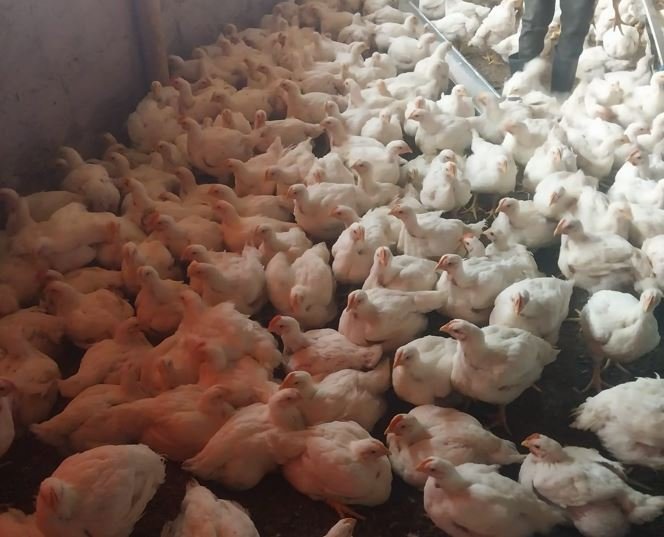
From starting with just 50 chickens in a backyard shack to building a commercial poultry operation housing more than 3,000 birds, her rise represents more than individual success. It signals what is possible when resilience, vision and opportunity intersect.