

Innovation is increasingly becoming one of Lesotho’s most urgent survival tools as young entrepreneurs race to develop homegrown solutions to food insecurity, climate change, unemployment and digital exclusion.
At the Lesotho Innovation Challenge 2026, that reality came sharply into focus as 22 young innovators pitched practical ideas to reshape the country’s future through technology, agriculture, and sustainable enterprise.
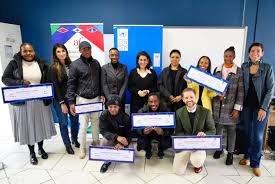
Held at the Alliance Française de Maseru Hall earlier this month, the public pitching session brought together entrepreneurs, development partners, students and policymakers for a showcase of youth-driven innovation.
Organised through a collaboration between the French Embassy to Lesotho, Alliance Française de Maseru, F’SAGRI and the United Nations Development Programme (UNDP), the event reflected a growing recognition that Lesotho’s development challenges may increasingly depend on local innovation rather than imported solutions.
More than 150 applications were submitted from across the country, but only 22 finalists advanced to the final pitching stage, competing in categories ranging from climate-smart agriculture and food technology to digital transformation and agricultural productivity.
Inside the hall, the atmosphere carried a mix of ambition, anxiety and determination. Some finalists spoke confidently before the judges, while others fought through visible nervousness, gripping microphones tightly as they introduced ideas they believed could change communities and livelihoods. Throughout the day, applause broke out regularly as presenters unveiled innovations designed to address the country’s growing economic and environmental pressures.
The competition comes at a time when Lesotho continues to grapple with high youth unemployment, climate shocks, food insecurity and limited economic opportunities, particularly in rural areas. Increasingly, innovation and entrepreneurship are being viewed as critical pathways toward building resilience and creating jobs.
Alliance Française de Maseru Director and Honorary Consul of France, Elisabeth Douillet, said the overwhelming response to the challenge revealed the depth of untapped creativity among Basotho youth.
“There was a similar challenge held in Pretoria, South Africa, where only around 40 young people participated, but here, we received over 150 applications. That already showed us the level of dedication, creativity and interest among Basotho youth,” she said.
Douillet explained that the finalists were divided into five categories, with winners in each category receiving M62 000 in funding while runners-up received M32 000.
“The challenge was a real success, with the 22 finalists doing very well and coming fully prepared for their pitches. Of the 22, they were divided into five categories, and from each category, one winner received M62 000 in funding. There was also a second-place finalist in each category who received M32 000,” she said.
Beyond financial support, Douillet said the challenge was designed to create long-term opportunities for innovators.
“Apart from the funding, the finalists will also have opportunities to pitch in South Africa and be included in databases for future mentorships and other support programmes. We want to continue helping these innovators grow beyond this competition,” Douillet said.
She further described the initiative as the beginning of what organisers hope will become a permanent innovation platform in Lesotho.
“This was the first event of its kind, and there is definitely more to come. We are also planning to follow up on how the winners have been progressing since receiving the funding,” she said.
Among the innovations that attracted major attention during the challenge was Thuso, a WhatsApp-based AI agricultural platform developed by Tim Jandrell. The platform emerged as one of the competition’s biggest success stories after winning M62 000 under the “Enhancing Agricultural Productivity” category.
Unlike many digital innovations that struggle to connect with ordinary users, Thuso was designed around a simple but powerful idea: using technology that farmers already understand and use daily.
“Thuso is a platform created to support farmers by giving them easier access to agricultural information, market opportunities and assistance they may struggle to find. Many farmers, especially in rural areas, face challenges accessing reliable information, buyers and networks that can help improve their productivity and businesses. We wanted to create something simple and accessible that farmers can use through technology they already have access to, such as WhatsApp,” Jandrell said.
The victory highlighted a growing shift toward accessible digital innovation tailored to local realities rather than expensive or overly complex systems. Judges appeared particularly drawn to the platform’s ability to bridge information gaps affecting rural farmers while working within existing communication habits.
“Agriculture is one of the most important sectors in Lesotho, but there are still many farmers who feel disconnected from opportunities and support systems that could help them improve their work. Through Thuso, we are trying to bridge that gap by creating a platform that provides useful information quickly and helps farmers feel more connected and supported. We believe technology can play a huge role in improving agriculture if it is designed around the real needs of the people using it,” he said.
Following his win, Jandrell said the funding would help expand the platform’s reach.
“Winning this funding means a lot because it shows that people believe in the idea and its potential impact. The money will help us improve the platform, expand its services and reach more farming communities across Lesotho. Opportunities like this are important because they give young innovators a chance to turn ideas into projects that can create real change,” he said.
Another standout finalist was Katleho Mpopo, founder of Genesis Seed, an initiative focused on preserving indigenous seed varieties and improving food diversity in Lesotho.
Her innovation addressed a growing yet often overlooked concern: the gradual disappearance of indigenous seeds and their impact on nutrition and food sovereignty.
“What inspired me into this comes from my natural curiosity and love for food and sustainable agriculture. At our farm, we focus on food diversity and on advocating the consumption of a variety of foods because we believe a colourful plate means balanced nutritional intake, which Lesotho lacks. The stunt rate in kids has risen to 37 per cent due to a lack of balanced nutrition intake,” she said.
Mpopo explained that the project emerged after recognising how limited seed diversity contributes to poor dietary diversity.
“I realised that we consume almost the same food every day, and the root cause of this was a lack of diversity in food, which comes from a lack of seed diversity. In response to this, we began collecting various varieties of vegetables. For example, we have about 25 varieties of beans, meaning people will not rely solely on sugar beans but can also grow and eat 24 more varieties. The thought of making this possible for an ordinary Mosotho is what drives me every day,” she said.
Despite the project’s growing visibility, she acknowledged the challenges involved in preserving indigenous seeds.
“The challenge I face is locating Lesotho’s indigenous seeds and documenting them. It costs money to travel to those remote areas. Secondly, the procedure of actually propagating the seed — we need more land, and that has been a challenge we are sorting out,” she explained.
Still, she described the competition as a major breakthrough for the project.
“Being selected as one of the finalists is honestly an answer to my prayers. This opportunity came at an exact time we needed it. I cannot be any more grateful for the aid it is bringing towards building Lesotho’s seed sovereignty,” she said.
She added that the funding would help strengthen the initiative’s long-term vision.
“Our future plan is to help in establishing policies that protect our indigenous seeds where possible. We also plan to build the first commercial seed bank that enables ordinary Basotho to access these seeds with ease. With the M62 000 from Alliance Française, France, South African Agricultural Institute and UNDP Lesotho, we plan to grow our operations,” she said.
For many attendees, the challenge represented more than a competition. It became a glimpse into a different future for Lesotho, one where young people are not merely waiting for jobs, but actively building solutions.
Thabo Makhetha, who attended the event, said the pitches demonstrated the potential of youth-led innovation to address national challenges.
“What stood out to me the most was seeing young Basotho coming up with practical solutions that directly respond to challenges affecting communities every day. It was encouraging to see how passionate the innovators were about solving problems and creating opportunities through their projects,” he said.
“Many young people have good ideas but often lack platforms to showcase them. Events like this help expose those ideas and show that innovation can contribute towards addressing challenges such as unemployment and food security in Lesotho,” he added.