


By Seabata Mahao
The Lesotho Highlands Development Authority (LHDA) is intensifying efforts to turn infrastructure-driven disruption into long-term economic opportunity, rolling out a series of livelihood programmes in Mokhotlong anchored by the Ha-Ramonakalali Innovation Hub under the Phase II Polihali Dam project.
At the centre of this approach is a deliberate shift: moving affected communities from dependency on compensation-based support towards practical, skills-driven agricultural livelihoods that can generate income long after construction work is completed.
Speaking in an interview, LHDA Senior Administration Officer Limpho Moeko said the intervention is designed to rebuild and strengthen household economies in areas affected by the dam development.
“The Phase II project has affected many people directly and indirectly. As LHDA, we are working to improve livelihoods at the household level. We encourage communities to participate in agricultural activities, starting from small crop plots to larger-scale farming, including greenhouse and commercial production,” Moeko said.
The Ha-Ramonakalali Innovation Hub has become one of the key delivery platforms for this strategy, focusing on hands-on agricultural training spanning crop production, poultry farming, livestock improvement and agri-commercialisation. Beneficiaries are trained not only to produce food but also to treat farming as a structured, income-generating activity.
“We are encouraging farmers to improve their livestock through quality breeding. This includes wool and mohair production, meat, eggs and vegetable farming,” Moeko said, adding that productivity improvement sits at the core of the programme.
A major focus area has been livestock genetics and productivity. LHDA has introduced improved breeding systems, including artificial insemination, to strengthen the quality of cattle, sheep and poultry in the district.
“We are implementing artificial insemination to ensure access to pure breeds, and this applies to cattle, sheep and poultry, with the goal of improving quality output in meat, wool and mohair,” Moeko explained.
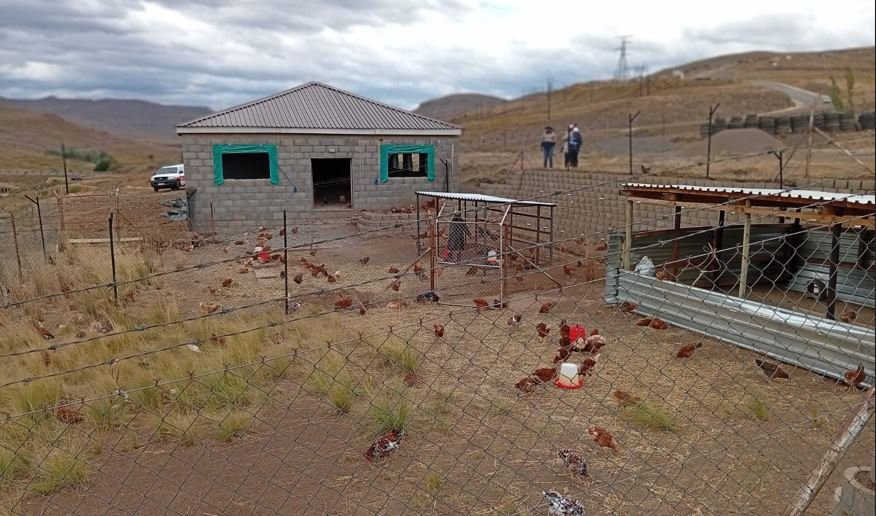
While poultry farming is already common in Mokhotlong, LHDA says productivity has often remained low due to reliance on unimproved breeds and traditional methods. The hub is therefore introducing improved chicken breeds that are more efficient in both meat and egg production.
LHDA Nutritionist Atlehang Makakola said the programme is designed not only to transfer skills but to ensure continuity beyond institutional support structures.
“We work with area technical assistance officers who are stationed within communities. They provide continuous training and support, ensuring that beneficiaries can apply what they learn effectively,” Makakola said.
She noted that extension officers from the Ministry of Agriculture are embedded in the programme to strengthen long-term sustainability and ensure that knowledge is retained within communities rather than remaining project-bound.
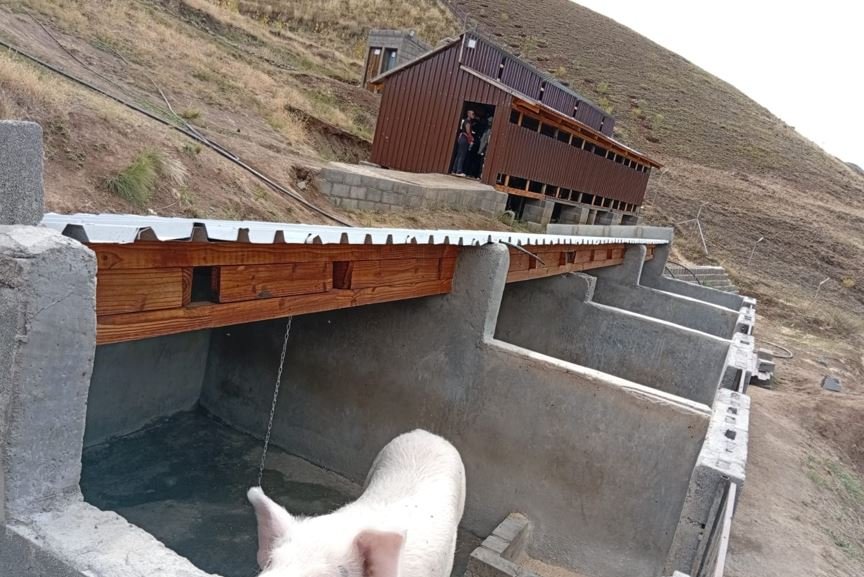
Beyond livestock, the programme is also diversifying rural livelihoods through piggery, beekeeping and fruit tree cultivation, activities selected for their relatively low space requirements and potential for steady income generation.
“We are introducing improved ram breeds to enhance wool and mohair production. For those interested in meat production, better breeds will result in higher quality outputs,” Makakola said, adding that piggery is increasingly being recognised as a viable alternative for households with limited land.
“Piggery was not initially popular, but communities are beginning to see its benefits. It requires less space and can be highly productive,” she explained.
One of the most visible outcomes of the programme has been the emergence of nutrition clubs, which have evolved into small but structured agricultural enterprises. According to Makakola, these groups are now actively participating in local supply chains.
“These clubs are doing exceptionally well. They supply eggs to Letšeng Diamond Mine and other businesses in Mokhotlong and beyond. Each club consists of about 30 members, and each member manages their own poultry operation,” she said.
For some beneficiaries, the impact has already shifted from training to sustained livelihoods.
‘Makabelo Polihali, one of the early participants in the programme, said the intervention has fundamentally changed her household economy.
“I can honestly say that there is a huge change because this has become my main source of livelihood. The vegetables we were taught to grow, produce and work with have helped me greatly. I have sold a lot of produce, and I have seen that if a person continues working hard without giving up, they will never go to bed hungry. I am very grateful for the support because it has empowered us with farming skills and helped us continue working and producing for ourselves,” she said.
She added that prior to the programme, she had little involvement in commercial vegetable farming, but now relies on it as a consistent source of income through local sales in Ha-Ramonakalali.
“Before this, I was not really involved in vegetable farming, but now we are successfully growing vegetables, and I have been able to sell to people in Ha-Ramonakalali. Our farming is very strong, and if a person has interest and commitment, they can truly sustain themselves for a long time and never struggle to find a way to survive, as long as they are willing to work with their own hands,” Polihali explained.
The Ha-Ramonakalali Innovation Hub is increasingly being positioned as more than a project site but a model for linking large-scale infrastructure development to grassroots economic rebuilding. By combining skills development, improved agricultural systems, and market access, LHDA is attempting to shift the narrative of dam-affected communities from vulnerability to productive resilience.
While challenges around scale and long-term sustainability remain, Moeko noted the direction is clear, turning displacement zones into production zones and transforming impact-affected communities into active participants in Lesotho’s agricultural economy.