


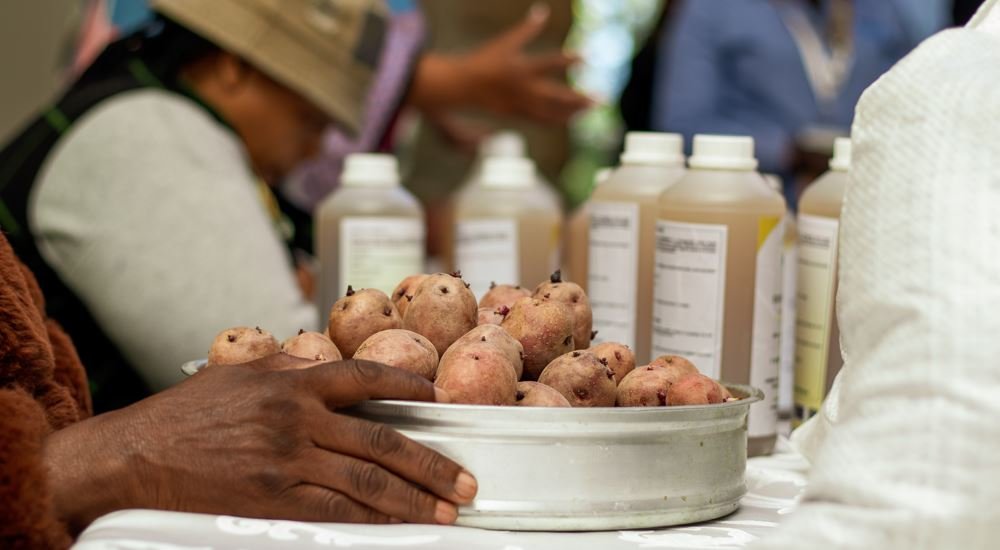

Lesotho marked International Potato Day on 29 May 2026, calling for expanded local production and reduced reliance on imports as demand for potatoes continues to exceed domestic supply.
The commemoration, held at Avani Lesotho, brought together farmers, policymakers, and agricultural stakeholders under the theme “Where potatoes grow, livelihoods flourish.” Discussions focused on production constraints, value chain gaps, and investment needs in the potato sector.
Minister of Agriculture, Nutrition and Food Security Selibe Mochoboroane said Lesotho is using the observance to strengthen its focus on potatoes as a strategic crop for food security and income generation.
He said a potato sector assessment supported by the Food and Agriculture Organization (FAO) had identified both production opportunities and structural constraints.
“While demand for potatoes continues to increase, local production still remains below market demand, resulting in continued reliance on imports,” Mochoboroane said.
He called for increased investment, partnerships, and innovation to strengthen the potato value chain and improve output.
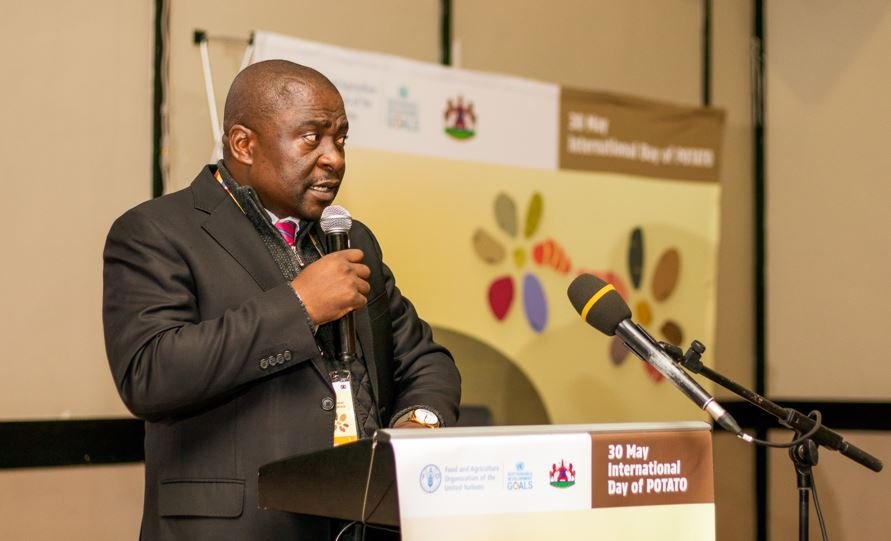
Minister of Agriculture, Nutrition and Food Security, Hon. Selibe Mochoboroane, addresses stakeholders during the commemoration of International Potato Day 2026 at Avani Lesotho. The event highlighted the urgent need to expand local potato production, strengthen value chains, improve access to certified seed and storage infrastructure, and reduce Lesotho’s dependence on potato imports as demand continues to outpace domestic supply.
“Together we can build resilient food systems, create employment opportunities, reduce poverty, improve nutrition, and secure a more prosperous future,” he said.
Stakeholders said production challenges extend beyond yields to include access to certified seed, irrigation systems, storage infrastructure, transport, and stable markets. Limited storage capacity continues to contribute to post-harvest losses and forced early sales at lower prices.
Potato Lesotho Association representative Joele Sekila Molapo said potatoes play a central role in rural livelihoods.
“In many rural communities, potatoes are not just a crop — they are a source of survival, education for children, and hope for a better future,” Molapo said.
He said FAO and the Ministry of Agriculture have supported farmers through seed distribution, mechanisation programmes, and production equipment, including tractors and harvesting tools aimed at improving efficiency and output.
Director of Crop Services Selebalo Moeketsi said potatoes remain a key crop in global food systems due to yield efficiency and adaptability.
“What makes potatoes remarkable is their adaptability. They thrive in different climates, soil types, and altitudes,” Moeketsi said.
He said potatoes require less water than several staple crops, making them suitable for the climate variability conditions affecting Lesotho.
He added that the potato value chain supports employment across production, transport, storage, and processing.
“Potatoes are affordable, nutritious, and accessible to low-income households,” he said.
Permanent Secretary in the Ministry of Agriculture, Dr Khothatso Tšooana, said potatoes are part of government plans under the National Strategic Development Plan II and the One Country, One Priority Product initiative.
He said the programme aims to increase commercial production and address nutrition challenges.
“We are celebrating more than just a crop. We are celebrating a pathway from subsistence to commercial success,” Tšooana said.
He said the government, with support from FAO and the International Potato Centre (CIP), plans to introduce iron- and zinc-biofortified potato varieties to address malnutrition and stunting.
According to the World Integrated Trade Solutions, Lesotho imports over 450,000 kg of processed/preserved potatoes, valued at nearly $1 million.
PS Tšooana also stressed that Lesotho continues to import potatoes to meet domestic demand, saying closing the gap between production and consumption remains a priority.
Speakers at the event, including farmers and officials, said that improving infrastructure, seed systems, and market access will determine whether the sector can move beyond subsistence production to commercial-scale output.