
Despite Lesotho’s position as the “Water Tower of Southern Africa” and ongoing investment in major water infrastructure, thousands of rural households still wake up to dry taps.
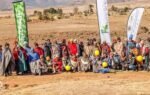
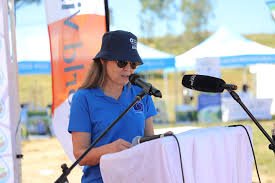
This tension between national capacity and local access took centre stage at the World Water Day commemoration held in Mafeteng on 10 April 2026, where government officials and development partners acknowledged both progress and persistent inequality in the sector.
Although World Water Day is globally observed on 22 March, the Mafeteng gathering created space for a sharper local focus on a reality that continues to define rural life: unequal access to clean water.
It was noted during the discussions that 22% of the national population still lacks access to clean water, and this figure is disproportionately higher in rural areas.
That single statistic set the tone for the day, exposing the gap between Lesotho’s role as a regional water exporter and the lived experience of communities still waiting for a reliable supply.
Honourable Mohlomi Moleko, Minister of Natural Resources, described the celebration as a turning point in the country’s approach to water delivery.
“This is a big step in Lesotho’s journey toward fair water distribution,” he said.
He pointed to large-scale infrastructure investments as a foundation for change, but stressed that impact will ultimately be measured at the community level.
“Major infrastructure projects are building a future where everyone from Mafeteng to Mokhotlong has reliable access to clean water,” he said.
While projects such as the Lesotho Lowlands Water Development Project (LLWDP) continue to expand national supply systems, officials acknowledged that distribution and last-mile delivery remain critical weaknesses.
Dr Rets’elisitsoe Matlanyane, Minister of Finance and MP for Qalabane, said financing frameworks are central to closing these gaps. She highlighted the expansion of the Metsi a Lesotho Financing Agreement into rural Mafeteng.
“This programme is intended to improve WASH (Water, Sanitation and Hygiene) services in rural areas of Mafeteng,” she said.
Her remarks reflected a growing recognition that infrastructure without sustained financing risks leaving rural systems under-maintained and inconsistent.
From the development partner side, H.E. Mette Sunnergren, European Union Ambassador to Lesotho, framed water access as a matter of equity and dignity rather than infrastructure alone.
“Water is not just a resource; it is a responsibility that falls disproportionately on the shoulders of women and girls,” she said, stressing that water scarcity continues to deepen gender inequality, particularly in rural areas.
“When water is scarce, women and girls pay the highest price,” she said.
Reinforcing the scale of the challenge, she repeated that, “…22% of the national population still does not have access to clean water, and the figure is disproportionately higher in rural areas.”
“If we are to achieve SDG 6, we cannot leave half our population behind,” she emphasised.
UNICEF also stressed the human cost of unequal access.
Dr Bob Muchabaiwa, Acting UNICEF Deputy Representative in Lesotho, said: “Water is fundamental to dignity, opportunity and equality.”
“Limited access affects health, education and livelihoods, with women and girls again bearing the heaviest burden. Persistent disparities in access continue to disproportionately affect women and girls,” he said.
The European Union reaffirmed its ongoing investment in Lesotho’s water systems, including support for major infrastructure programmes.
Ambassador Sunnergren noted recent progress: “Two years ago, we signed the Metolong Financing Agreement, and in 2025, we observed results.”
She added that expanded coverage is now reaching new districts:
“Now Mafeteng and Mokhotlong have been included, and we will see improved access to WASH services, especially in rural areas of Mafeteng.”
But beneath the progress narrative, structural challenges remain. Ageing infrastructure, limited maintenance capacity, and weak distribution networks continue to disrupt supply in rural districts.
Climate change is further tightening pressure on the system, with increasing rainfall variability and prolonged dry periods affecting water reliability across Southern Africa.
For communities in districts like Mafeteng, this means that even where infrastructure exists, access is not always guaranteed.
The Mafeteng commemoration ultimately exposed a central contradiction: Lesotho continues to expand water systems at the national scale, but rural households still experience inconsistent access.