



A new three-year programme aimed at helping Basotho farmers adapt to climate change while improving food production and rural livelihoods has been launched, bringing fresh hope to communities increasingly affected by drought, land degradation and unpredictable rainfall.
The Building Climate Resilient Livelihoods and Food Systems (ReLiF) project, launched by the Ministry of Agriculture, Food Security and Nutrition, will run from April 2026 to April 2029 and initially be implemented in Leribe, Maseru, Mohale’s Hoek and Quthing.
The initiative seeks to strengthen climate-smart agriculture through improved water management, natural resource conservation and sustainable livelihood opportunities, particularly for vulnerable rural communities.
Launching the project, Principal Secretary in the Ministry of Agriculture, Dr Khothatso Ts’ooana, said building resilience was no longer optional as climate change continued to threaten food production across the country.
“Climate change continues to affect agricultural production, and this project presents an opportunity to improve the livelihoods of Basotho while protecting our natural resources.”
He said the project’s success would depend on collaboration between government ministries, development partners and farming communities.
“We want this project to benefit the nation. Communities must take advantage of the opportunities it provides, make better use of available water resources and use this support to fight poverty,” he said.
ReLiF Project Director ‘Masechaba Ramphoko said the programme was designed to address the twin challenges of climate change and rural poverty by helping communities build sustainable sources of income while protecting the country’s natural resources.
She said implementation would focus on communities located near water catchments, where reliable water supplies can support climate-smart agricultural production and environmental restoration.
“The project will concentrate on areas close to water catchments because many of its interventions depend on sustainable water use.”
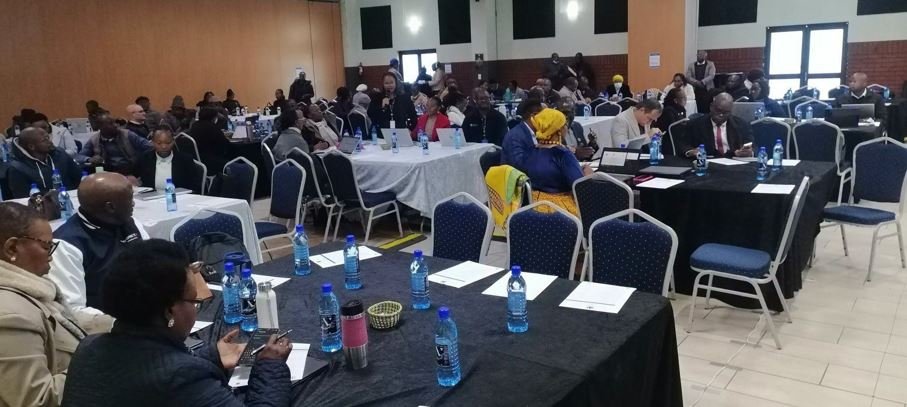
Ramphoko said the inception workshop marked the beginning of implementation and introduced stakeholders to the project’s objectives, implementation strategy and expected outcomes.
While government sees ReLiF as an investment in climate resilience, farmers believe its success will depend on whether it addresses the practical challenges limiting agricultural productivity.
Maseru farmer Ntone Mohale welcomed the initiative, saying it could encourage more young people to see agriculture as a viable business.
“Projects like this are exactly what young people need. At the same time, the youth also have to be willing to work hard because farming requires commitment.”
However, he urged project implementers to ensure support reaches farmers across the country rather than a limited number of communities.
“I expect this project to benefit every farmer. The Ministry also needs to improve the way it communicates with farmers and involve them more in programmes that are meant for them,” he said.
Mohale said access to reliable markets remains one of the biggest obstacles facing producers.
“Sometimes we deliberately reduce production because we know we will struggle to sell what we harvest. Without reliable buyers, farmers end up making losses.”
He also called for greater investment in farmer training, particularly in climate-smart agriculture, saying many producers continue to rely on traditional farming methods despite changing weather patterns.
“Farmers should always be consulted because we know the realities we face every day. If projects are designed with farmers instead of for farmers, they are more likely to succeed,” he added.
As implementation begins, ReLiF will be judged not by the number of workshops it holds, but by whether it helps farmers increase production, strengthen their incomes and become more resilient to climate change. If successfully implemented, the initiative could become an important step towards building a more food-secure and climate-resilient Lesotho.