

…Ministry’s Delay Buries Farmers’ Cattle Dreams
…Lumpy Skin cases increase to over 1000
Lesotho’s farming communities are engulfed in panic and sorrow as lumpy skin disease ravages cattle herds, leading to economic ruin and emotional trauma.
Farmers across various districts report that the outbreak has revealed significant delays in the Ministry of Agriculture, Food Security and Nutrition’s response, delays they believe have cost them both their livestock and their livelihoods.
In villages where cattle represent wealth, dignity and survival, kraals now stand half-empty.
What was once viewed as a seasonal livestock illness linked to climate fluctuations has escalated into a nationwide outbreak.
Early records from the Ministry of Agriculture and Food Security indicated 448 cattle were infected and 19 had died at the onset of the outbreak. By February, infections had surged to 1,061, with 63 confirmed deaths.
Farmers contend that these figures do not accurately reflect the situation, asserting that many animals are buried without official documentation.
The outbreak has not only weakened herds but has also shaken rural economies and heightened food insecurity in a country where cattle are vital for daily survival.
In Pitseng, Leribe, the crisis is measured in graves.
Farmer Tsepo Rantho stands beside freshly covered mounds of soil, each marking the loss of an animal that once sustained his household.
“I watched five of my cattle suffer and die helplessly in front of me while I waited for the vaccine since November 2025,” Rantho said.
“While waiting, I tried traditional herbs and medicines, but I found that such remedies do not help; instead, they worsen the situation because I watched them all die.”
Rantho noted that his village has been severely impacted.
“We have lost many cattle in our village. We waited for the vaccine until our cattle died, and even those who later managed to secure vaccinations have tasted bitter disappointment as some of their vaccinated cattle have also died.”
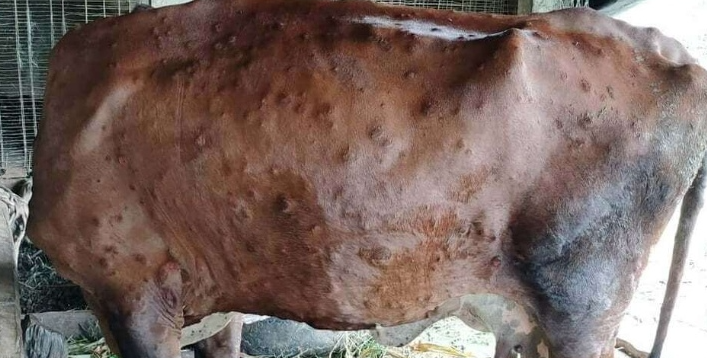
For families who have herded cattle for generations, the outbreak feels like a betrayal by time and by the institutions meant to protect them. Animals that once ploughed fields and produced milk now deteriorate rapidly, their bodies covered in painful nodules, with fevers draining their strength.
“Herbs helped some farmers, but this virus shows no mercy. Whether you like the cow or not, it just kills.”
At Malimong in Berea, Mothobi Tho faces an unnerving silence where livestock once thrived.
“My last two cows became affected and died,” Tho said, his voice heavy with sorrow.
He explained, “Lumps swelled everywhere, and fever took them down quickly. I had nothing left, and they were my last hope for survival, as I used them to plough my fields and provide food. They also gave me money during the ploughing season as I offered the same services to others. Now I am left with nothing.”
Without oxen, the ploughing season becomes uncertain. Without cattle to sell, funds for school fees, medical bills and seeds vanish. Tho indicated that his loss is not just livestock but represents food security, income and independence.
Across rural Lesotho, similar stories resonate: cattle too weak to stand, dwindling milk supplies and fields left unploughed.
With no immediate vaccination campaign on the horizon, farmers turned to tradition, household chemicals and anything that might save their animals.
Refiloe Selateli of Ha Makoaela, Pitsaneng in Leribe, said he relied on ancestral remedies.
“I used traditional medicines to heal my four cows. I pounded moringa bark with goat fat and smeared it thickly on the nodules; I brewed aloe steam for fever.”
His two cows responded positively and began grazing after three days. By the end of the week, their sores had scabbed over.
“The other two worsened and died quickly from lumps, their legs buckling,” he noted.
Elsewhere, some farmers resorted to potassium permanganate or disinfectants like Dettol in a desperate attempt to clean wounds. The results were mixed because some animals survived, while others suffered.
Bokang Tsimatsi initially used potassium permanganate and other remedies.
“I used potassium permanganate and other remedies first, and all my cows survived,” he shared, but strongly insists that relying on improvisation is not a solution.
“Just because my cows survived should not prevent me from needing proper treatment from the Ministry of Agriculture. I am still waiting because these cows are my main food source.”
Farmers argue that official figures understate the severity of the outbreak.
Some livestock deaths go unreported due to a lack of information or fear of stigma, suggesting that infections may exceed the recorded 1,061 cases. This was confirmed by the Minister of Agriculture and Food Security, Thabo Mofosi, who acknowledged that the government’s response was delayed by procurement challenges.
The minister revealed that the required vaccines needed to be imported. During the ordering process, the outbreak spread across Southern Africa, leading to shortages before Lesotho could secure preventive doses.
“By the time we managed to source the vaccine, the preventive vaccine was no longer available,” Mofosi said, noting that what arrived were antibiotics used to manage infected animals.”
The antibiotics arrived in the country on 11 February 2026, and the Ministry has since begun preparing a national rollout campaign.
“27 vehicles have been deployed to travel across the country to vaccinate affected cattle, and veterinary teams will visit farms directly to reduce animal movement and prevent further transmission. Farmers will be assisted in vaccinating their infected animals free of charge,” the Minister confirmed.
He emphasised that limiting cattle movement is essential to controlling the disease and urged farmers to maintain routine vaccinations.
“Prevention is better than cure. We urge farmers to continue vaccinating their cattle regularly to protect their livestock,” Mofosi said.
The Ministry has also reiterated that early detection, reporting of suspected cases and cooperation with veterinary officers are critical to containing the outbreak.
In Lesotho, cows are more than just animals; they are economic pillars and cultural anchors.
With over 500,000 head nationwide, according to the Lesotho National Farmers Union (LENAFU), cattle contribute an estimated 20 per cent of rural GDP. Each animal can fetch between M5,000 and M10,000, often covering a school term’s fees. Oxen plough nearly 80 per cent of smallholder fields, while milk nourishes approximately 70 per cent of rural children under five. Meat sustains ceremonies and trade.
Cattle are sold to pay medical bills, buy seeds during droughts, finance funerals and fulfil lobola obligations. They symbolise pride, continuity and resilience.
Now, kraals are shrinking.
For many farmers, recovery will take years; for some, it may never come.
According to the World Organisation for Animal Health, effective management of lumpy skin disease requires a comprehensive approach that includes vaccination, strict biosecurity measures, quarantine protocols and rapid reporting of suspected cases. Early intervention is essential to limit the spread and reduce mortality.
The Food and Agriculture Organization has similarly emphasised the importance of coordinated prevention strategies and preparedness planning to safeguard livestock-dependent economies from transboundary animal diseases.