







…as Unpaid Farmers Face Two-Month Payment Delays
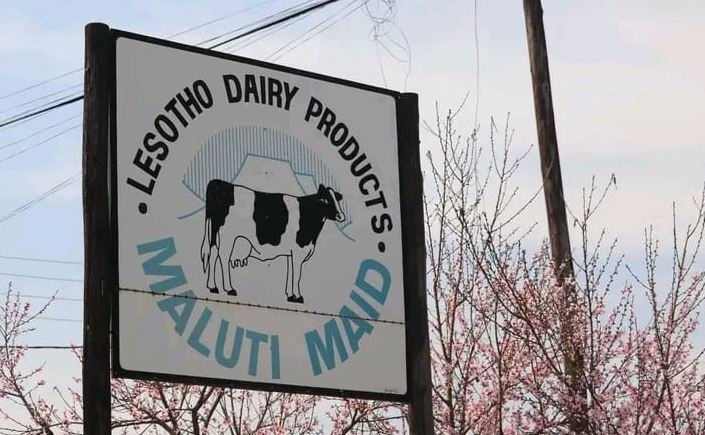
The Ministry of Agriculture, Food Security and Nutrition has dissolved the Lesotho National Dairy Board (LNDB) following a prolonged payment crisis that left dairy farmers waiting nearly two months for money owed for milk supplied to Lesotho Dairy Products.
The intervention follows investigations into the ownership and management of the dairy processing company, which revealed concerns over changes to its shareholding arrangements and the absence of a properly constituted board of directors.
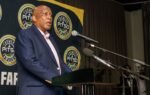
Minister of Agriculture, Food Security and Nutrition Selibe Mochoboroane announced that the ministry would oversee the sector’s administration on an interim basis, pending the establishment of a new board expected in November.
The decision comes amid growing frustration among dairy farmers whose livelihoods depend on regular payments for milk delivered to the processor.
Mochoboroane said the government initiated investigations to establish the underlying causes of the challenges affecting Lesotho Dairy Products, particularly its ownership and governance arrangements.
“The investigations were conducted to establish the root causes of the challenges at Lesotho Dairy Products, focusing on its ownership and management structures, and one of the findings is that shareholders were reshuffled without the consent of all shareholders,” he said.
The minister traced the company’s establishment to a 1985 agreement between Lesotho and Canada, which laid the foundation for Lesotho Dairy Products as a venture involving government and dairy farmers.
According to Mochoboroane, the company was structured around several shareholders, with the Lesotho National Dairy Board holding a 60 per cent shareholding on behalf of government.
“Lesotho agreed with Canada in 1985 to establish Lesotho Dairy Products. The company is owned by shareholders including the government and farmers, with the Lesotho National Dairy Board holding a 60 per cent shareholding on behalf of government,” he explained.
He said governance challenges emerged in 2015 after the government introduced its one-stop-shop initiative, which affected the company’s shareholding arrangements.
The changes subsequently led to the withdrawal of representatives from the company’s board, leaving questions over its governance and the authority of those managing its affairs.
“The LNDB subsequently recalled its representatives from the Lesotho Dairy Products Board, while farmers also recalled their representatives, leaving the company without a properly constituted board,” Mochoboroane said.
The absence of an effective governance structure has raised concerns about accountability, management oversight and the protection of shareholders’ interests within a company that plays an important role in Lesotho’s dairy value chain.
Mochoboroane said the ministry would engage the company’s shareholders, including government, farmers and employees, to establish a new board to determine Lesotho Dairy Products’ future management and operations.
“The Ministry of Agriculture will engage shareholders, including government, farmers and employees, to establish a new board in November to determine the company’s future management and operations,” he said.
The new leadership would be expected to address governance concerns and determine how the company should operate, including arrangements for processing milk supplied by local producers.
“The new board will be expected to determine how the company will operate, including how milk will be processed. We have heard farmers’ concerns, and we are committed to addressing them,” Mochoboroane said.
LNDB farmers’ representative, Nts’ibane Nts’ibane, welcomed the planned restructuring, saying the company had been operating under the direction of individuals rather than a properly constituted board.
He said the intervention would provide a lasting solution to the company’s difficulties, but cautioned that improvements would not necessarily be immediate.
“A business should generate profit through effective operations while protecting the interests of its employees,” Nts’ibane said.
He emphasised that employees’ interests must also be considered as efforts to restore the company’s operations proceed.
According to Nts’ibane, resolving the governance challenges would help improve services to dairy farmers while ensuring that shareholders derive value from their investments.
The restructuring is particularly important to producers whose continued participation in commercial dairy farming depends on reliable milk collection, processing and payment arrangements.
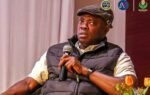
Permanent Secretary in the Ministry of Agriculture, Food Security and Nutrition, Khothatso Tsooana, acknowledged the difficulties farmers face and said the ministry is working to restore order in the sector.
“As a Ministry, we are working hard to put everything in place to avoid long periods of suffering for our dairy farmers. It is unacceptable for a farmer to wake up every morning to milk cows and then wait two months without pay,” Tsoana said.
He said further investigations were underway to establish the extent of outstanding financial obligations to farmers and ensure that milk deliveries were properly accounted for.
“More investigations are continuing to assess the finances owed to farmers, and once the findings are out, farmers will know, and we will account for every litre that was delivered, and we will make the report public,” he said.
The ministry has not yet disclosed the total amount owed to farmers, the number of affected producers or a timetable for settling outstanding payments.
The Lesotho National Dairy Board’s membership and shareholding records include several farmer groups and individual shareholders, among them Masianokeng Dairy Farmers, Lancers Dairy Farmers, Tsemeli Dairy Farmers, Leribe Farmers, Matsieng Dairy Farmers and Botsabelo, alongside other listed shareholders.