










Across Southern Africa, women are increasingly challenging perceptions, turning agricultural enterprises into sources of income, employment and economic independence.
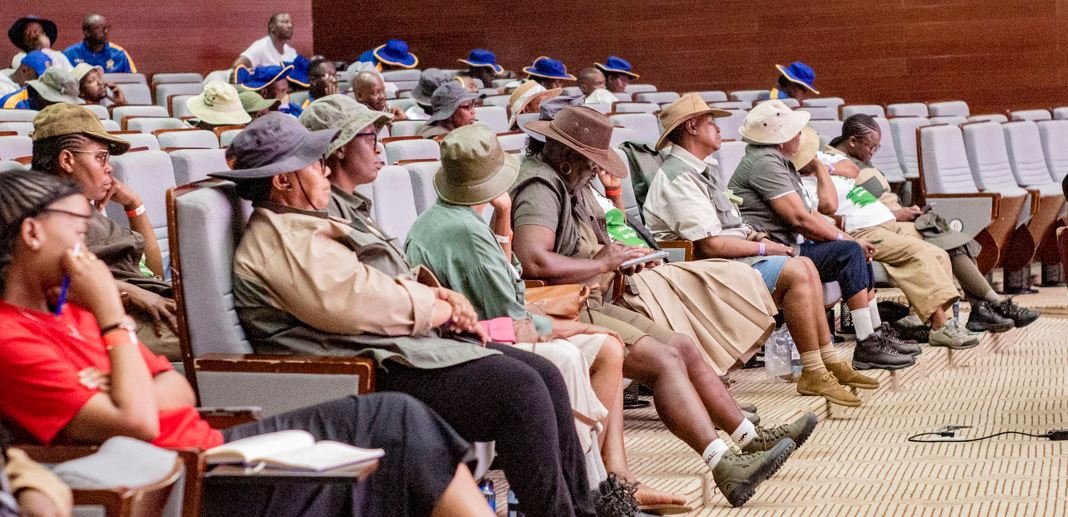
At the She Farms women’s agricultural conference, organised by a female farmer, Alida Matsa in Maseru, that transformation came into focus through the experiences of entrepreneurs who built businesses from modest beginnings, overcame production challenges, and pursued opportunities in sectors ranging from poultry and horticulture to agro-processing.
Their journeys revealed a common determination to establish agriculture as a profession worthy of ambition, investment and recognition, while encouraging younger women to see opportunities in an industry often burdened by outdated perceptions.
Delivering the keynote address, Dr Sindiswa Mzamo, Global President of the Circle of Global Business Women in South Africa, challenged women farmers to embrace their identities, recognise their capabilities and approach agriculture with confidence.
“She farms, she is her. Authenticity and confidence are the most powerful tools women farmers can carry. Without them, a woman can go all over the world without reaching any goal,” Mzamo said.
Drawing on her own agricultural background and professional experience, she reflected on the changing image of farming and the need to make agriculture attractive to a younger generation.
“I come from a family of farmers. I worked in the Department of Agriculture and Rural Development in South Africa, and I have walked the journey of turning strategy into action.
“For many years, wearing overalls was associated with being uneducated, but today, as women, we are showing the world that agriculture is cool, classy and interesting.”
Mzamo said women who had established themselves in farming had a responsibility to demonstrate that agriculture could be a serious economic activity, capable of supporting entrepreneurship and national development.
“Young people must learn and see through us as women in farming that agriculture is a key driver of the economy,” she said.
She encouraged Basotho women farmers to increase their participation in production and commercial markets, arguing that their visibility and success could help reshape public perceptions of the agricultural sector.
“Together, we rise as women in farming. We should make sure that we take our seats in marketplaces and showcase who we are, our excellence and what we produce.”
Among them was Rethabile Mokaeane, Managing Director of Letsiboho Poultry Farm, whose entry into the poultry industry was driven by a shortage of locally available day-old chicks.
Mokaeane recalled that when the business began in 2015, Lesotho’s poultry farmers were heavily dependent on suppliers in South Africa, leaving local producers vulnerable to shortages, unreliable deliveries and difficulties obtaining quality chicks.
“Letsiboho Poultry Farming was born out of a challenge in 2015, when there was no access to day-old chicks in the country. We realised the gap and saw the opportunity,” she said, noting the business started with three employees and a small hatchery capable of accommodating 8,000 chicks per month.
Mokaeane said the opportunity was not simply to establish another poultry enterprise, but to address a supply problem that affected farmers across the country.
“As a country, we got chicks from South Africa, and during peak seasons they would deny us chicks. Sometimes they sold us rejects that often died along the way to Lesotho, and that really motivated me to enter the business,” she explained.
Establishing the hatchery Mokaeane said required substantial personal commitment, particularly because the enterprise was financed without outside investment at its inception.
Mokaeane said the difficulties she encountered demanded persistence and confidence in the purpose behind her decision.
“Letsiboho was self-financed, and giving up when things became difficult was not an option. I had already invested too much, and I had to win big.”
“We conquered and worked hard through challenges. Because I had passion and knew what brought me into the poultry industry, I had to win,” she said.
A decade after its establishment, Mokaeane said the business now has a hatchery capacity of 240,000 chicks per month, up from the 8,000-chick monthly capacity with which it began; it supplies customers across Lesotho, boosting domestic availability of poultry inputs and reducing some farmers’ reliance on cross-border suppliers.
The enterprise employs 23 permanent workers and engages additional temporary staff during busy hatchery periods.
However, its growth has not been without setbacks; she identified poultry diseases, including avian influenza, the disruption caused by COVID-19, and climate-related challenges as pressures affecting the enterprise.
“We are not where we want to be, but we still anticipate growing bigger. We are looking forward to poultry policies to guide us. For a long time, when we experienced challenges, we did not know where to report them, but now we are hoping for the best in poultry farming,” she said.
Thembisile Mafu, founder of Resilient Mafu’s Farming in Eswatini, on the other hand, shared a journey into commercial agriculture that began with a much smaller investment.
Mafu started her enterprise with cayenne pepper seedlings valued at E400 and paid E200 for half an hour of tractor ploughing.
She gradually diversified into vegetable production, cultivating cabbages, green beans, green peppers, spinach and lettuce, alongside seasonal crops including maize, beans and chillies.
“We are also involved in agro-processing for value addition and to prevent post-harvest losses. Some of the vegetables grown are processed into vegetable atchaar, while cayenne pepper chillies are processed into cayenne pepper sauce,” she said.
Mafu also produces jam from emajoti and guavas when the fruits are available in sufficient quantities.
She said this approach allows her to explore markets beyond fresh produce while using crops that might otherwise be difficult to sell before they deteriorate.
Her interest in agriculture extends beyond crop cultivation. She has pursued training in climate-smart farming and dairy processing and has acquired skills in artificial insemination in cattle.
“I am very passionate about farming. I am certified in climate-smart farming and dairy processing, and I can perform artificial insemination in cows,” she said.
Mafu explained that water shortages and difficulties establishing irrigation systems forced her to adjust her production decisions, introducing crops that could be grown under rain-fed conditions.
“I then added cabbages. Due to water shortages and irrigation problems, I decided to grow beans, maize and sweet potatoes and rely on the rains,” she said.
“The farm started on half a hectare of land, and today we farm on three hectares. The business is now registered, and part of the farm has been fenced.”
Mafu sells her produce through both formal and informal markets and said the enterprise has developed into a source of financial independence.
“The business is growing, and I can earn a comfortable living through it. It keeps me busy, sane and happy. Through my farming journey, I have made many international business connections where I can share business ideas and learn from others.”
Without enough land of her own, Mafu rents fields from other households, particularly to cultivate maize and beans.
She also faces irrigation challenges that require considerable manual labour.
“Not having enough resources, such as a proper irrigation system, is another challenge. I use buckets to water the vegetables. Climate change is also a challenge to the stability of my business,” she said.
Mafu advised young enthusiasts to avoid discouragement from others if they want to start.
“To young women who want to enter farming, start small. Start with what you have. Even if people do not believe in you, if you believe that you can do it, do it,” she said, stress they should stay curious, pursue training opportunities, and build relationships that could support their professional growth.
“Ask questions and always be willing to learn from others. Never stop learning and trying. Attend workshops and training sessions. Make friends and use social media wisely. There are many opportunities, especially for young people. Apply for every opportunity that comes along. Be bold. Be resilient.”
While Mafu’s journey began with a small investment in seedlings, Dr Mampiti Matete of Matpit Farm entered agriculture after establishing a career in academia and working with institutions connected to agricultural development.
Matete said the decision to become a commercial farmer came from a growing awareness of the gap between agricultural theory and the practical realities farmers face.
“I left academia for farming. The story began after I completed my PhD and worked in the Department of Agriculture at the National University of Lesotho,” she said.
As a lecturer, Matete encountered students who questioned the relevance of some classroom knowledge.
“During my lectures, I encountered students who had worked in farming for a long time. They said what I taught in class was very different from what happens on the ground. That inspired my curiosity about agriculture, and I wondered what they meant.”
She recalled that agricultural lecturers regularly organised practical visits for students, often travelling to farms in South Africa.
The experience left her questioning why Lesotho could not develop similar opportunities.
“As lecturers, we were expected to take students on farm tours. At that time, we used to take trips to farms in South Africa, and that embarrassed me. I found such tours humiliating,” she said.
“Through those farm tours, my first seed was planted, and I decided that I wanted to have a farm.”
Her interest in agriculture was also shaped by her family background and a changing understanding of the profession.
Matete recalled that her father had worked on farms in South Africa as an engineer, yet she had once regarded farming as a less prestigious occupation.
“When I applied for a scholarship, I was asked to provide my father’s title. I did not want to write ‘farmer ’, and I hated it,” she said.
Her perception gradually changed as her professional experiences brought her into closer contact with agricultural enterprises.
She later worked at Land Bank in South Africa, where she interacted with farmers and gained further exposure to the agricultural sector.
“The work connected me to farmers, and the love for farming kept growing,” she said.
Despite the professional opportunities available to her, Matete found herself increasingly drawn towards the independence and practical engagement offered by farming.
“I also got bored at Land Bank because it was an eight-to-five job. I joined the International Union for Conservation of Nature, where there was life. Still, I was not as happy as I am now in farming,” she narrated, saying everyone around her did not immediately welcome her decision to return to Lesotho and establish a farm.
Matete said some relatives, including her husband, questioned why a woman with a doctorate would leave established professional opportunities to work in agriculture.
“I got many negative comments from my husband and family members. They said that a PhD holder should not be working on farms, watching crops and animals. They labelled my idea as one of Pharaoh, but I continued. Now I am Matpit Farm,” she said.
She began farming in 2017, initially cultivating a small number of cabbages while working towards her ambition of establishing a substantial agricultural enterprise.
“From 2017 until now, I am happy that God answered my prayer of having a farm under my name. I started with a few cabbages, and my husband would ask, ‘Is this what you came back home for?’”
What began with modest crop production has since developed into a commercial farming operation, and according to Matete, Matpit Farm now has 20,480 laying hens and employs 30 full-time workers and 20 seasonal employees.
The business began with only three employees, making its expansion a significant development in both production capacity and employment.
“In farming, there is freedom and happiness; you can just watch me and observe,” she said.
The conference provided a platform for women to exchange practical knowledge, discuss the barriers they continue to encounter and establish relationships that could support future collaboration.Women Redefining Agriculture Through Enterprise, Resilience and Ambition
By Topollo Tlali
Across Southern Africa, women are increasingly challenging perceptions, turning agricultural enterprises into sources of income, employment and economic independence.
At the She Farms women’s agricultural conference, organised by a female farmer, Alida Matsa in Maseru, that transformation came into focus through the experiences of entrepreneurs who built businesses from modest beginnings, overcame production challenges, and pursued opportunities in sectors ranging from poultry and horticulture to agro-processing.
Their journeys revealed a common determination to establish agriculture as a profession worthy of ambition, investment and recognition, while encouraging younger women to see opportunities in an industry often burdened by outdated perceptions.
Delivering the keynote address, Dr Sindiswa Mzamo, Global President of the Circle of Global Business Women in South Africa, challenged women farmers to embrace their identities, recognise their capabilities and approach agriculture with confidence.
“She farms, she is her. Authenticity and confidence are the most powerful tools women farmers can carry. Without them, a woman can go all over the world without reaching any goal,” Mzamo said.
Drawing on her own agricultural background and professional experience, she reflected on the changing image of farming and the need to make agriculture attractive to a younger generation.
“I come from a family of farmers. I worked in the Department of Agriculture and Rural Development in South Africa, and I have walked the journey of turning strategy into action.
“For many years, wearing overalls was associated with being uneducated, but today, as women, we are showing the world that agriculture is cool, classy and interesting.”
Mzamo said women who had established themselves in farming had a responsibility to demonstrate that agriculture could be a serious economic activity, capable of supporting entrepreneurship and national development.
“Young people must learn and see through us as women in farming that agriculture is a key driver of the economy,” she said.
She encouraged Basotho women farmers to increase their participation in production and commercial markets, arguing that their visibility and success could help reshape public perceptions of the agricultural sector.
“Together, we rise as women in farming. We should make sure that we take our seats in marketplaces and showcase who we are, our excellence and what we produce.”
Among them was Rethabile Mokaeane, Managing Director of Letsiboho Poultry Farm, whose entry into the poultry industry was driven by a shortage of locally available day-old chicks.
Mokaeane recalled that when the business began in 2015, Lesotho’s poultry farmers were heavily dependent on suppliers in South Africa, leaving local producers vulnerable to shortages, unreliable deliveries and difficulties obtaining quality chicks.
“Letsiboho Poultry Farming was born out of a challenge in 2015, when there was no access to day-old chicks in the country. We realised the gap and saw the opportunity,” she said, noting the business started with three employees and a small hatchery capable of accommodating 8,000 chicks per month.
Mokaeane said the opportunity was not simply to establish another poultry enterprise, but to address a supply problem that affected farmers across the country.
“As a country, we got chicks from South Africa, and during peak seasons they would deny us chicks. Sometimes they sold us rejects that often died along the way to Lesotho, and that really motivated me to enter the business,” she explained.
Establishing the hatchery Mokaeane said required substantial personal commitment, particularly because the enterprise was financed without outside investment at its inception.
Mokaeane said the difficulties she encountered demanded persistence and confidence in the purpose behind her decision.
“Letsiboho was self-financed, and giving up when things became difficult was not an option. I had already invested too much, and I had to win big.”
“We conquered and worked hard through challenges. Because I had passion and knew what brought me into the poultry industry, I had to win,” she said.
A decade after its establishment, Mokaeane said the business now has a hatchery capacity of 240,000 chicks per month, up from the 8,000-chick monthly capacity with which it began; it supplies customers across Lesotho, boosting domestic availability of poultry inputs and reducing some farmers’ reliance on cross-border suppliers.
The enterprise employs 23 permanent workers and engages additional temporary staff during busy hatchery periods.
However, its growth has not been without setbacks; she identified poultry diseases, including avian influenza, the disruption caused by COVID-19, and climate-related challenges as pressures affecting the enterprise.
“We are not where we want to be, but we still anticipate growing bigger. We are looking forward to poultry policies to guide us. For a long time, when we experienced challenges, we did not know where to report them, but now we are hoping for the best in poultry farming,” she said.
Thembisile Mafu, founder of Resilient Mafu’s Farming in Eswatini, on the other hand, shared a journey into commercial agriculture that began with a much smaller investment.
Mafu started her enterprise with cayenne pepper seedlings valued at E400 and paid E200 for half an hour of tractor ploughing.
She gradually diversified into vegetable production, cultivating cabbages, green beans, green peppers, spinach and lettuce, alongside seasonal crops including maize, beans and chillies.
“We are also involved in agro-processing for value addition and to prevent post-harvest losses. Some of the vegetables grown are processed into vegetable atchaar, while cayenne pepper chillies are processed into cayenne pepper sauce,” she said.
Mafu also produces jam from emajoti and guavas when the fruits are available in sufficient quantities.
She said this approach allows her to explore markets beyond fresh produce while using crops that might otherwise be difficult to sell before they deteriorate.
Her interest in agriculture extends beyond crop cultivation. She has pursued training in climate-smart farming and dairy processing and has acquired skills in artificial insemination in cattle.
“I am very passionate about farming. I am certified in climate-smart farming and dairy processing, and I can perform artificial insemination in cows,” she said.
Mafu explained that water shortages and difficulties establishing irrigation systems forced her to adjust her production decisions, introducing crops that could be grown under rain-fed conditions.
“I then added cabbages. Due to water shortages and irrigation problems, I decided to grow beans, maize and sweet potatoes and rely on the rains,” she said.
“The farm started on half a hectare of land, and today we farm on three hectares. The business is now registered, and part of the farm has been fenced.”
Mafu sells her produce through both formal and informal markets and said the enterprise has developed into a source of financial independence.
“The business is growing, and I can earn a comfortable living through it. It keeps me busy, sane and happy. Through my farming journey, I have made many international business connections where I can share business ideas and learn from others.”
Without enough land of her own, Mafu rents fields from other households, particularly to cultivate maize and beans.
She also faces irrigation challenges that require considerable manual labour.
“Not having enough resources, such as a proper irrigation system, is another challenge. I use buckets to water the vegetables. Climate change is also a challenge to the stability of my business,” she said.
Mafu advised young enthusiasts to avoid discouragement from others if they want to start.
“To young women who want to enter farming, start small. Start with what you have. Even if people do not believe in you, if you believe that you can do it, do it,” she said, stress they should stay curious, pursue training opportunities, and build relationships that could support their professional growth.
“Ask questions and always be willing to learn from others. Never stop learning and trying. Attend workshops and training sessions. Make friends and use social media wisely. There are many opportunities, especially for young people. Apply for every opportunity that comes along. Be bold. Be resilient.”
While Mafu’s journey began with a small investment in seedlings, Dr Mampiti Matete of Matpit Farm entered agriculture after establishing a career in academia and working with institutions connected to agricultural development.
Matete said the decision to become a commercial farmer came from a growing awareness of the gap between agricultural theory and the practical realities farmers face.
“I left academia for farming. The story began after I completed my PhD and worked in the Department of Agriculture at the National University of Lesotho,” she said.
As a lecturer, Matete encountered students who questioned the relevance of some classroom knowledge.
“During my lectures, I encountered students who had worked in farming for a long time. They said what I taught in class was very different from what happens on the ground. That inspired my curiosity about agriculture, and I wondered what they meant.”
She recalled that agricultural lecturers regularly organised practical visits for students, often travelling to farms in South Africa.
The experience left her questioning why Lesotho could not develop similar opportunities.
“As lecturers, we were expected to take students on farm tours. At that time, we used to take trips to farms in South Africa, and that embarrassed me. I found such tours humiliating,” she said.
“Through those farm tours, my first seed was planted, and I decided that I wanted to have a farm.”
Her interest in agriculture was also shaped by her family background and a changing understanding of the profession.
Matete recalled that her father had worked on farms in South Africa as an engineer, yet she had once regarded farming as a less prestigious occupation.
“When I applied for a scholarship, I was asked to provide my father’s title. I did not want to write ‘farmer ’, and I hated it,” she said.
Her perception gradually changed as her professional experiences brought her into closer contact with agricultural enterprises.
She later worked at Land Bank in South Africa, where she interacted with farmers and gained further exposure to the agricultural sector.
“The work connected me to farmers, and the love for farming kept growing,” she said.
Despite the professional opportunities available to her, Matete found herself increasingly drawn towards the independence and practical engagement offered by farming.
“I also got bored at Land Bank because it was an eight-to-five job. I joined the International Union for Conservation of Nature, where there was life. Still, I was not as happy as I am now in farming,” she narrated, saying everyone around her did not immediately welcome her decision to return to Lesotho and establish a farm.
Matete said some relatives, including her husband, questioned why a woman with a doctorate would leave established professional opportunities to work in agriculture.
“I got many negative comments from my husband and family members. They said that a PhD holder should not be working on farms, watching crops and animals. They labelled my idea as one of Pharaoh, but I continued. Now I am Matpit Farm,” she said.
She began farming in 2017, initially cultivating a small number of cabbages while working towards her ambition of establishing a substantial agricultural enterprise.
“From 2017 until now, I am happy that God answered my prayer of having a farm under my name. I started with a few cabbages, and my husband would ask, ‘Is this what you came back home for?’”
What began with modest crop production has since developed into a commercial farming operation, and according to Matete, Matpit Farm now has 20,480 laying hens and employs 30 full-time workers and 20 seasonal employees.
The business began with only three employees, making its expansion a significant development in both production capacity and employment.
“In farming, there is freedom and happiness; you can just watch me and observe,” she said.
The conference provided a platform for women to exchange practical knowledge, discuss the barriers they continue to encounter and establish relationships that could support future collaboration.