


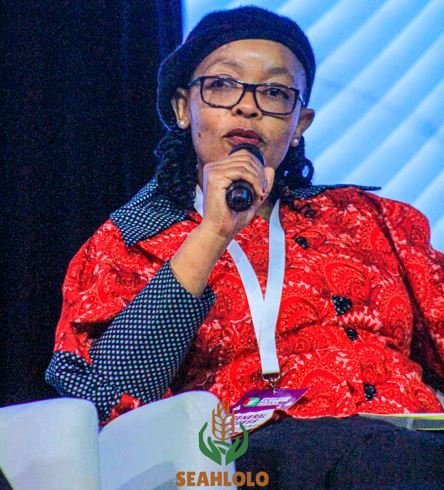

At a gathering dominated by discussions on finance, production, and market access, an unexpected voice shifted the conversation, providing a clarifying reminder that the agricultural sector is not just about supply chains but also about the identity of the food produced.
At the Mzansi Young Farmers Indaba in Pretoria, Chef Ska Moteane took to the stage during a panel on agro-processing, ownership, and value creation, offering a perspective that transcended economics and delved into culture.
An award-winning cookbook author and culinary consultant, Moteane is known for her book Cuisine of the Mountain Kingdom, which has been recognised as one of Africa’s best cookbooks. However, at the Indaba, her message was not focused on accolades.
She reclaimed the value of indigenous food systems.
“We need more platforms like this where we talk about our food and connect directly with farmers to give meaning to the hard work and efforts put into producing the very products we use in our kitchens,” she said.
Moderated by Patricia Tembo, a journalist from Food For Mzansi, the panel explored topics ranging from snail farming to the wine industry. Yet it was Moteane’s contribution that reframed the discussion, shifting agro-processing from a technical concept into a cultural one nurtured in kitchens.
When asked about her raw material sourcing practices, she was clear: “I prioritise products with cultural significance from local farmers because I abide by the notion: tell me what you eat, and I will tell you who you are.”
At the centre of her preferred product is sorghum—mabele—a crop deeply rooted in Southern African history yet increasingly overlooked in modern food systems.
“In my kitchen, I always use sorghum, so much so that it has become a part of who I am,” she said.
Despite its resilience and nutritional value, sorghum has been gradually replaced by imported foods and changing consumption patterns. For Moteane, this shift represents more than a dietary change.
“This significant shift signals a loss of identity in a product that embodies who we are as a nation, and this is a threat to many other African products.”
“As Africans, we already have what we need. We have always eaten complete, balanced meals, and most of our cuisines have been focused on preserving food,” she said.
She describes her work as a bridge connecting farmers to consumers not just through products but through stories.
“In my kitchen, ingredients are not anonymous commodities; they carry names, origins, and histories.”
This perspective challenges a dominant trend in global food systems, where efficiency and uniformity often overshadow heritage and meaning.
As indigenous foods struggle to compete with heavily marketed imports, both nutritional diversity and cultural knowledge are at risk.
“If traditional foods disappear from our kitchens, they disappear from our memory, hence the need for a renewed focus on integrating indigenous crops into modern cuisine, not only to preserve culture but to create sustainable demand for local farmers,” the chef said.
Her message resonated beyond the panel. It positioned agro-processing not merely as value addition but as value restoration, where culture, identity, and storytelling become integral to the agricultural economy.
At an Indaba designed to shape the future of farming, Moteane’s contribution served as a reminder that progress does not have to come at the expense of heritage.
By championing Sesotho cuisine on a continental platform, she was not simply promoting a grain—she was advocating for a system that values local production, supports farmers, and preserves cultural identity.
“Agriculture is not just about feeding people. From what we farm, it is about affirming who we are,” she said.