

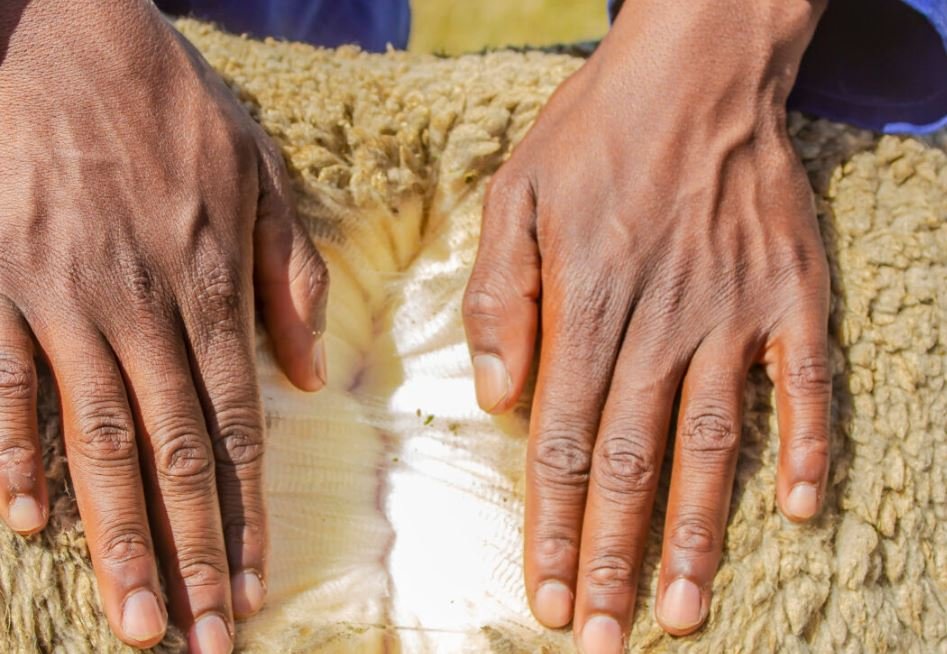

The South African wool market recorded stronger prices during the 29th auction of the 2025/26 season held on 22 April 2026, supported by increased demand for high-quality clips and improved buying activity following developments in key export markets.
According to the BKB isiXhosa and Lesotho Wool Market Report for CAT29, the Responsible Wool Standard (RWS) market indicator closed at R269.68, reflecting a 6.4 per cent increase compared to the previous session.
Price gains were recorded across major micron categories. The 18-micron RWS wool increased by 8.6 per cent to R324.00, while 19-micron RWS wool rose by 7.0 per cent to R302.00. The 21-micron non-RWS category increased by 7.2 per cent to R253.00.
The report attributes the price movement to demand for well-prepared individual clips and improved competition among buyers in the auction system.
A total of 10,737 bales were offered at the auction. BKB handled more than 6,200 lots as the main broker.
Standard Wool purchased 21.68 per cent of the offering, followed by BKB Pinnacle Fibres at 20.71 per cent and Tianyu SA at 20.12 per cent.
Individual producers in Adelaide and Bedford recorded some of the highest prices. Emslie Farming (Pty) Ltd sold a 17.6-micron clip at R257.00 per kilogram, while Robvue Farming CC achieved R255.10 per kilogram for an 18.7-micron clip.
Market reports indicate that prices have increased in some categories by more than 40 per cent over the season, linked to supply constraints in major producing countries, including Australia.
Lesotho National Wool and Mohair Growers Association (LNWMGA) Chairperson Mokoinihi Thinyane said wool prices have been on an upward trend, and the latest auction reflected continued momentum rather than a new increase.
Thinyane said a number of shearing shed schemes in Lesotho continue to produce high-quality wool, contributing to the country’s position in the global market.
He said only about 10 shearing sheds in Lesotho are currently certified under the Responsible Wool Standard, but training programmes are underway to increase the number of producers certified under the standard.
Thinyane said certification compliance is being expanded through ongoing training targeting more shearing sheds and farmers.
He also confirmed that wool export logistics had been affected by delays in shipments, linked to market restrictions in China.
He said a recent announcement indicating the lifting of a ban on wool imports into China is expected to restore normal export flows.
“What we have been crying out about is that the wool already transported to Port Elizabeth was stuck there, unable to reach the buyers because China had closed its borders to wool imports. However, the great news is that today (Wednesday), an announcement was made that China has lifted the ban,” Thinyane said.
He said the restriction had delayed payments to farmers, affecting household incomes and farming operations.
“While we still exported wool to other markets like India and Europe, it was a complicated situation. Since China buys the vast majority, about 75 per cent of our wool, with the remaining 25 per cent shared among other countries, farmers could not just be paid in fractions. We had to wait for all the money from all the buyers to come through,” he said.
Meanwhile, the Government of Lesotho has welcomed China’s decision to lift the temporary ban on wool imports from the country.
In a statement issued by the Office of the Government Spokesperson on 28 May 2026, the government said the restriction, imposed following an outbreak of Foot-and-Mouth Disease, had disrupted wool trade and negatively affected Basotho farmers, with consignments estimated at over M100 million held up at South African ports.
According to the statement, sustained diplomatic engagements and technical consultations between Lesotho and Chinese authorities have resolved all outstanding issues.
Wool consignments that had been held have since been released, and payments to Basotho farmers have already commenced.
The development follows a joint announcement by China’s General Administration of Customs and Ministry of Agriculture and Rural Affairs on 26 May 2026, confirming the lifting of import restrictions.
The government extended appreciation to the Chinese Embassy in Lesotho, wool and mohair producers’ associations, and officials from the Ministry of Agriculture, Food Security, and Nutrition for their role in securing the breakthrough, adding that it remains committed to safeguarding farmers’ interests and strengthening agricultural trade relations.