


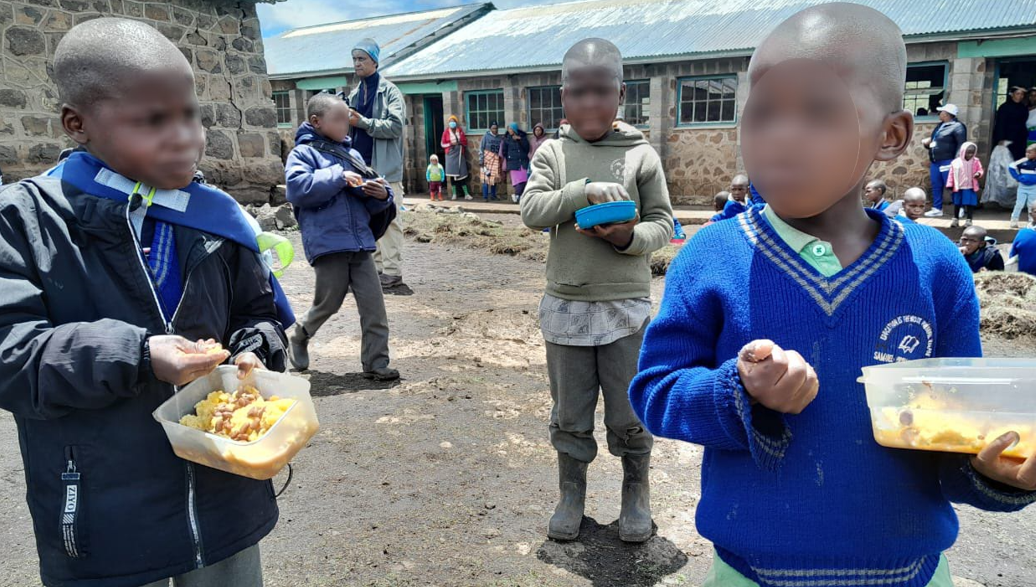

Early morning in rural Lesotho often begins with a familiar sound, the clang of cooking pots and the murmur of children gathering around steaming bowls of porridge.
For many of these children, the meal served at school is more than just food, it is a vital source of nourishment, sometimes the only substantial meal they will have all day. In a country where poverty and food insecurity remain stubbornly high, the school feeding program is a beacon of hope, a promise that the government and its partners have made to the nation’s youngest citizens.
Yet, behind this hopeful image lies a complex and often troubling reality.
The ambitious policy frameworks and investment pledges that underpins Lesotho’s School Feeding Program (SFP) clash with the logistical, financial, and systemic challenges that hamper its full implementation. The result is a program that, while life-changing for some, falls short of its promise for many others.
Lesotho’s commitment to feeding its schoolchildren is enshrined in its School Health and Nutrition Policy, revised in 2023.
The policy is bold and visionary, aiming to provide nutritious, locally sourced meals to all primary school children on every school day. It recognises that good nutrition is not just a health issue but a critical factor in educational success, cognitive development, and long-term economic growth.
At the heart of the policy is a home-grown approach: the government pledges that up to 80% of the food used in school meals should come from local smallholder farmers. This dual objective is designed to simultaneously improve child nutrition and stimulate rural economies by creating a reliable market for local agricultural produce.
To support this vision, the government committed to increasing the school meals budget by at least 50% in the 2024/2025 fiscal year, aiming to raise the cost per meal from about US$0.19 (M4) to US$0.43 (M8.20) over three years.
This increase is intended to improve the quality, diversity, and nutritional value of meals served in schools.
The policy also emphasises multi-sectoral collaboration, involving ministries of education, health, agriculture, and social development, as well as partnerships with international organisations like the World Food Programme (WFP) and donors such as the Principality of Monaco.
The World Food Programme (WFP) has been a steadfast partner, supporting over 51,300 learners in all ten districts during the first half of 2024 as part of the National School Meals Programme.
The Principality of Monaco’s €600,000 donation has helped provide meals for 10,000 children and training for 300 smallholder farmers, strengthening the link between agriculture and school feeding.
Despite the policy’s clear goals and increased budget commitments, the reality on the ground paints a more sobering picture.
One of the most significant gaps lies in the sourcing of food. While the policy aspires to 80% local procurement, in practice, only about 5% of the food used in school meals is sourced locally. The vast majority—around 95%—is imported. This reliance on imported food undermines the policy’s goal of supporting local farmers and rural economies.
Smallholder farmers, who could benefit immensely from stable school feeding contracts, remain largely excluded due to logistical challenges, lack of capacity, and weak linkages between agricultural production and school feeding procurement systems.
The financial promises have also been difficult to realise fully.
Although the government pledged a 50% budget increase, actual funding has been inconsistent, with reports of budget cuts and delayed payments to food suppliers.
In 2022, these delays led to a crisis where suppliers went unpaid for months, resulting in schools receiving substandard meals. Teachers and parents reported that children were often served meals consisting solely of peas, samp, and papa, lacking the protein, fruits, and vegetables necessary for a balanced diet.
The program currently serves over 300,000 children across Lesotho’s ten districts, a significant achievement in a country with a population of just over 2 million, however, capacity constraints mean that many schools, especially in remote and mountainous areas, still lack reliable access to school meals.
Reports have indicated that in some schools, portions have been reduced due to rising food prices and supply chain disruptions.
In others, meals have been skipped entirely when ingredients failed to arrive on time. Teachers in rural areas speak of “managing expectations” as they try to keep children fed amid unpredictable deliveries.
The program has also faced allegations of inefficiencies and misuse. Some reports suggest inflated enrollment numbers to access more food supplies, diversion of food meant for schools, and weak oversight mechanisms.
While these issues are not widespread, they erode community trust and highlight the urgent need for stronger monitoring, transparency, and community involvement in governance.
The policy envisions nutrition education as a core component of the program, with practical lessons on balanced diets, food preparation, and healthy habits integrated into school curricula, yet, many schools lack the basic resources to deliver these lessons effectively.
Idealy, there should be demonstration gardens, cooking facilities, or teaching materials at the schools hhowever, social biases persist, with practical subjects like home economics and agriculture often undervalued compared to traditional academic subjects.
Existing nutrition clubs established in over 400 schools are a bright spot, helping to raise awareness among children, women, and caregivers, however, scaling these efforts remains a challenge.
The stakes of these shortcomings are high because malnutrition in Lesotho remains a critical public health challenge with profound implications for children’s futures. Nearly one in three children under five (33.2%) is stunted, a condition caused by chronic undernutrition that impairs physical growth and cognitive development. This rate, while slightly improved from 34.6% five years ago, remains alarmingly high compared to regional and global averages.
Micronutrient deficiencies, particularly iron deficiency and anemia, affect about 40% of women and children, leading to fatigue, poor concentration, weakened immunity, and increased vulnerability to illness.
Lesotho is also grappling with a paradoxical double burden: while many children suffer from undernutrition, others—especially in urban areas—are becoming overweight or obese. This reflects nutritional inequality and the growing consumption of ultra-processed, low-nutrient foods.
Malnutrition directly affects educational outcomes. Hungry children struggle to concentrate, have lower attendance rates, and are more likely to drop out and this is seen when teachers frequently report that children’s grumbling stomachs hinder their ability to learn.
Despite these challenges, there are positive signs.
The World Food Programme (WFP) has been a steadfast partner, supporting over 51,300 learners in all ten districts during the first half of 2024 as part of the National School Meals Programme.
In its annual country report 2024 WFP Lesotho provided support to over 103,000 food-insecure people in the first half of 2024, including 52,000 people receiving assistance through the Anticipatory Action Initiative.
WFP’s support to the National School Meals Programme nourished over 51,300 children across all 10 districts, advancing toward the goal of feeding 240,000 schoolchildren by year’s end.
It partnered with the Department of Nutrition and Home Economics to implement nutrition initiatives across all 10 districts, resulting in the establishment of over 400 nutrition clubs. These clubs engage women, men, and nutritionally vulnerable groups, in learning innovative nutrition skills.
Teachers in areas where meals are reliably provided report improvements in attendance, enrollment, and classroom engagement. Knowing a meal awaits them encourages children to stay in school longer and participate more actively.
School feeding is only one part of a larger fight against malnutrition. Complementary interventions in maternal health, sanitation, and poverty reduction are needed to create lasting change.