



…Armed forces mum as politicians continue moving livestock
Lesotho’s fight to contain foot-and-mouth disease is being undermined in plain sight.
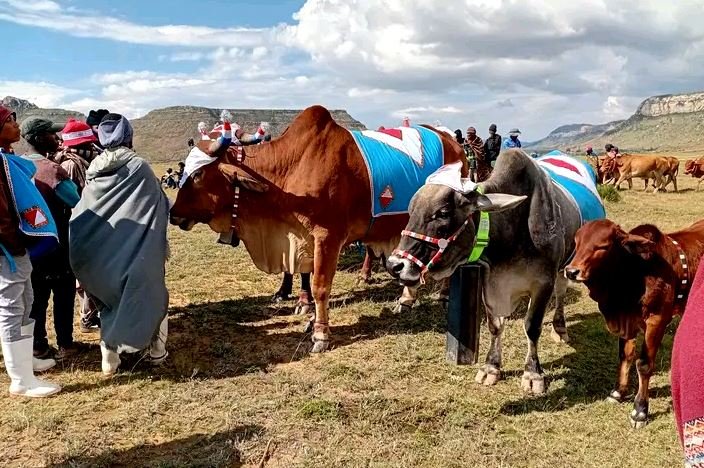
Even as authorities impose strict bans on livestock movement and gatherings, cattle racing competitions continue across parts of the country, organised by popular politicians, raising alarm among officials, farmers and industry stakeholders.
The country recently lost its World Organisation for Animal Health (WOAH)- designated foot-and-mouth disease-free status following confirmed outbreaks in multiple districts.
In response, the Department of Livestock Services under the Ministry of Agriculture, Food Security and Nutrition issued a directive on 2 March 2026, enforcing strict controls within a 10-kilometre radius of affected areas.
The circular is clear: livestock gatherings, auctions, and informal trading of cloven-hoofed animals are prohibited without veterinary clearance. The movement of animal products, including raw milk, hides, skins, and manure, is also banned without permits. Non-compliance, the ministry warned, is an offence under the Stock Diseases Proclamation of 1896 and may lead to prosecution.
Yet, despite these measures, cattle races continue to bring animals into close contact, heightening the risk of further spread.
Dr Relebohile Lepheane from the Ministry of Agriculture acknowledged the growing concern, warning that such activities threaten both disease control efforts and the broader economy.
“The ministry’s work involves teaching communities how to avoid the spread of the disease. If communities fail to abide by the rules established by the ministry, the Lesotho Mounted Police, National Security Services, and the Lesotho Defence Force are responsible for law enforcement in these communities,” Lepheane noted.
“As the ministry, we have reported to the three bodies responsible for stopping animal gatherings in different communities; it is in their hands and power to ensure that everyone who gathers animals complies with the law,” Lepheane concluded.
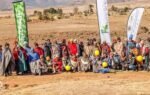
Following the livestock movement ban on 2 March 2026, on 6 April, more than 20 villages competed for a cash prize of 40,000 in a cattle-racing competition in Matelile, in Mafereng District, despite the foot-and-mouth disease outbreak, which had been declared a crisis. The event was sponsored by Moleboheng Mokobocho Sefali, a secretary in Prime Minister Sam Matekane’s office.
A second cattle race competition was also held on 18 April at Ha Rasenkisi, sponsored by Yantai Concrete Bricks and Paving and managed by Motsamai John Tanlla, a prominent political figure in the country. The event featured 26 kraals from different villages.
For farmers’ organisations, the situation is not only concerning but also very reckless.
Khotso Lepheana, Executive Director of the Lesotho National Farmers Union (LENAFU), condemned the ongoing races in strong terms.
“The racing competitions that occurred regardless of the movement ban are not just carelessness in communities, but a direct threat to our national livestock rearing industry and the livelihoods of thousands of households. It is sad that Basotho farmers are prioritising entertainment and quick money over biosecurity. My wish is for them to look beyond short-term earnings; if the disease spreads, all farmers will be impoverished, and the country will also suffer economically,” he added.
He warned that the consequences extend beyond cattle farmers.
“Sheep and goat farmers are currently panicking about the future of their market. If Basotho continue this reckless behaviour of disregarding government regulations, farmers will face a lack of market, and as Lesotho wool and mohair are top foreign-exchange earners, major buyers require products from countries free of foot-and-mouth disease.”
“Different stakeholders should align with the Ministry of Agriculture’s regulations. We know money is tempting, but farmers should consider the economic risks that the spread of foot-and-mouth disease can bring to the country,” Lepheana concluded.
On the ground, frustration is growing over what some describe as a disconnect between policy and behaviour.
Mohale Leloma, District Administration Officer for Mafeteng, said awareness campaigns are ongoing but not always effective.
“It is surprising to see that people are in ignorance and denial of the dangers the foot-and-mouth disease can pose to the country’s economy if cases continue to increase. Shearing centres have implemented measures for goats and sheep farmers to follow when attending shearing sessions that align with issued regulations to decrease the spread of foot-and-mouth disease,” Leloma noted.
“In races, cattle run closely together, and those cattle are in serious danger if the disease is detected,” Leloma concluded.
Farmers themselves are also calling for stronger enforcement and clearer communication.
Tlohelang Aumane, former minister of development planning, now a farmer, stressed the importance of biosecurity and awareness; “After Lesotho and South Africa declared a foot-and-mouth outbreak, the ministry of agriculture implemented control measures that farmers and citizens should follow to control the disease.”
“Farmers should engage in activities that are safe for their livestock during this outbreak to avoid further increases in the number of cases.”
He urged authorities to improve communication nationwide, citing that relevant information on the foot-and-mouth disease should be available in every media house so that every Mosotho can understand the state of the disease and determine whether the number of cases is decreasing or increasing.”
“Some farmers in rural areas have only heard about the disease once, and so far have no information. If the ministry remains quiet, the communities might end up organising gatherings.”
Voices from the private sector are equally critical.
Lebohang Mosaola, a private extension officer at Leseli la lihoai, questioned the effectiveness of current awareness efforts.
“As Basotho, we are very ignorant to the extent that we often bring problems upon ourselves. I have noticed that even before Lesotho reported foot and mouth disease, Basotho were still buying animals from South Africa, which has high cases of the disease in the region.”
“I was impressed at first after the ministry of agriculture issued the control measures, but now the ministry is relaxed as there are no awareness campaigns nationwide,” Mosaola noted.
“Where are the awareness campaigns, educational sessions nationwide, posters, radio teachings, and newspaper updates?” he asked.
“At this point, I do not blame people who are organising cattle racing campaigns because the ministry is not fulfilling its role of educating the nation about the disease.”
Tensions are also emerging within the livestock sector itself.
Khotsang Moshoeshoe of the Lesotho National Wool and Mohair Growers Association criticised what he described as uneven enforcement.
“It is as if sheep and goat farmers are the only ones stopped from gathering animals,” he stated.
“Why are cattle farmers continuing to organise competitions while we have been stopped from holding shows? Why are prominent people in the community the ones sponsoring these events?”
He also questioned the transparency around the outbreak: “Is this disease truly present in the country? Why are farm owners found to have foot and mouth disease kept anonymous? What is really being hidden? The worst aspect of this entire issue is that Lesotho has been reported to have this disease, so for us, goat and sheep farmers, our market is severely affected as buyers require products from FMD-free states.”
“We need fair rules that protect all farmers without hiding the truth. Our survival depends on transparent markets, not strange restrictions,” he concluded.
When approached for comment on how the cattle shows were hosted, the ministry remained mum. Permanent Secretary Khothatso Tshoana referred this paper to Dr Relebohile Lepheane from the Department of Livestock in the Ministry of Agriculture.
According to global animal health authorities, foot-and-mouth disease spreads rapidly through direct contact, contaminated equipment, and, under certain conditions, airborne transmission. In a country where agriculture underpins rural livelihoods, the risks are significant.
“In many rural communities, cattle racing transcends mere sport, representing pride, status, and tradition. Winners often gain social recognition and, in some cases, financial rewards,” Lepheana noted, “But in the midst of a national outbreak, those traditions are colliding with a harsh reality: every gathering carries risk. As livestock continue to mix and crowds gather, the question facing authorities is becoming more urgent: whether regulations on paper can translate into action on the ground before the outbreak deepens further.”