





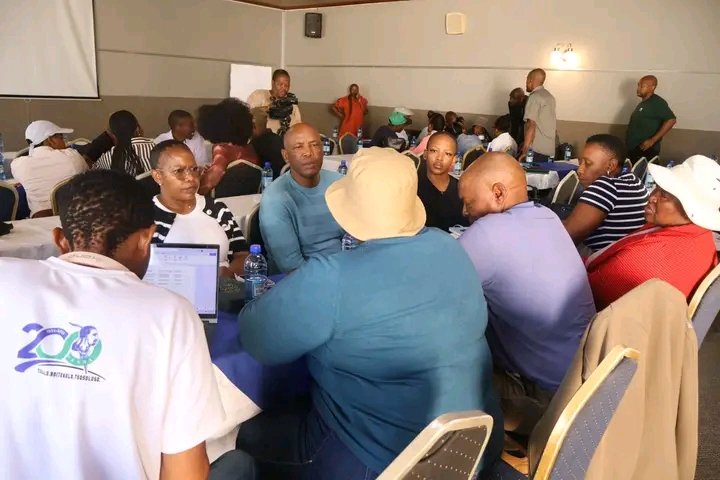

Farmers, bankers, and project officials convened in Mohale’s Hoek for an open discussion on the implementation of the Smallholder Agricultural Development Project Phase II (SADP II) Matching Grants Programme, tackling long-standing challenges that have hindered progress and delayed benefits for beneficiaries.
The two-day meeting, organised by SADP II, aimed to identify operational bottlenecks in the matching grants system, including high bank charges, delayed disbursements, inefficiencies in manual processing, and communication breakdowns among stakeholders.
Leading the discussions, Matching Grant Specialist Relebohile Khatibe acknowledged that the programme has faced significant setbacks and emphasised that the platform was designed to encourage honest engagement and collaborative problem-solving.
“The goal is simple: we must learn from the mistakes of farmers, the procurement challenges faced by banks, beneficiary slip-ups, and even delays from SADP II, so that we can expedite implementation and enhance project success.”
The SADP II Matching Grants Programme is implemented by the Ministry of Agriculture and Food Security with support from the World Bank. It aims to assist small and medium agricultural businesses and farmers’ associations in commercialising their operations by introducing innovative technologies and business models within Lesotho’s agricultural sector.
The reflection session brought together beneficiaries from four categories: Round 1 farmers (including representatives from Mokhotlong, Qacha’s Nek, and Thaba-Tseka), Round 2 and 3 farmers from all districts, and youth grant beneficiaries. Representatives from participating banks—Standard Lesotho Bank, Nedbank Lesotho, and First National Bank Lesotho—also attended.
Farmers were grouped by their funding rounds to discuss the challenges they faced in accessing and managing grants.
Titimisi Ramashamole of Shamza Agric Farm, representing Round 1 farmers using Standard Lesotho Bank, cited delays caused by manual transfers and slow feedback from both SADP II and the banks. He also expressed concerns about transaction charges of up to M300 per transfer.
“There are delays in obtaining feedback from both SADP II and the bank,” he remarked, noting that additional documentation requests were often communicated late.
Makhaola Tsibonyane, representing Round 2 farmers, echoed concerns about poor communication among farmers, SADP II, and banks. He added that the delayed issuance of beneficiary contracts sometimes forced farmers to incur costs beyond their approved budgets.
In Rounds 2 and 3, farmers also reported that manual processing of transfer letters extended approval times and contributed to financial losses due to accumulated bank charges. Some beneficiaries admitted that inadequate training in account management led to blocked accounts and compliance issues.
Youth representative Tebello Lenyepa of Lenyepa Veggies in Leribe noted that many young beneficiaries struggled to meet the first milestone contribution required under the grant structure. Others from Qacha’s Nek highlighted the absence of a Nedbank branch in their district, necessitating long-distance travel to access banking services.
Bank representatives acknowledged the delays but also pointed to persistent administrative challenges.
Mathesoa Mathesoa of Standard Lesotho Bank mentioned that banks often deal with suppliers who are not properly vetted, leading to fraud risks and complicated refund procedures. He also cited issues such as incorrect account numbers, unclear documents, and inaccurate transfer letters submitted by farmers, all of which slow down processing.
“We receive a high volume of follow-up calls from farmers,” he said, explaining that incomplete documentation frequently requires correction before payments can proceed.
Letsema Moeketsi of First National Bank Lesotho added that incorrectly recorded email addresses and documentation errors contributed to communication delays.
Meanwhile, Nedbank representative Chabeli Chabeli noted that dormant accounts and a lack of ownership by some beneficiaries further hindered processing. “Farmers must take full responsibility for their accounts,” he said.
Despite frustrations, the meeting concluded on a constructive note. Farmers pledged to take greater responsibility for their projects and comply strictly with grant procedures and training requirements.
Ramashamole urged banks and SADP II to include beneficiaries in email communications concerning their projects.
“We are humbly asking to be included in discussions sent through emails so that we know where our projects stand,” he said.
Banks committed to clarifying requirements, reducing delays, and improving communication systems. SADP II officials acknowledged internal inefficiencies and promised to streamline processes, provide clearer guidance, and accelerate contract issuance and fund disbursement.
Malefetsane Raliengoane, Communication Specialist for SADP II, concluded the workshop by reaffirming the programme’s broader vision to enhance food security and commercialise smallholder agriculture.
“The primary aim of SADP II is to improve food security and assist farmers in commercialising their businesses, enabling them to create employment opportunities,” he stated, encouraging participants to share the lessons learned with fellow farmers in their communities.
All stakeholders concurred that improved coordination, transparency, and shared accountability would be essential to unlocking the full potential of the matching grants programme for Basotho farmers and the country’s agricultural transformation.