



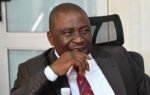


Despite a reduction in the Ministry of Agriculture, Food Security and Nutrition’s budget allocation for the upcoming financial year, Minister Thabo Mofosi insists the sector can still weather the storm.
The Ministry has been allocated M1.1 billion for the 2026/2027 financial year, down from M1.3 billion in the previous financial year. The cut has raised concerns among lawmakers and stakeholders, particularly as Lesotho grapples with rising food insecurity, climate shocks and livestock disease outbreaks.
Yet Mofosi says all is not lost.
“We will make full use of the allocated budget,” he said, expressing confidence that careful planning and strategic partnerships will cushion farmers from disruption.
On 18 February 2026, Minister of Finance and Development Planning Dr Retšelisitsoe Matlanyane tabled the national budget estimates for 2026/2027, confirming the M1.1 billion allocation to the agriculture ministry. In both the 2024/2025 and 2025/2026 financial years, the ministry had received M1.3 billion.
When the Ntsokoane Matekane-led administration entered office, boosting agriculture funding to over a billion maloti for the first time was widely praised. The move was framed as a turning point aimed at strengthening food security, increasing productivity and building sustainable farming systems.
Now, the reduction comes amid mounting pressure on the agricultural sector.
Dr Matlanyane outlined that the 2026/2027 expenditure will prioritise food production, irrigation development, livestock protection and strengthening key agricultural value chains.
“To improve crop production, the government will support share-cropping blocks through subsidised agricultural machinery, including equipment procured from China and the Republic of Korea, to expand cultivated land and improve efficiency,” she said.
She further announced that the Maseru Storage and Logistics Facility would be fully operationalised to strengthen national grain reserves and post-harvest management.
In support of climate-resilient agriculture, the government plans to mount irrigation schemes at a minimum of eight sites to stabilise production, reduce reliance on rainfall and enable year-round farming across priority crop zones.
The optimism in the budget speech contrasts sharply with food security data.
The 2025 IPC Acute Food Insecurity Analysis indicates that approximately 258,000 people, about 17 per cent of Lesotho’s population, are experiencing high acute food insecurity.
Projections show that between October 2025 and March 2026, the figure could rise to 334,000 people, or 22 per cent of the population.
The report attributes the trend to multiple stressors, including dry spells, high food prices, livestock disease outbreaks and soaring temperatures.
Eight of the ten districts analysed were classified as IPC Phase 2 (Stressed), while Mafeteng, Maseru and Mohale’s Hoek were classified as IPC Phase 3 (Crisis).
Although rainfall that began in late October to November 2024 enabled timely planting in the lowlands, subsequent dry spells and extreme heat during the critical crop growth stage between December 2024 and January 2025 undermined yields.
The analysis further noted that livestock disease outbreaks and reduced agricultural opportunities due to smaller planted areas continue to strain rural households. From November 2025 onward, poorer populations are expected to face food gaps despite food availability in markets.
Against this backdrop, Mofosi has assured farmers that they will continue to receive essential support.
One of the ministry’s key strategies in the coming financial year will be to outsource the distribution of farming inputs to the private sector. According to Mofosi, the ministry lacks the logistical capacity to manage distribution efficiently and in a timely manner.
Under the new arrangement, businesses already selling farming inputs will handle distribution.
“There will be no regular concerns from farmers due to delays in arrival or non-arrival of farm inputs,” Mofosi said, adding that the ministry has budgeted for this model and expects farming activities to proceed without disruption.
The shift signals an attempt to address long-standing complaints about late deliveries of seeds, fertilisers and equipment, which have previously undermined planting seasons.
Beyond crop production, the budget outlines preventive nutrition programmes targeting maternal and child nutrition, school-based feeding schemes and community nutrition clubs.
If successfully implemented, these initiatives could ease the pressure of food insecurity among vulnerable households. However, critics question whether implementation will match ambition.
Opposition Member of Parliament (MP) Nkaku Kabi expressed disappointment over the reduced allocation.
“The government has disappointed the nation with the budget cut,” Kabi said, arguing that heavy spending on imports continues while agricultural production declines.
He emphasised that agriculture has the potential to stabilise the country economically, calling for stronger investment to achieve self-sufficiency.
Kabi further stressed the importance of strengthening data collection to determine the nation’s farming needs and assess how much arable land remains fallow.
He also called for the ministry’s research department to be strengthened to drive evidence-based planning.
Professor Nqosa Mahao, also an opposition MP, highlighted that despite substantial allocations over the past two years, grain production has remained low.
He attributed this to weaknesses in the distribution plan for farming inputs.
“Although the funding allocation was high, production has decreased according to the Bureau of Statistics. I question what strategic objectives this reduction is meant to achieve,” Mahao said.
Mahao also argued that most funds appear to benefit commercial farmers, while the majority of Basotho, who depend on subsistence agriculture, receive inadequate support.
He noted that Parliament had previously debated the balance between commercial and subsistence farming allocations.
During her budget presentation, Dr Matlanyane remained confident that strategic interventions would drive improvement.
“The improvement in the agricultural sector is expected to be anchored by enhanced breeding practices on livestock, coupled with anticipated favourable weather conditions on crops,” she said.
She added that strategic utilisation of water resources would support transformative irrigation investments, while increased agricultural output would be processed domestically to reduce imports and diversify exports.