

…Puts youth and women central to her work
On a continent searching for sustainable solutions to food security, climate change, and youth unemployment, some answers are quietly emerging, rooted not just in soil but in purpose.
From Cameroon, Njonguo Sindy Nguegim is one such solution.
As a bee-farming expert, youth leader, and agri-food policy advocate, Njonguo has not had a journey of privilege or easy support; rather, it has been defined by conviction, persistence and a belief in agriculture as a transformative force.
Her path has been shaped by both academic pursuits and lived experiences. Currently working towards an MSc in Agricultural Economics and Agribusiness, with a background in Animal Sciences, Njonguo’s foundation is strong, but it is her mindset that sets her apart.
“My path has developed through agriculture, youth leadership, climate action and community work,” she explains. However, beyond her studies, she says what has truly shaped her journey is a deep belief that agriculture can change lives.
For Njonguo, agriculture is not merely about production but the possibilities folded from within.
“For me, agriculture is not only about farming for survival; it is also about dignity, innovation, resilience and creating a better future for our communities.”
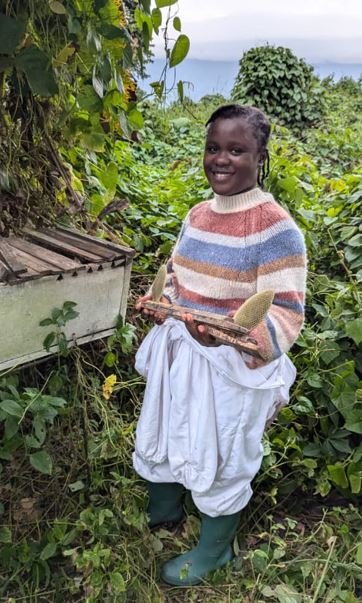
Finding Purpose in the Hive
While many young people remain hesitant to engage in agriculture, Njonguo discovered her calling in one of its most overlooked areas: beekeeping.
“One part of agriculture that has become especially close to my heart is beekeeping,” she narrates, saying her fascination quickly evolved into a sense of purpose.
“What draws me to beekeeping is that it encompasses much more than just honey. Bees are vital for pollination, biodiversity, food systems and environmental balance. When I began to understand this more deeply, I started to see beekeeping as something incredibly powerful.”
“Bees also teach us important lessons. They demonstrate the value of order, purpose, consistency and collaboration. In many ways, I feel that these same values have shaped my own journey,” she says, stressing that beyond the science, she found valuable lessons in the behaviour of bees themselves.
Turning Challenges into Innovation
As she immersed herself in the field, Njonguo began to notice a gap: farmers lacked the tools and timely information needed to manage their hives effectively.
Rather than accepting this as a limitation, she recognised an opportunity to be seized.
“As I learned more about beekeeping, I also began to observe some of the challenges that farmers face, particularly the absence of tools and timely information that could assist them in managing their hives more effectively. I wanted to consider how innovation could address a genuine need.”
Her line of thinking led to the creation of SwarmDec, a solar-powered early-warning device designed to predict bee swarms.
“That is what inspired me to develop SwarmDec, a solar-powered early warning device aimed at aiding swarm prediction in beekeeping.”
This innovation, she explains, employs acoustic sensors to detect hive activity, providing farmers with critical insights before swarming occurs.
“This idea stemmed from a desire to resolve a practical issue in Cameroon’s beekeeping sector. I wanted to contribute something that could make beekeeping feel more modern, data-informed and responsive to climate and environmental realities.”
However, for Njonguo, the technology is only part of the story.
“For me, SwarmDec is not solely about technology. It also involves helping to protect biodiversity, strengthen food systems and create more opportunities for women and young people in agriculture.”
Growing Impact Beyond the Hive
Njonguo’s work extends far beyond beekeeping.
She is the founder of the Africa Humanitarian Development Peace Organization (AHDPO), which operates across several African countries, and also leads Potential Youth, an initiative focused on inspiring and empowering young people.
“I have had the opportunity to train, mentor and support many young people in sustainable agriculture, including beekeeping, insect farming and climate-smart practices. I have also collaborated with various organisations and contributed to discussions surrounding agriculture, climate action and policy. These experiences have helped me realise that real change occurs when local actions and larger systems begin to connect.”
Changing the Narrative for Young People
At the core of her mission is a simple yet powerful idea: agriculture must be reimagined for the next generation.
“One thing I care deeply about is changing the way young people perceive agriculture. Too often, agriculture is viewed only as hard work with limited opportunities. “But I believe agriculture is also a space for innovation, entrepreneurship, leadership, and impact,” she says, explaining that her approach is practical: “Young people are not merely trained; they are given responsibility.”
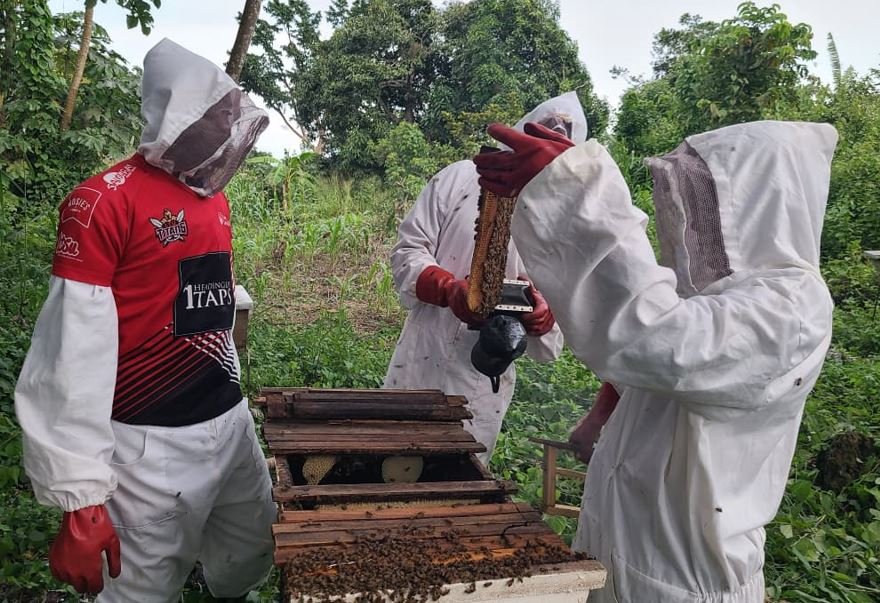
“Young people are encouraged to lead by managing apiaries, conducting hive inspections, producing and harvesting honey, and taking responsibility for small beekeeping enterprises. They are also given opportunities to lead training sessions, share knowledge with their peers, and participate in decision-making, allowing them to build confidence, skills and ownership.”
A Journey Without Shortcuts
Njonguo’s story is crafted around challenges and hardships, with no support at the beginning.
“No one provided me with support. I faced criticism for choosing agriculture and was told I was overdoing it by pursuing beekeeping,” but her strength came from within.
“I learned everything on my own. Just a young girl in love with and passionate about agriculture and the environment.”
That resilience now shapes how she advises others.
“Don’t start for money. Begin with passion and the desire to solve a problem in the field. Advocate for people, not for yourself, especially our grassroots communities. Avoid greed and self-centredness. Be patient, and you will see results. Above all, be authentic and true to yourself.”
A Bigger Vision for Africa
Njonguo views beekeeping not merely as a livelihood but as part of a broader solution to some of Africa’s most pressing challenges.
“This matters because we are facing significant questions in our time. How do we feed people sustainably? How do we protect the environment while still creating livelihoods? And how do we ensure that young people are not left behind but are involved in building the future?”
Her answer is unequivocal.
“For me, beekeeping is one of the beautiful solutions to these questions. To invest in beekeeping is to invest in pollination, biodiversity, food security and life itself, and what keeps me going is the conviction that Africa does not need to wait for change. We can create it.”
As her journey continues, she stays grounded in purpose and possibility.
“My journey is still unfolding, and I am learning every day. But I remain hopeful. I believe that when young people are empowered, when women are given the opportunity to lead, and when innovation is rooted in genuine community needs, agriculture can become a powerful force for change.”