
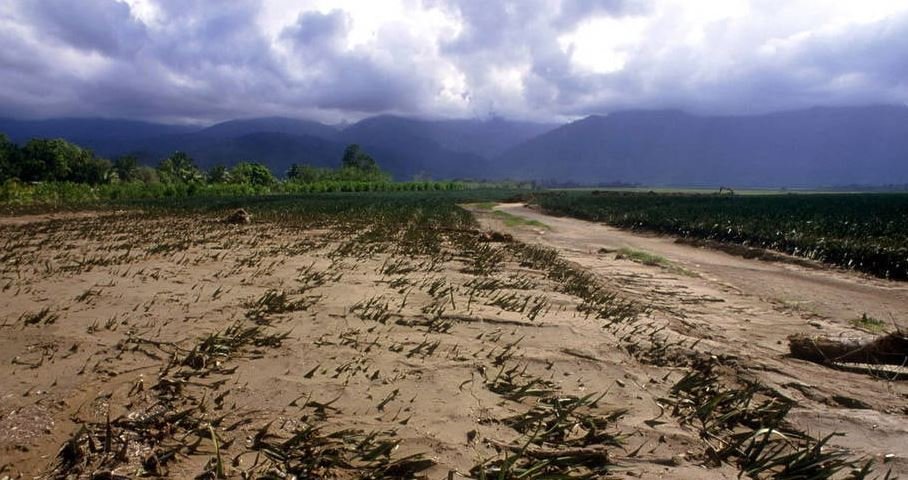

A new report from the United Nations Country Team (UNCT) paints a stark picture of the impact of an El Niño-induced drought that has gripped the country since 2024, so severe that the government declared a National State of Food Insecurity Disaster from July 2024 through March 2025.
For a country heavily dependent on rain-fed agriculture, the consequences have been immediate and far-reaching. An estimated 700,000 people, nearly a third of the population, faced hunger as crops failed and water sources dried up.
The scale of the crisis extends beyond Lesotho’s borders.
“Lesotho and the wider Southern African region experienced one of the most severe climate-related food crises in recent history,” the report states.
Across the region, nearly 27 million people were left without enough food as prolonged dry spells disrupted agricultural production on a massive scale.
Lesotho’s vulnerability is compounded by structural limitations. With only 10 per cent of its land suitable for farming, the country has little margin for climate shocks. When rainfall fails, food systems quickly come under pressure.
Yet even as the crisis exposes deep vulnerabilities, it is also accelerating change.
The report shows that Lesotho is continuing to pursue its Sustainable Development Goals (SDGs), with a current index score of 55.64. While progress remains gradual, there is a clear shift toward building climate-resilient food systems.
Efforts are now focused on helping farmers produce under increasingly unpredictable conditions. In Berea and Maseru, eight greenhouse structures and eight water harvesting tanks have been established, allowing households to grow vegetables with less dependence on rainfall.
Support for farmers has also expanded, with more than 700 farmers receiving input packages that included seeds for maize and beans, fertilisers, and automatic insurance coverage—designed to cushion them against future climate shocks.
At the same time, the government is diversifying food production systems. Policies for aquaculture and potato production are being finalised as part of a broader strategy to strengthen food security.
Recognising the growing unpredictability of weather patterns, the country is also investing in early warning systems.
“With help from the UN, the Lesotho Meteorological Services are now better at predicting the weather with precision. This allows the government to take anticipatory action, meaning they can act before a disaster hits rather than just responding afterwards,” the report says.
Technology is increasingly playing a role in managing climate risks. Drone mapping is being used to assess flood risks, while wetlands are being restored to protect critical water sources.
Beyond production, efforts are also being made to strengthen farmers’ ability to respond to changing markets. Market Information Days held across four districts have reached more than 1,600 people, many of them women and youth, equipping them with knowledge to navigate shifting agricultural conditions.
Despite the severity of the drought, the report highlights a broader story of resilience.
As United Nations Resident Coordinator Taija Kontinen-Sharp noted, Lesotho is responding by blending traditional knowledge with modern innovation to ensure long-term food security in a changing climate.
The crisis may have exposed the fragility of the country’s food systems, but it has also accelerated a transition in which survival increasingly depends on how quickly agriculture can adapt.