





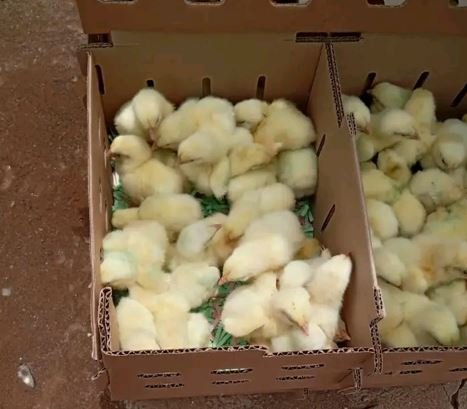
Thirty-five young farmers in Quthing have received broiler chickens as part of a government-supported initiative aimed at enhancing youth participation in agriculture and addressing unemployment.
The Ministry of Agriculture, Food Security and Nutrition, through the Smallholder Agriculture Development Project (SADP II), distributed 200 broiler chickens and 14 bags of feed to each beneficiary. This initiative is part of a larger national effort to stimulate food production and promote agribusiness development across all ten districts of Lesotho.
The mentorship-driven programme combines practical poultry training with input support to equip young people with the technical knowledge and hands-on experience necessary to manage viable agricultural enterprises while contributing to food security and rural employment.
During the handover ceremony, Minister of Agriculture, Thabo Mofosi, stated that the initiative is part of a strategic plan to reduce youth unemployment and establish a sustainable agricultural value chain.
“Following this distribution, the Ministry, through the marketing department, should explore ways for youth to successfully sell their products, ensuring a fruitful journey in commercial farming,” Mofosi said.
He emphasised the government’s desire to create a clear and functional value chain that connects producers, farmers, buyers, and consumers.
“A clear value chain is essential as it links every step of food production from seed to plate,” he noted.
Mofosi further stated that Lesotho’s long-term goal is to strengthen local production capacity so that Basotho can increasingly consume food produced within the country.
“You should take care of the chickens and ensure they yield profits, while also creating job opportunities for other young people in your communities,” he urged.
He reminded beneficiaries that a core mandate of the ministry is to ensure good nutrition nationwide, with youth-led farming enterprises central to this mission.
Among the beneficiaries, Atang Lipholo expressed appreciation for the opportunity, describing the intervention as both recognition and responsibility.
“SADP support is not just about us as youth being recognised; it motivates us to inspire others, create jobs and promote healthy food consumption in the country,” Lipholo said, however, highlighting market access as a persistent challenge.
“We produce on a small scale, and most of the time our target market consists of villagers who rely solely on credit purchases, which threatens our sustainability,” he explained.
Lipholo appealed to the Ministry to assist youth farmers in securing reliable markets, especially now that production capacity is increasing.
“As we are already engaged in farming and know where we can sell, we ask the Ministry to find ways for youth to access reliable markets as we are now rearing on a larger scale than before,” he added.
Upper Moyeni councillor Lehlohonolo Bohloko congratulated the young farmers and encouraged them to approach poultry farming with discipline and patience.
“I used to rear chickens back in 2015, and during winter, I even slept in the same room with them because they require full attention and care.”
He stressed that agriculture offers real opportunities but demands professionalism and continuous learning, particularly as climate change reshapes traditional farming calendars.
“There is life in farming, but it requires responsibility and a willingness to learn every day,” he said.
The distribution in Quthing forms part of a wider national programme where SADP II directly supports youth across all ten districts with inputs and stock capital.
The programme aligns with Prime Minister Ntsokoane Matekane’s broader call for youth job creation and economic empowerment. By integrating mentorship, input provision, and market linkage strategies, the Ministry aims to cultivate a new generation of commercially minded farmers.
