


…Dairy Sector Partners Equip Farmers to Boost Milk Production
Only weeks after dairy stakeholders concluded that Lesotho’s biggest challenge is not the absence of institutions but low on-farm productivity, farmer support organisations have begun taking that conversation directly to producers.
At Maluti Maid’s premises in Ha Leqele on 19 June, dairy farmers from across the country gathered for a practical training programme aimed at tackling some of the very constraints that continue to suppress milk production, poor feeding practices, limited access to finance, weak herd management and inconsistent milk quality.
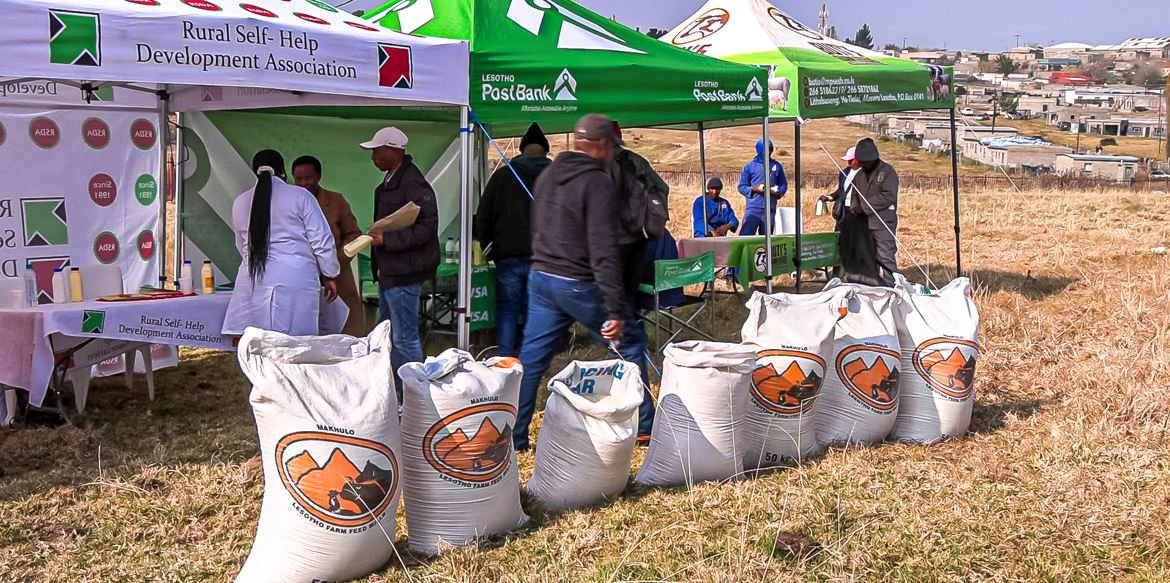
The workshop, organised by Makhulo Farm Feeds under Lesotho Flour Mills (LFM) in partnership with Lesotho Dairy Products and Lesotho Post Bank, reflected a growing recognition that increasing national milk production will depend not only on policy discussions but also on strengthening farmers’ technical and business capacity.
The training followed closely on the heels of the national dairy stakeholder consultation, where government, industry and development partners acknowledged that, despite decades of investment, Lesotho continues to produce far less milk than it consumes.
Feed shortages, poor genetics, inadequate technical support, and limited access to markets were identified as principal obstacles preventing the industry from reaching its full potential.
For Makhulo Farm Feeds, improving nutrition remains the quickest route to increasing milk production.
Addressing farmers, Teboho Khati said surveys conducted in the dairy sector show that many producers continue to record low milk yields, largely due to poor feeding practices rather than poor-quality animals alone.
“There was a survey conducted, and it shows that dairy producers produce very little, and this is also linked to the limited knowledge they have on feeding their cattle for better production,” Khati said.
He acknowledged that quality feed remains expensive for many smallholder farmers, creating a cycle in which poor nutrition leads to low production and low income, making it even harder for farmers to invest in better feed.
“We have noticed that farmers do not make enough money to afford quality feed for their animals, and this results in low milk production,” he said.
“We will train you on how to mix feed for your animals so that you can increase your production. Good production means good sales, and with good sales, you will be able to purchase high-quality feed.”
Rather than relying entirely on commercially prepared feed, farmers were introduced to practical feed-formulation techniques using locally available ingredients to reduce costs and improve animal nutrition.
Khati said collaboration between institutions would be critical if Lesotho hopes to reverse the decline in milk production.
“We will be joining hands with the Ministry of Agriculture, Lesotho Post Bank and RSDA to help farmers produce better and achieve greater success in dairy farming.”
Improving dairy breeds also emerged as a major priority.
Mampho Thulo of the Rural Self-Help Development Association (RSDA) said the organisation is returning to active dairy sector support after more than a decade, with renewed emphasis on improving herd genetics and farmer extension services.
“RSDA has been working with dairy farmers since 2005 until 2011, when we took a break. We are now back and hoping to be better than we were before and to do even more for farmers.”
She said the government has identified Jersey cattle as a strategic breed capable of improving productivity within Lesotho’s production systems.
“The Ministry of Agriculture has decided to introduce the Royal Jersey and bring it into focus within the Lesotho dairy sector.”
According to Thulo, the Africa Jersey Forum is preparing to work alongside Jersey South Africa to strengthen breeding programmes and improve access to quality bloodlines.
Improved genetics, she said, must go hand in hand with better management if farmers are to realise higher milk yields.
RSDA has already begun visiting dairy farms across the country to assess production systems and identify opportunities for improvement.
“We have visited farms in Mafeteng and will continue visiting others across the country.”
She also encouraged greater competition within the dairy industry, arguing that recognising top-performing farmers could motivate wider improvements across the sector.
“One thing we need to implement is competition within the sector so that everyone strives to do better.”
While knowledge improves productivity, access to finance determines whether farmers can apply that knowledge and Lebona Lleokaonke, representing Lesotho Post Bank, outlined several financial products designed specifically for agricultural enterprises.
“We have savings products, production loans, feed financing and livestock support packages intended to reduce barriers to expansion.”
He also highlighted the government’s subsidy programme, under which the Ministry of Agriculture contributes 30 per cent towards approved agricultural investments.
“The Ministry has decided to help farmers by contributing 30 per cent of the total cost of a product they want to purchase,” he said.
Beyond production volumes, Lesotho Dairy Products stressed that milk quality remains equally important.
Motselisi Thaele, Quality Controller at Lesotho Dairy Products, reminded farmers that poor hygiene can quickly undermine otherwise productive farms.
“Good hygiene is not only about looking clean. It is about making sure that when milking and handling cattle, you keep your nails trimmed, the containers you use are clean, and the place where you store the milk is free from contamination,” she said.
She also emphasised careful milk handling, proper filtration and adherence to veterinary withdrawal periods following treatment.
“Farmers need to be cautious about the medication they give their animals and should not supply milk from medicated animals during the withdrawal period.”
Milk produced during withdrawal periods, she warned, cannot be processed safely for human consumption, thus exposing both farmers and processors to financial losses.
Thaele urged farmers to make greater use of veterinary services, arguing that healthy animals remain the foundation of consistent milk production.