
Lesotho has officially confirmed an outbreak of Foot-and-Mouth Disease (FMD) in the northern part of the country, placing the livestock sector on high alert as the government simultaneously combat Lumpy Skin Disease.
The Ministry of Agriculture, Food Security and Nutrition, through the Department of Livestock, announced that the outbreak was reported on 18 February after veterinary authorities identified cattle exhibiting clinical signs consistent with FMD at a cattle post in Mahlase, Butha-Buthe, near the South African border.
In a statement, the Ministry confirmed that laboratory tests conducted on 17 cattle found that six tested positive for antibodies of Foot-and-Mouth Disease.
Additional samples have since been sent to a reference laboratory of the World Organisation for Animal Health in Botswana for virus typing and vaccine matching.
“The infected cattle have been placed under strict quarantine, and nearby cattle posts are also under precautionary quarantine and are being monitored through active surveillance to prevent further spread,” the statement said.
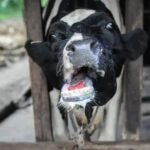
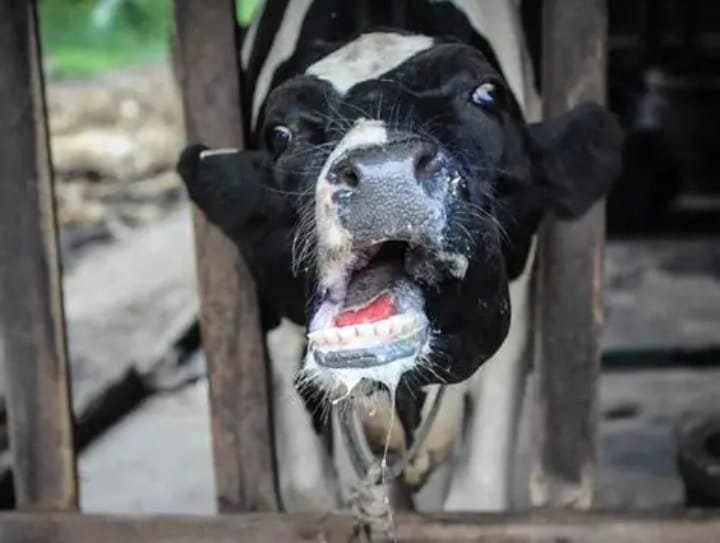
The ministry has urged livestock farmers, traders, and the public to remain vigilant and report any suspected symptoms, such as excessive salivation, lameness, or lesions in the mouth or on the hooves, to the nearest agriculture or veterinary office immediately.
Foot-and-Mouth Disease is a highly transmissible viral disease affecting cloven-hoofed animals such as cattle, sheep, goats, and pigs. Although it does not typically pose a direct threat to human health, outbreaks carry severe economic consequences due to livestock losses, movement restrictions, and trade bans.
In some communities, farmers report having already suffered losses consistent with FMD symptoms.
Phoofolo Phoofolo of Kolonyama Ha Manama stated that he lost some of his livestock two weeks before the official confirmation.
“I lost three cattle and eight sheep that had vesicles in the mouth, lameness, nasal discharge and excessive drooling. I did not report to anyone, I just used home remedies, and unfortunately, the animals died,” Phoofolo said.
Although his animals were not clinically tested, he believes the disease is already present in several communities.
“I wish other farmers would be responsible enough to report the disease to the Ministry and resist using home remedies,” he added.
Following the rise of FMD cases in South Africa, the Ministry convened stakeholders to discuss a national strategy in anticipation of a possible outbreak. A task team was established as part of the government’s strategic response plan; however, the Department of Livestock disclosed that the team is not yet operational, as the Ministry is still awaiting the appointment of a veterinary epidemiologist to lead it.
The department, however, emphasises that alignment with World Organisation for Animal Health measures remains a priority.
Lesotho’s geographic position, entirely surrounded by South Africa, increases its vulnerability to the disease.
Earlier this month, South Africa declared its nationwide FMD outbreak a “national disaster.”
According to South Africa’s Bureau for Food and Agricultural Policy, 24,400 FMD cases have been recorded. Across Southern Africa, the livestock sector is under mounting pressure as outbreaks disrupt livestock movement, threaten export markets and increase economic uncertainty for beef and dairy producers.
The Centre for Coordination of Agricultural Research and Development for Southern Africa (CCARDESA) reports confirmed FMD cases in South Africa, Zimbabwe, Botswana, Eswatini, Mozambique, and now Lesotho, highlighting the growing transboundary nature of the crisis.
South Africa remains the epicentre of the most extensive and economically significant outbreaks, with quarantine zones and movement restrictions in multiple provinces. Industry analysts warn that repeated outbreaks are costing the beef and dairy sectors billions of rands in lost exports, reduced production, and disease control costs.
Zimbabwe has confirmed outbreaks in Matabeleland South Province near the Botswana border, raising concerns about cross-border livestock movement.
Botswana has reported infections in the northeastern Masunga district, triggering quarantine measures and movement controls to protect its beef export markets.
Eswatini has suspended livestock sales in affected areas, warning of serious implications for rural livelihoods and national food security.
Mozambique has confirmed cases in Moamba district, Maputo Province, and has intensified surveillance amid concerns over informal livestock movement and cross-border transmission.
According to the World Organisation for Animal Health, the severity of FMD depends on the virus serotype, exposure dose, animal age and species, and immunity levels.
Morbidity can reach 100 per cent in susceptible populations. While mortality rates in adult animals are generally low (1–5 per cent), they can exceed 20 per cent in young calves, lambs, and piglets. The incubation period lasts from two to fourteen days.
Typical clinical signs include blisters or vesicles on the nose, tongue, lips, inside the mouth, between the toes, above the hooves, and on the teats. Ruptured blisters often result in severe lameness and a reluctance to move or eat. Other common symptoms include fever, depression, hypersalivation, loss of appetite, weight loss, and decreased milk production. Animals that are chronically affected may experience up to an 80 per cent reduction in milk yield.
Since FMD cannot be clinically distinguished from other vesicular diseases, laboratory confirmation is essential.
The Food and Agriculture Organization of the United Nations supports countries through a stepwise, risk-based approach tailored to their national contexts. The FAO facilitates vaccine procurement and distribution while promoting biosecurity measures and improved livestock management practices to mitigate risk.