




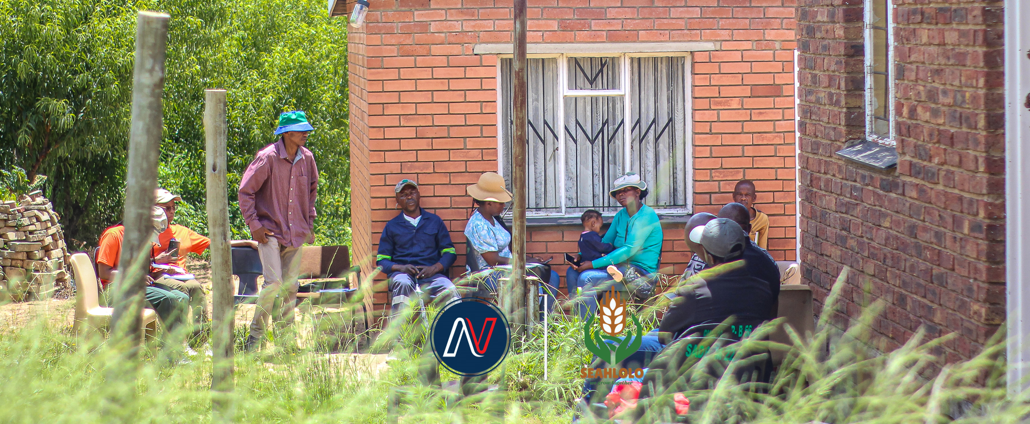
Berea farmers gathered at the Teya-Teyaneng Resource Centre for a consultative meeting with the Northern Agricultural Hub to improve production quality and increase market access. The discussion centred on guiding farmers through the entire agricultural value chain, from production to post-harvest handling and marketing.
The Northern Agricultural Hub is a government-established facility designed to aggregate, package, and market agricultural produce from northern districts, including Berea, Leribe, Butha-Buthe, and Mokhotlong. This meeting was part of the hub’s renewed outreach strategy following challenges encountered in its first year of operation.
Mahasela Nkoko, representing the Northern Agricultural Hub, acknowledged that the facility had faced significant setbacks, including considerable post-harvest losses. “One of the major challenges we experienced last year was that large volumes of Basotho produce rotted at the hub due to a lack of buyers,” Nkoko stated. He attributed this largely to poor product quality that did not meet market standards.
Nkoko explained that, in response to these losses, the hub decided to engage directly with farmers in their communities to better understand production challenges and clarify buyer expectations. “Customers demand high-quality produce, and retailers operate under strict terms and conditions,” he said. He noted that some buyers lacked confidence in locally produced crops, raising concerns about pesticide use and food safety practices. “They question whether the produce is safe for their customers,” he added.
The hub also highlighted production challenges related to seed quality and farming practices. Nkoko pointed out that the use of low-quality seeds for crops such as tomatoes and peppers, combined with open-field production, often resulted in discoloured or inconsistent produce. “Cabbages turning yellow or purple immediately repel buyers,” he remarked.
During the discussion, farmers raised questions and expressed concerns, prompting Nkoko to emphasise the importance of coordinated action. He stressed that the challenges in farming could only be addressed through collaboration between farmers, markets, and the Ministry of Agriculture and Food Security, particularly in managing production standards, strengthening value chains, regulating imports, and improving communication.
“As the hub, we plan to visit all resource centres and support farmers in selecting representatives,” Nkoko said. “These representatives will come together to form a strong leadership team focused on improving both the quantity and quality of agricultural produce.”
Farmers voiced their frustrations regarding systemic constraints. Steven Makhethe noted that while farmers worked hard, delayed government subsidies often compromised production quality. “Sometimes we lack information because regulatory bodies fail to communicate with us in a timely manner,” he said. Another farmer added that even when quality and quantity were achieved, access to large retailers remained difficult due to entrenched supplier relationships, resulting in produce losses.
Northern Agricultural Hub marketing manager Karabo Leshoele outlined three models through which the hub works with farmers. He explained that under one arrangement, produce is sold on agreed terms, and farmers are paid after sales. In another model, the hub purchases produce outright and pays farmers immediately. He also described wholesaling as an additional option.
One farmer, Marorisang, urged the hub to simplify engagement processes. “Farming is stressful and requires short, clear pathways,” she said, calling for practical and efficient systems that reduce administrative burdens.
Nkoko announced that the hub intends to take over packaging responsibilities to reduce farmers’ costs and logistical challenges. He stated that farmers who deliver produce to the hub would be paid within five working days. The hub is also exploring the establishment of collection centres in farming communities to ease transportation constraints.
Despite previous losses, including a cabbage surplus crisis, Nkoko encouraged farmers to continue producing vegetables in sufficient quantity and quality. He disclosed that between June and July 2025, the hub only sold 210 heads of cabbage out of a consignment of 5,693 heads of cabbage; the rest was lost to spoilage. The meeting concluded with discussions on the losses incurred by farmers and possible compensation mechanisms.
Lesotho established agricultural hubs to address structural challenges in the sector, promote sustainable growth, improve food security and stimulate economic development. The hubs support smallholder farmers through training, aggregation services and market linkages, while encouraging diversification into vegetables and fruits. They also promote the adoption of improved technologies and infrastructure under policy frameworks such as the Comprehensive National Agriculture Policy and the National Agricultural Investment Plan.
According to the Food and Agriculture Organisation, Lesotho imports significant volumes of food from South Africa daily. The El Niño-induced drought in early 2024 reduced maize production by an estimated 60 per cent below average, driving above-average maize imports during the 2024/25 marketing year. Monthly imports by December 2024 were approximately 30 per cent higher than the previous year.
The National Bureau of Statistics reported that annual inflation stood at 3.7 per cent in December 2024, down from 7.2 per cent a year earlier, while food inflation was estimated at 5.6 per cent. However, maize meal prices increased by 9.3 per cent year-on-year, reflecting record-high white maize prices in South Africa.
Poor harvests, elevated food prices and limited income opportunities continue to strain food access, particularly among vulnerable households. According to the Integrated Food Security Phase Classification analysis released in February 2025, approximately 335,000 people—about 22 per cent of Lesotho’s population—were experiencing acute food insecurity at crisis levels and above, a situation expected to persist until the main harvest period.