





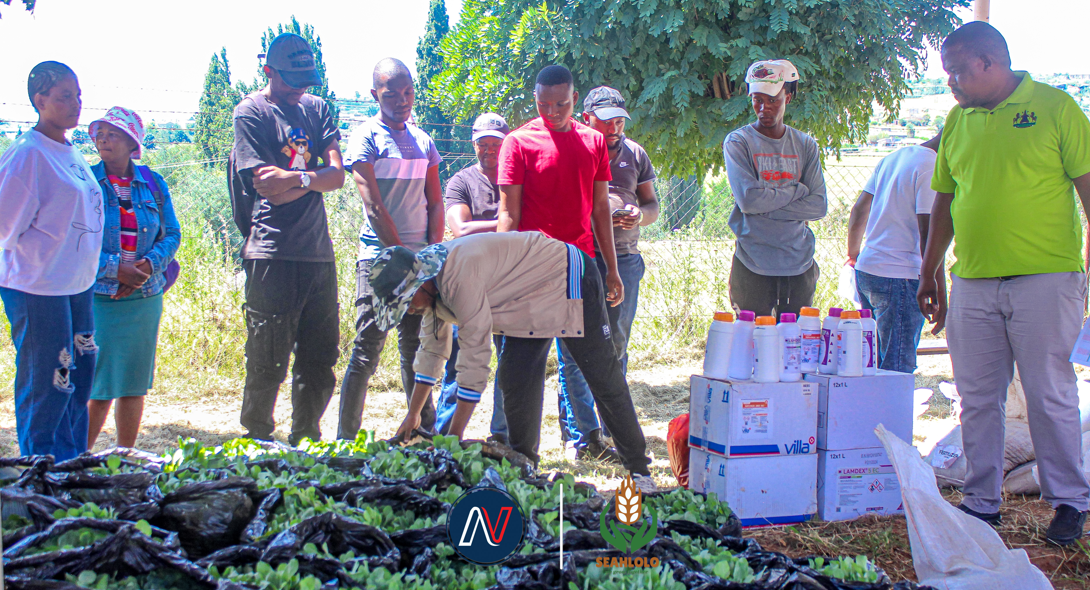
MASERU – In a decisive effort to combat youth unemployment and enhance farming productivity, the Ministry of Agriculture and Food Security has provided agricultural inputs to 40 more young Basotho farmers through the Smallholder Agriculture Development Project II (SADP II) at the Agricultural District Office in Maseru.
With the first group receiving inputs in November, this initiative is part of a national programme aiming to support 1,000 youth across the country.
Under the Smallholder Agriculture Development Project II (SADP II), this effort seeks to tackle Lesotho’s rising youth unemployment while enhancing agricultural productivity.
This initiative further aligns with the ministry’s commitment to support youth by 2025 through its Youth Mentorship Programme, which aims to nurture the next generation of farmers and entrepreneurs.
During the distribution event, extension officer Lechesa Nthulenyane urged the youth to make the most of the support.
“Go home and transform your surroundings. Care for the land, the soil, vegetables and livestock remembering that farming is the backbone of Lesotho’s economy. Make it your source of livelihood,” he encouraged.
Among the recipients, 25 young vegetable farmers each received 2,000 seedlings, two bags of fertiliser and two bottles of pesticide.
Puleng Ntsela, from Ha Ntsi, expressed her gratitude to the ministry for its ongoing support.
“After graduating from Lesotho Agricultural College in 2023, I returned home to face high unemployment. I started planting seedlings to sustain myself and today, with this support, I can expand my farming activities, though water scarcity remains a challenge,” she shared.
Another recipient, a trained nurse, described how he turned to farming after struggling to find work in his field.
“I started with a small plot to supply vegetables to my classmates and over time I expanded to serve my community and local shops. Farming has truly become my livelihood,” he noted, encouraging his peers to seize the opportunities around them.
All participants underwent training that focused on best practices for quality produce, sustainable farming methods, business skills and marketing strategies prior to receiving inputs.
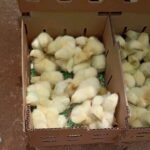
Poultry farmers also benefited; 15 youth received 200 broiler chickens each, along with 14 bags of chicken feed sufficient to sustain their flocks until sale.
Tiisetso Lepitikoe, who has been rearing chickens since 2023, shared the challenges she has faced with disease outbreaks and market access.
“After pausing my business for seven months, I lost many customers,” she said.
She indicated that access to a licensed abattoir remains a major hurdle, pleading to the government to establish a central abattoir to support Basotho farmers.
The ministry plans to replicate this initiative in other districts, with participants in Maseru also benefiting from site visits for progress monitoring.
According to Nthulenyane, the programme addresses high youth unemployment and rural poverty, while promoting agricultural entrepreneurship, climate resilience, and domestic food production.
“This Youth Mentorship Programme not only provides immediate support but also aims to create a network of youth-led agribusinesses, linking them to national and regional markets and opening long-term employment and export opportunities,” he explained.
He added, “As Lesotho grapples with the dual challenges of climate change and global food insecurity, this initiative represents a forward-looking policy approach that empowers youth and strengthens the country’s agricultural sector.”
The Youth-to-1,000 pledge, announced in 2025, has become one of the Ministry’s most ambitious initiatives. It is focused not only on input distribution but also on the SADP II Mentorship Programme, which pairs young farmers with experienced producers who guide them in climate-smart agriculture, business planning, and commercialisation. The Ministry believes that equipping youth with both resources and knowledge is essential for transforming subsistence farming into profitable agribusiness.
Globally, youth farming programmes have demonstrated a significant impact. Developed jointly by FAO and UNIDO, in collaboration with the African Union Commission, the Opportunities for Youth in Africa (OYA) programme accelerates youth employment in agribusiness across the continent. Similarly, FAO’s Junior Farmer Field and Life Schools (JFFLS) equip vulnerable rural youth with agricultural, business, and life skills, enabling them to contribute meaningfully to their communities. To date, over 25,000 young women and men across 20 countries have benefited from this approach.
