



Lesotho has taken a decisive step toward reforming its fisheries and aquaculture sector with the validation of the Lesotho Fisheries and Aquaculture Policy (2025–2035), the country’s first integrated governance framework for the industry.
This policy aims to reposition fisheries and aquaculture as strategic contributors to food security, nutrition, employment and economic diversification, moving the sector beyond its historically fragmented and informal state.
Despite the country’s extensive water resources, including the Senqu River system, high-altitude reservoirs such as Katse and Mohale Dams, and numerous small inland water bodies, fisheries and aquaculture have remained underdeveloped.
Capture fisheries largely operate informally under outdated regulatory frameworks, while aquaculture production is dominated by a small number of commercial trout farms serving export markets. As a result, national per-capita fish consumption remains below 5 kg, significantly lower than the SADC average of 11 kg, highlighting the urgent need for a coherent production and governance strategy.
The validated policy seeks to address these structural gaps by introducing a coordinated, modern governance framework anchored in sustainability, inclusivity, and evidence-based planning. It prioritises food and nutrition security, ecosystem-based management, research and data systems, climate resilience, gender and youth inclusion and responsible investment. One of its key targets is to increase national fish production to 8,000 metric tonnes by 2035, with a stronger focus on domestic supply.
At the heart of the policy is governance reform.
The framework proposes modernising outdated legislation, most notably the Freshwater Fish Proclamation of 1951 and strengthening institutional coordination, compliance, monitoring and enforcement systems. It also facilitates the formalisation of community-based fisheries and aquaculture, enabling small-scale producers to operate in a regulated and supportive environment.
The policy further introduces ecosystem-based management approaches to address environmental risks such as water pollution, habitat degradation and climate-related shocks. It promotes climate-smart aquaculture practices, biodiversity protection and pollution control measures to ensure the long-term sustainability of aquatic resources.
Recognising persistent inequality in the sector, the policy places a strong emphasis on gender and youth integration, calling for targeted capacity-building programmes, improved access to quality seed and feed, strengthened extension services and better market linkages for small-scale and rural producers. Food safety, aquatic animal health and value chain development are also central pillars aimed at improving consumer confidence and expanding market opportunities.
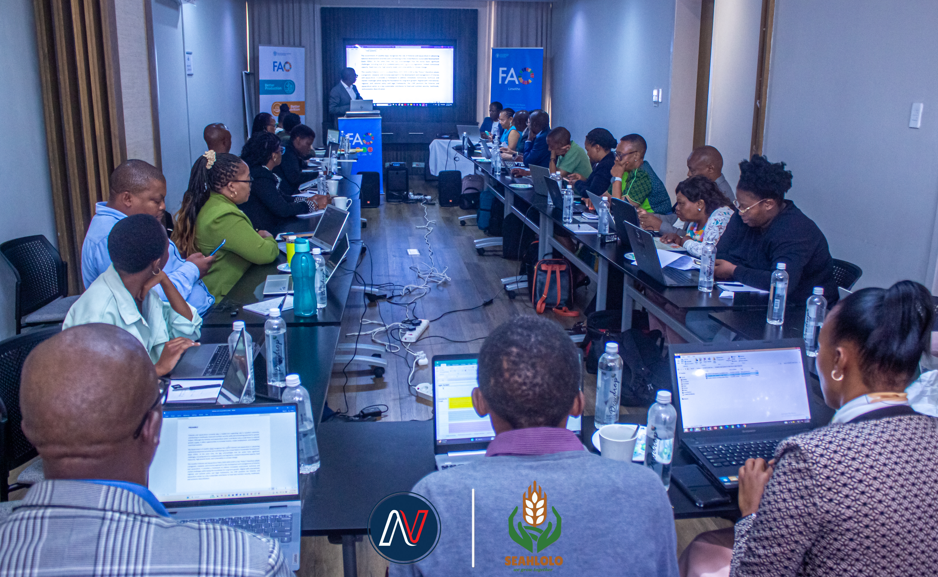
Presenting the policy roadmap, FAO Senior Aquaculture Officer Dr Ana Menezes outlined the evidence-driven process behind the framework, which included a national aquaculture baseline study, stakeholder consultations and multiple technical reviews. This process ensured the policy addressed governance weaknesses, ecological constraints and investment barriers identified across the sector.
FAO Assistant Representative Mokitinyana Nthimo stated that the policy represents a shift from fragmented interventions towards a unified development approach.
“FAO’s role in this policy is capacity building and technical support. We are encouraged by the progress made and confident that this framework will strengthen the entire fisheries and aquaculture value chain,” he said.
Minister of Agriculture, Food Security and Nutrition, Hon. Thabo Mofosi, noted that the policy marks a transition from viewing fisheries as a recreational activity to recognising it as a productive economic and food system sector aligned with national development priorities.
Once adopted, the policy is expected to modernise fisheries governance, strengthen research and data systems, promote responsible public and private investment, and significantly expand production in both aquaculture and capture fisheries.