






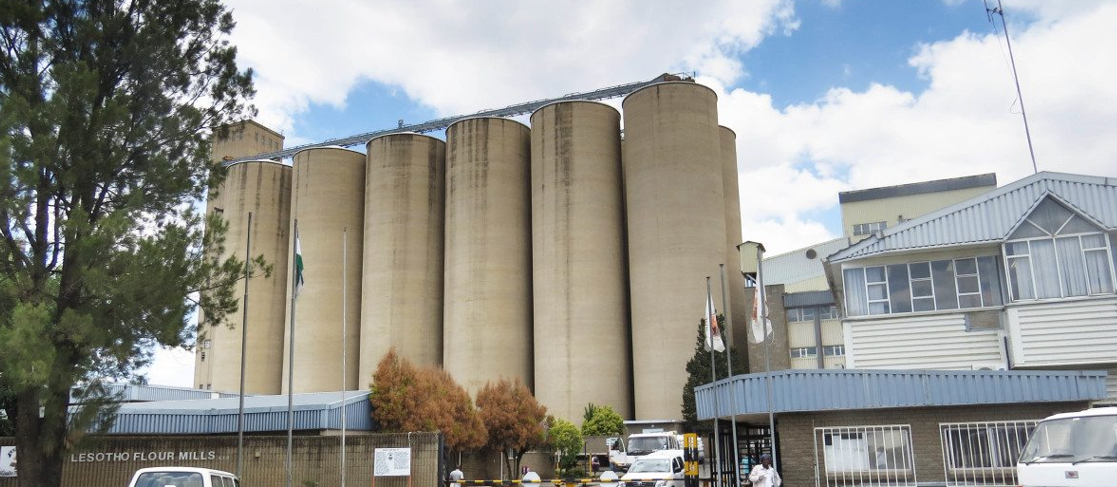
Lesotho farmers are set to benefit from renewed hope as Lesotho Flour Mills (LFM) introduces a new grain procurement model that allows both large-scale and smallholder producers to sell maize and wheat in any quantity.
This initiative is expected to stimulate local production, ease market access challenges and integrate small-scale farmers into the formal grain economy.
The announcement was made during a joint meeting between the Southern Mountains Association for Rural Transformation and Development (SMARTD) and LFM to create sustainable market opportunities for Basotho farmers through guaranteed grain purchases.
This development comes at a critical time for the country’s grain sector, which continues to face severe production challenges due to climate variability.
Recurring droughts and floods linked to El Niño and La Niña have significantly reduced yields. During the 2023/24 season, local maize production declined by 52 per cent, forcing Lesotho to rely heavily on imports from South Africa. However, regional drought conditions have also strained South African supply, driving up import and retail prices and threatening national food security.
Strengthening local grain production has therefore become a strategic priority. By sourcing grain domestically, Lesotho can reduce its dependence on volatile imports, retain value within local communities, and encourage farmers, particularly smallholders, to expand production beyond subsistence levels. LFM’s commitment to buying directly from Basotho farmers is viewed as a key step toward building a resilient, self-sustaining food system capable of withstanding global supply shocks.
Speaking at the meeting, LFM Quality Assurance Manager Dingaan Maan stated that the company is committed to quality control across the entire grain value chain, from planting and harvesting to processing.
“We want the best quality control of grain from all sides, which is why we follow the entire production chain to ensure the final product meets high standards,” Maan said.
He added that LFM’s approach goes beyond procurement, with the company collaborating with the Government of Lesotho, the World Food Programme (WFP), and the Food and Agriculture Organization (FAO) to provide farmer training on crop selection, planting schedules, and improved production practices.
LFM outlined several key objectives under the new model, including engaging farmers with clear quality standards, increasing participation in formal markets and supporting the transition from subsistence farming to commercial production. These measures aim to strengthen beneficiation along the grain value chain and generate broader economic impact.
“This initiative will create jobs, boost economic growth and open new opportunities. When farmers work with LFM, we buy their grain regardless of quantity, and we visit their farms to guide proper grain production,” Maan said.
He noted that maize and wheat currently contribute only about 10 per cent of the local grain supply, urging farmers to scale up production not only for household consumption but also for sale. To ease market access, LFM announced a transport subsidy of M50 per tonne for Basotho farmers supplying grain.
Maize Grading Requirements
LFM also briefed farmers on maize grading standards, which include assessment of:
Moisture content
Hectolitre mass
Screenings
Foreign matter
Noxious seeds
Total damage
Kernels with other coloration
Picked kernels
Additional grading considerations include:
Field and storage fungi
Frost- and heat-damaged kernels
Other grains and unthreshed ears
Gravel, stones, turf, and glass
Combined deviations (D+E+G+I)
During the session, Nts’ekhe Tlaba trained farmers in food preservation techniques, from production through processing, emphasising the importance of ongoing farmer education.
He noted that regular workshops are held for youth aged 21–24 to improve nutrition outcomes and reduce malnutrition nationwide.
“Boriba calls on young people to take action, advocate for improved nutrition and ensure that no one, especially marginalised communities and youth, is left behind,” he said.
Farmers welcomed the new procurement model with optimism.
Masenate Adoro, a farmer from Quthing, stated that the initiative marks a turning point for rural producers.
“LFM has given us a great opportunity. We used to farm mainly for consumption, but now, with a guaranteed market, we will produce more. Before, our biggest challenge was producing without a market. This initiative has changed that,” she said.
She added that expert support on planting calendars and grading requirements would help farmers improve yields and meet quality standards.