



A Berea farmer has been left devastated after an unknown wild predator slaughtered 15 sheep in a single night, sending shockwaves through the Ha Tebeli community and raising concerns about the growing human–wildlife conflict in rural Lesotho.
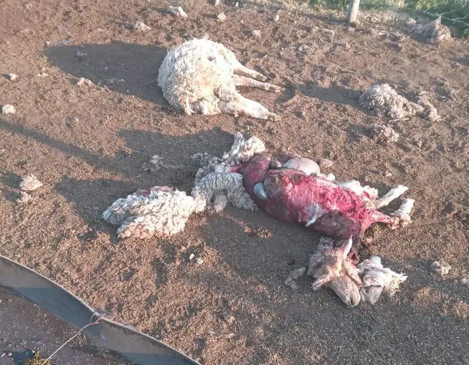
In September, Mokhethi Molefi, a small-scale livestock farmer, woke up to a scene of horror when he went to check his kraal in the early hours of the morning. He found blood-soaked ground, injured animals and lifeless sheep scattered across what he believed was a secure, fenced enclosure.
“I wake up every morning to check my animals as usual. That morning, when I entered the kraal, I could not believe what I saw. My sheep were lying down, some dead, some badly injured,” Molefi recalled.
Of the 15 sheep attacked, seven were killed instantly, while eight were left severely injured. Unable to save them, Molefi made the painful decision to slaughter the injured sheep to prevent further suffering.
The incident has instilled fear across Ha Tebeli village, an area surrounded by thick vegetation, where residents say they have never experienced attacks of this nature before. Villagers were particularly alarmed by the silence of the night during which the attack occurred.
“There were no dogs barking, no strange sounds. It was completely silent. We only discovered the damage in the morning,” Molefi said, puzzled by the predator’s stealth.
The identity of the animal responsible remains unknown, heightening anxiety among farmers, who now fear they could be next.
“If we knew what animal this was, we could at least prepare ourselves. But because it is unknown, fear continues to grow,” Molefi said.
The loss has dealt a heavy financial and emotional blow.
Molefi estimates his losses at M18,000, as he usually sells sheep at M1,200 each. For him, livestock is not just an asset but his sole source of income.
“Marino rearing is how I support my family with education, health and everything. Losing them like this weakens my ability to provide,” he said.
Reflecting on the incident, Molefi highlighted the importance of livestock insurance, admitting that although he was aware of such services, he had delayed taking action.
“I always planned to insure my animals, but I kept postponing it. Now I regret it,” he said.
The village chief, Sekoai Tebeli, confirmed that livestock attacks have been reported recently in the area.
“This is not an isolated incident. Another farmer recently reported that her ducks were killed by unknown animals. As a community, we must remain alert,” the chief said.
He added that villagers are considering organising a coordinated search to identify possible predator habitats and signs of wildlife movement near homesteads.
Molefi said he felt helpless after the attack, unsure where to formally report the case, although an agricultural extension officer later visited to offer support.
“I wish Lesotho had a dedicated office or response team to assist farmers during threats to crops and livestock,” he said.
The incident has left Molefi battling fear and uncertainty. He has since relocated his remaining sheep to the highlands under the care of herd boys, yet the anxiety persists.
“Even after moving them, every night I still fear that the predator will finish the few I have left,” he said.
He has called on the Ministry of Agriculture and Food Security to assist farmers with practical solutions rather than financial handouts.
“Our livelihoods are at risk. Farmers support the economy. We are not asking for handouts; just guidance on how to protect our animals,” he appealed.
Molefi’s case reflects a broader challenge facing rural communities as human–wildlife conflict intensifies. According to the Lesotho Tourism Development Corporation (LTDC), wildlife conservation remains critical to tourism development, but incidents involving stray wildlife must be properly managed.
LTDC has urged the public to report stray wild animals to the Department of Environment, which is responsible for wildlife conservation and conflict management.
FAO reports note that the expansion of human settlements, overgrazing, climate change, and habitat loss are pushing wild animals closer to farming communities. They indicate that declining natural prey due to drought and ecological disruption forces carnivores to turn to domestic animals to survive.
Similar challenges are observed globally. In parts of the United States and Canada, coyotes prey on sheep and goats; in Europe, wolves and bears attack livestock; while in parts of Africa and the Middle East, jackals and wild dogs pose persistent threats to farmers.
The Ha Tebeli incident may signal a localised ecological imbalance, where disrupted natural food systems are driving predators into villages. For farmers like Molefi, the situation underscores the urgent need for coordinated government response, farmer education, improved livestock protection infrastructure and wildlife management strategies.
“Wild animals are not just a threat to our livestock; they are becoming a threat to us,” Molefi warned.