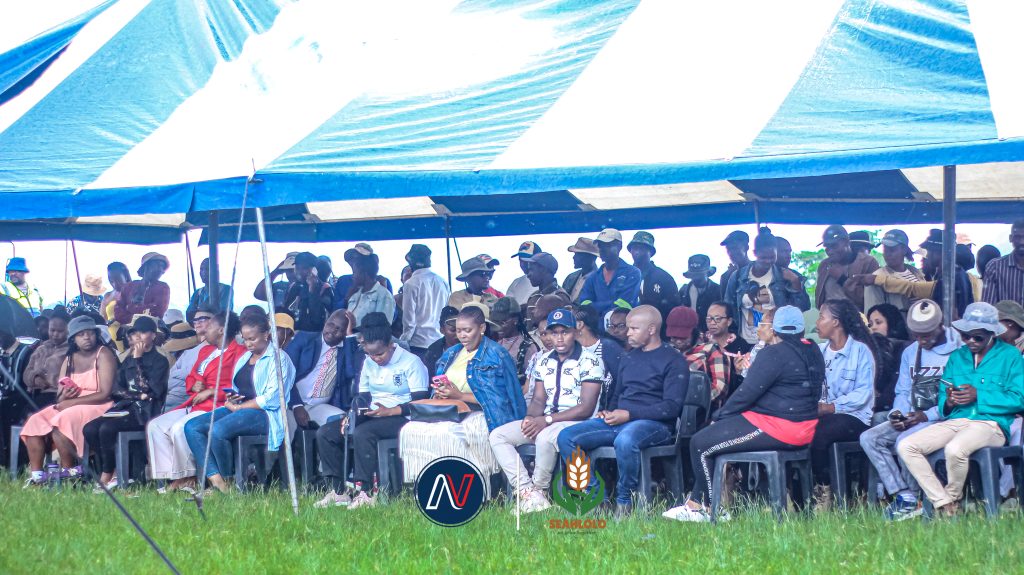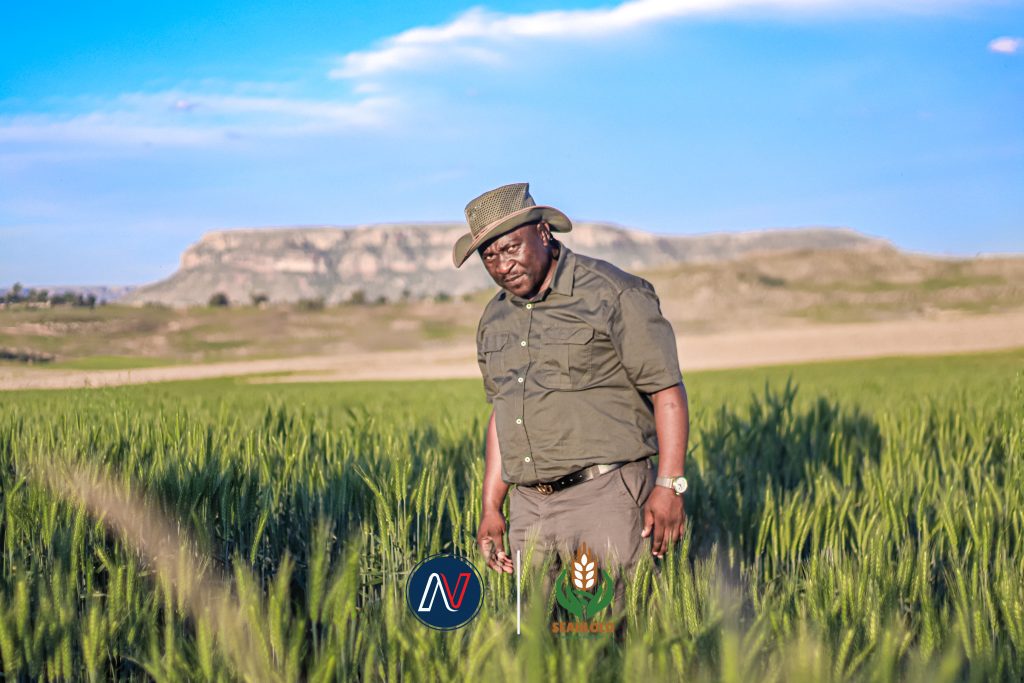



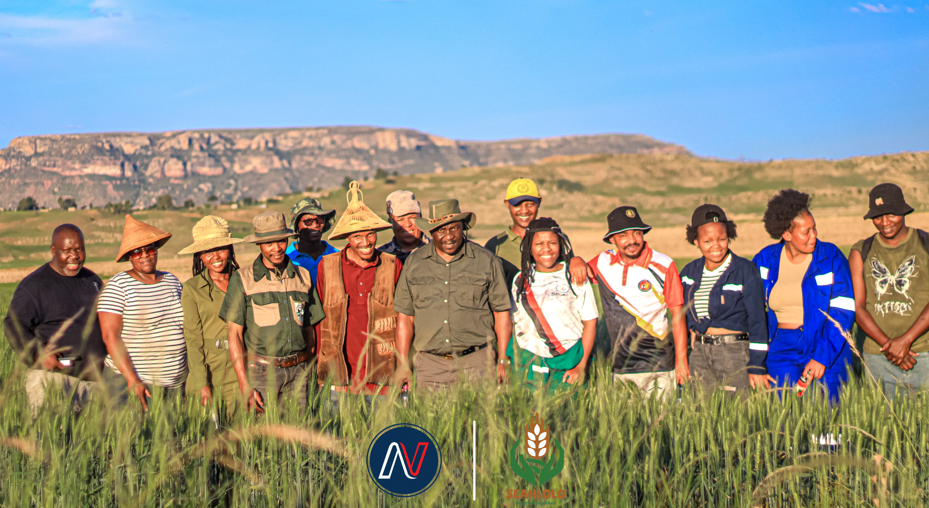
The cool morning air of Thabana Morena held a subtle promise as young farmers stepped off their vehicles and onto the expansive lands of Hon. Selibe Mochoboroane’s farm in Mafeteng.
What awaited them was not just a tour, but an immersion into a narrative of resilience, transformation and a deep commitment to agriculture that has turned previously idle land into one of the district’s finest examples of block and commercial production.
This visit, organised by Farmers Pitso as part of its mission to expose emerging farmers to excellence, followed Mochoboroane’s recent honour from His Majesty King Letsie III at the September Farmers Gala. While attendees anticipated fields and livestock, few expected the powerful story behind them.
From the moment he welcomed the visitors, the Minister of Health, who is also a dedicated commercial farmer, spoke not as a politician but as a farmer who understands the sting of failure, the patience required to rebuild, and the satisfaction of witnessing crops thrive. His story began with a simple truth: nothing about his farming journey came easily.
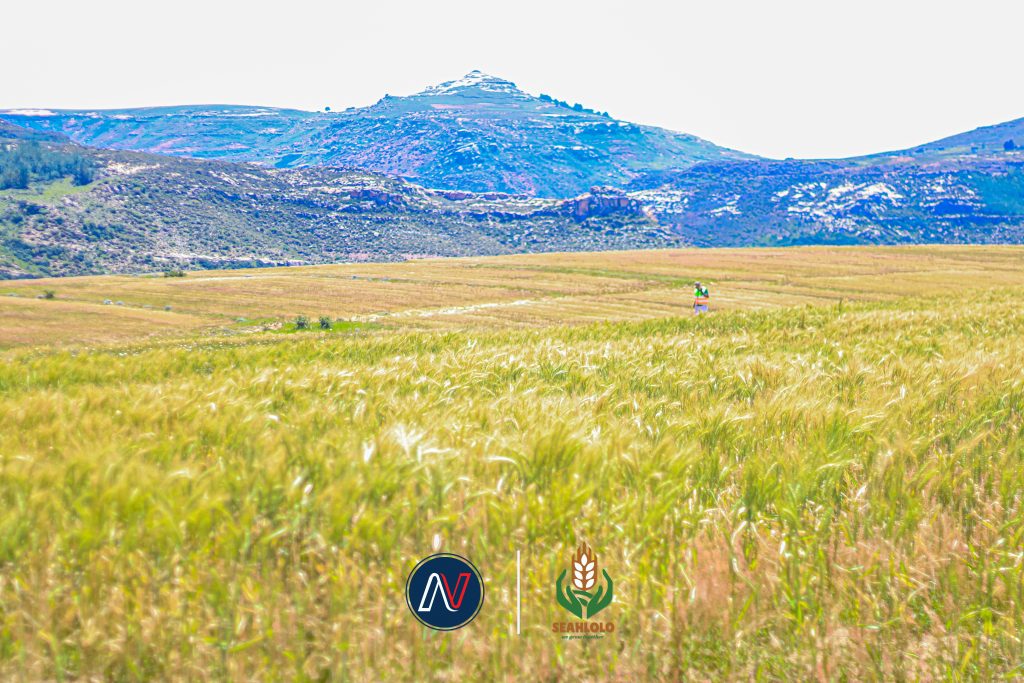
As they walked through the fields, he shared how most of the land they admired had been abandoned grazing areas for years. For years, he narrated that the fields were parched from neglect, demanding back-breaking effort to restore their agricultural viability. “Most of these fields had been left uncultivated for years and had lost their health to produce anything fruitful,” he stated, gesturing towards the now-lush wheat.
“I had to start from scratch with testing and getting the soil ready. It was challenging, but I knew revitalising it for farming was essential for both myself and the landowners.”
Mochoboroane primarily farms wheat and also raises sheep, cattle, and pigs, emphasising that crop and livestock farming are interdependent.
Today, over a thousand people rely on his farm for income year-round, allowing him to balance his responsibilities as both minister and farmer. When he describes his routine of walking the fields, checking for pests, monitoring rainfall, and inspecting animals, he speaks with quiet pride, his heart rooted in the soil.
He currently cultivates a total of 410 hectares through block farming, noting that he secured some land through agreements with chiefs and individual owners across Thabana Morena. He began this approach five years ago, and as he recounted his journey, applause erupted periodically from the young visitors, awed that someone who started with such challenging conditions now cultivates wheat at a scale many believed impossible in Mafeteng, long labelled “a desert district.”
However, the tour was not merely a celebration of success. Mochoboroane insisted on sharing his failures with equal candour.
He recounted the year he planted beans in mid-February, a risky decision that yielded no harvest and cost him income.
“That was my biggest failure,” he confessed to the group.
“I tell people that crop choice and timing matter the most when one is looking for yield. When you plant at the wrong time, you plant failure and a guaranteed loss. I only got confirmation of this philosophy after that devastating loss.”
His openness resonated deeply with the young farmers, many of whom have faced their own discouraging seasons.
For them, witnessing a national figure candidly discuss losing entire fields made the journey of farming feel communal rather than isolating.
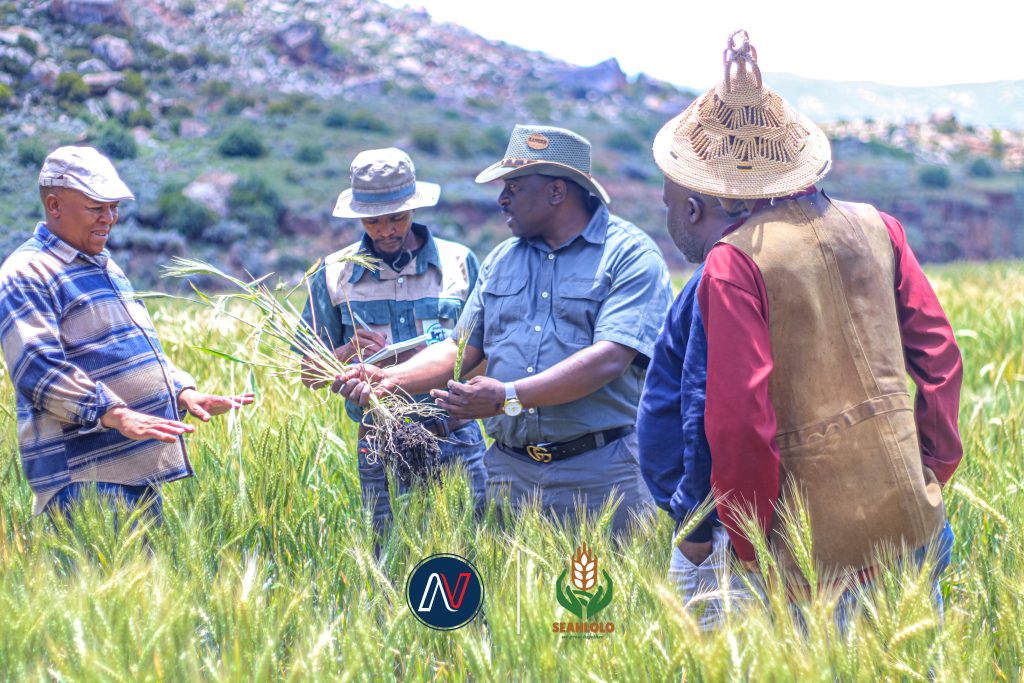
As they ventured deeper into the wheat blocks, differences in crop density and colour became apparent. He explained how soil type, fertiliser placement, and management decisions impact output.
In Samaria, where he had applied fertiliser twice, the wheat stood taller and greener than in other areas.
“This is the place I worked hardest. I expect a better yield here than anywhere else I have ploughed,” he remarked, hope glimmering in his eyes.
The group frequently paused to ask questions about subsidies, climate change, and the reasons behind the low wheat production in Lesotho.
Mochoboroane explained that winter wheat offers farmers a chance to access subsidies without competing with those who only farm in summer.
“Basotho have a stereotype that farming is only done in summer, and that is why we crowd subsidies points all at the same time, a phenomenon that always results in chaos,” he noted.
Only about 10 per cent of farmers plough in winter, he added, leaving much untapped potential in both input acquisition and market positioning.
He criticised the lack of agricultural knowledge, noting that many farmers grow wheat solely to maintain soil health, unaware of the crop’s full economic potential. He noted wheat remains Lesotho’s second staple food, yet the country imports most of what it consumes.
He challenged the Farmers Pitso organisers to persuade at least ten commercial farmers to produce wheat in the next season to help move the country towards sustainability, “Watch how quickly we stop relying on South Africa,” he asserted.
A moment of reflection came when he addressed climate change as a major threat to Lesotho’s agricultural yields. Despite producing at a commercial scale, he relies entirely on dryland methods, relying on rainfall rather than irrigation.
“Climate change is our biggest enemy, and its unpredictability continues to make things worse. Sometimes, rain is delayed, and the quantity and quality of the crop suffer. When wheat does not meet the market’s required quality, protein, moisture, and weight, it becomes ungraded. Sometimes it comes excessively and still affects the quality.”
Still, he encouraged the farmers to adapt.
“We live in a new climate era, and you must learn to adapt, innovate and use mitigation to achieve major production yield. You don’t need a degree to learn. You can visit farms, watch videos, or read. Information is everywhere.”
The tour extended well into the day, leaving participants both fatigued and invigorated. They walked through field after field until the wheat, changing colour with the shifting light, seemed to dance before them. It was here that several farmers paused in quiet awe, realising that the land they had long considered infertile could, in the hands of dedicated individuals, realise its potential.
Sitting beneath the trees for a simple lunch of pap, vegetables, and meat, one farmer remarked softly, “Eating here with you, Honourable, made everything real. This moment will stay with me forever.” Another added, “I never imagined wheat farming in Mafeteng could be this successful.” The group laughed, reflecting on how their assumptions had crumbled throughout the day.
The tour continued through the livestock section.
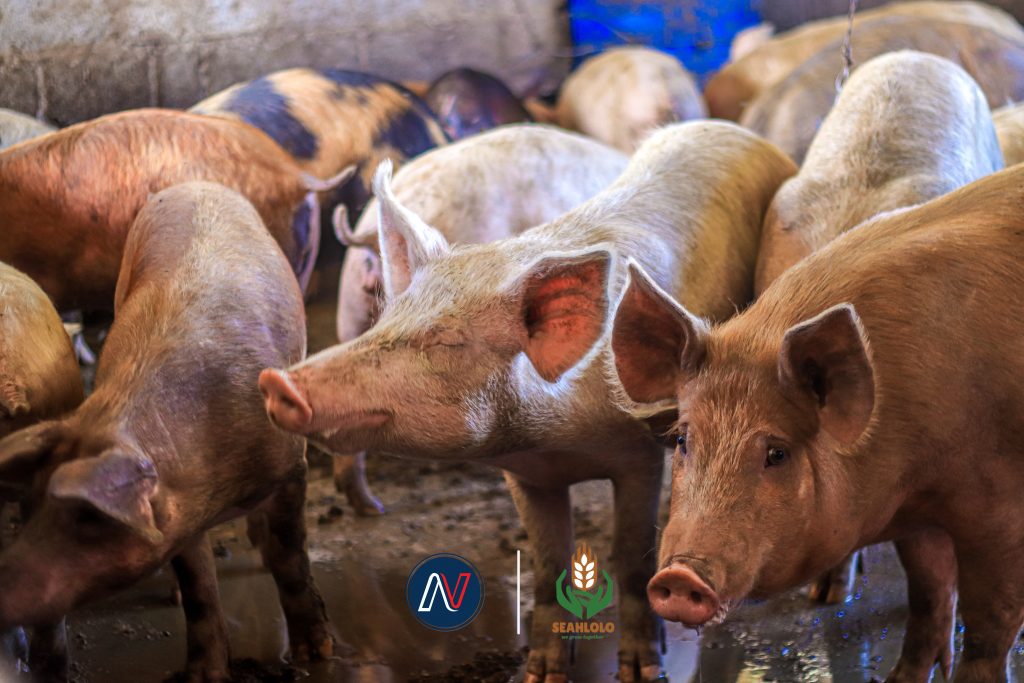
Mochoboroane’s pigs filled multiple sheds, organised by size and purpose. The farmers were astonished by their condition.
He explained how he grinds his own pig feed, mixing maize, pig grower concentrate, and premix to avoid the high costs of purchased feed. He also grows maize specifically for his pigs.
The sheep and cattle areas were equally impressive. He plans to increase his rams for wool production and is preparing to enter high-quality beef production, he shared.
He demonstrated how he uses peas, beans, and crop residues to create nutrient-rich feed for cattle. He even owns a milling machine for grinding feed components.
However, he also shared a humbling chapter, his failed dairy project. He once kept several dairy cows but lost significant money because the milk spoiled during transport to Maseru. “I lost a lot of money, but because I love agriculture, I keep going.” Today, he maintains only one dairy cow to provide milk for the workers residing on the farm.
Before concluding the visit, he urged the farmers to collaborate.
“Lesotho can be self-sufficient in food production if we work hand in hand,” he said. He encouraged them to apply for tractors to expand their operations and embrace large-scale production.
As the sun began to set behind the wheat fields, the farmers gathered to express their gratitude. Some were exhausted, some emotional, but all were inspired. They shook his hand, conveyed their thanks, and prepared to return home not just with new knowledge, but with renewed hope.