
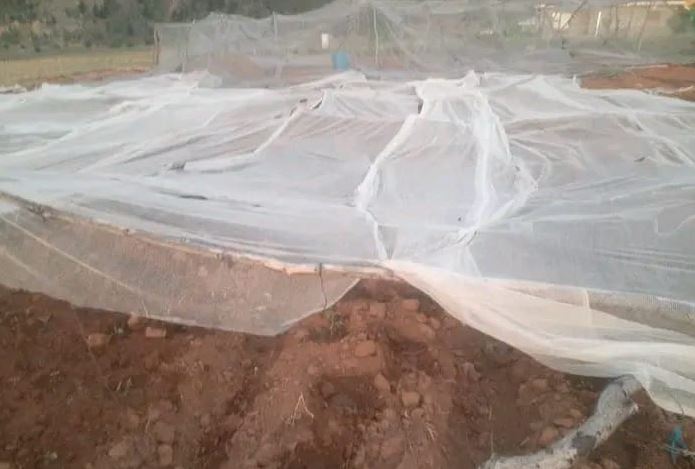
Sejakhosi Lefisa, a young and determined farmer from Mabita Finest Farm in Thabana Mokhele, Butha-Buthe, recently confronted the harsh reality of climate change when strong winds tore down the shade nets protecting his tomato crops.
At 1,600 metres above sea level, Butha-Buthe’s northern district is no stranger to weather extremes, but this incident left Lefisa grappling with both financial and emotional losses.
Mabita Finest Farm had planted 2,350 tomato plants, carefully shielded under 50 by 40-metre shade nets designed to protect against the sun, pests, and diseases; however, a sudden wind brought all those protective measures crashing down, leaving the crops exposed and vulnerable.
“That afternoon after returning home and resting, I was woken up by my neighbour calling me to see the damage,” Lefisa recounted.
Upon arriving at his farm, Lefisa felt a mix of worry, disbelief and exhaustion.
“Finding the shade nets I worked so hard to set up lying over my tomatoes was devastating. The energy required to salvage the situation felt overwhelming, and the potential losses weighed heavily,” he described, noting that while he had experienced wind damage before, this incident brought a new level of personal and financial strain.
“It was the hardest day in my four years of farming journey,” he admitted.
Lefisa believes the increasing severity of weather events is a direct consequence of climate change, saying, “The weather patterns show our climate is shifting before our eyes. We need to adapt, but some forces remain beyond our control,” he said, reflecting on humanity’s relationship with nature, noting that environmental degradation might be contributing to these extreme events.
“It is our duty to care for nature so it can sustain us in return,” he stated.
Following the loss, he noted he had to plan quickly to replace the shade nets and protect the remaining tomatoes, a costly and labour-intensive task.
“I lost about 70 boxes of tomatoes and 35 seedlings, which is a serious blow to my business,” he said.
Beyond the immediate damage, Lefisa said the winds carried diseases and pests that threatened the crops further, forcing him to spend additional hours pruning and safeguarding the plants.
He stressed the importance of insurance for small-scale farmers, who often face financial constraints that limit their ability to implement adaptive measures, such as strong windbreaks.
“Farmers are at risk because we lack the resources to combat the effects of climate change, and it is important we start having conversations about insurance access for small-scale farmers,” he explained.
He recalled that farming in the past was more predictable with ancestral knowledge guiding planting, harvesting and coping with seasonal winds. Today, unpredictable rainfall, stronger winds and extreme heat have made farming feel like a gamble.
Lefisa comments on the current La Niña, which has brought excessive rainfall, calling it an added challenge.
He explained that continuous rain can waterlog soils, stunt tomato growth, and increase the likelihood of plant diseases such as leaf mould.
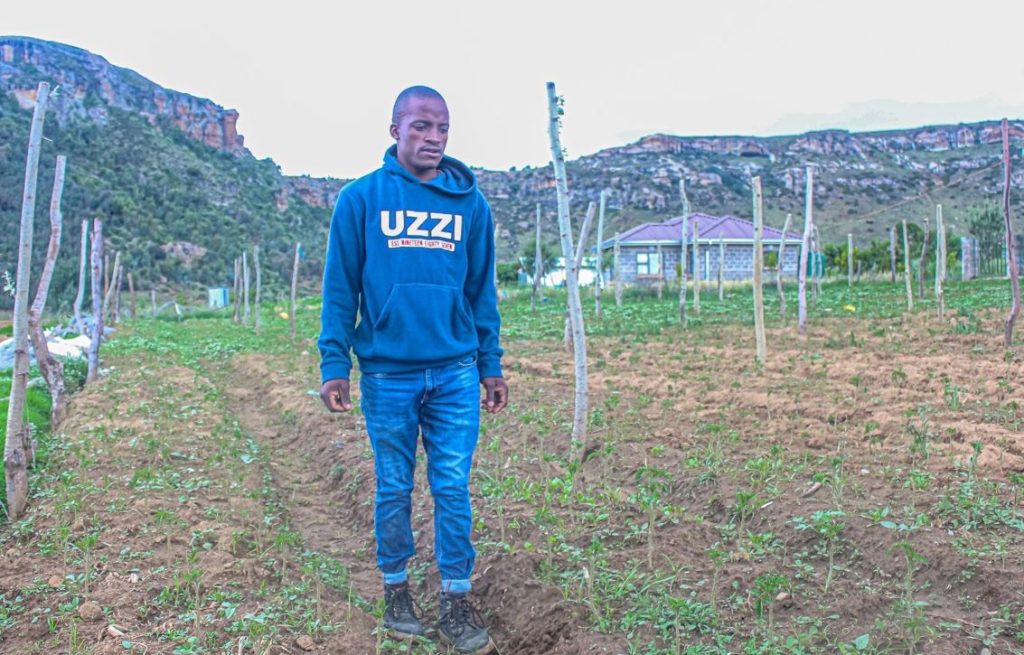
“These weather disruptions affect supply and market prices, particularly during the dry season when vegetable demand rises. Our goal at Mabita Finest Farm is to produce enough vegetables throughout the year to keep prices affordable for local customers, but we still need to find a solution for such disasters,” he said.
Lefisa also highlighted the need for targeted support; “Government assistance should be directed toward farmers who are truly passionate and actively producing if indeed they want to achieve a win in food sustainability,” he insisted.
The district administrator of Butha-Buthe, Tsepa Chaba, confirmed that climate change has affected many local crop farmers.
“Unpredictable rainfall, strong winds and floods threaten harvesting seasons, making it difficult for farmers to maintain consistent yields for crops and vegetable farmers, while livestock farmers have been relatively unaffected due to abundant grazing,” Chaba said.
The impact of climate change on agriculture is not unique to Lesotho. Global shifts, such as rising temperatures, altered rainfall patterns and more frequent extreme weather events, including heatwaves, floods, and droughts, are challenging farmers to maintain predictable yields.
Studies suggest crop yields could fall by up to 20 per cent, and water shortages are projected to worsen as rainfall declines and evaporation rates increase. Maize and mohair production in Lesotho have already been affected.
Experts advocate for sustainable farming practices to mitigate these effects. Strategies such as improving soil health, efficient water use, promoting agroforestry, and cultivating climate-resilient crop varieties can help farmers adapt to changing conditions. Investments in water-efficient irrigation systems, native crops, and innovative technologies can maximise productivity while reducing environmental impacts.
Lefisa’s journey into farming began after completing his LGCSE in 2020. His passion for agriculture led him to establish Mabita Finest Farm in 2022, which he later registered as a commercial entity in November 2023. Initially focused on vegetables, melons, roots, and tubers, the farm has expanded to include poultry, maize, and sorghum. By adopting smart agricultural practices, Lefisa has grown from planting a small 15 by 10-metre plot with M20 seeds to producing thousands of cabbages and potatoes on 3–5 acres, with plans for larger shade net structures in the future.
Mabita Finest Farm supplies vegetables to local markets, street vendors, shops, and supermarkets in Thabana Mokhele and surrounding areas. Despite having boreholes for irrigation, water scarcity during dry seasons still affects production.
He noted that competition comes from both local smallholders and larger South African vegetable suppliers, highlighting the need for efficiency and innovation in local farming.
Lefisa remains realistic about the uncertainties ahead.
“Farming is a gamble. Even after following all proper procedures, weather events can undo months of work,” he said.
The wind damage continues to weigh on him, but his determination to face challenges remains unwavering. “The torn shade nets haunt me every time I see clouds, but I refuse to sit back. I will confront every obstacle and continue producing food for our communities,” he concluded.