

By Seahlolo Reporter
More than four decades after Lesotho embarked on an ambitious journey to build a self-sufficient dairy industry, the country still imports much of the milk and dairy products consumed by its people.
The infrastructure exists. Processing plants have been established. Farmers have been trained. Development partners have invested millions of Maloti over successive decades. Yet local milk production continues to fall, exposing a sector rich in potential but constrained by persistent structural challenges that have resisted decades of intervention.
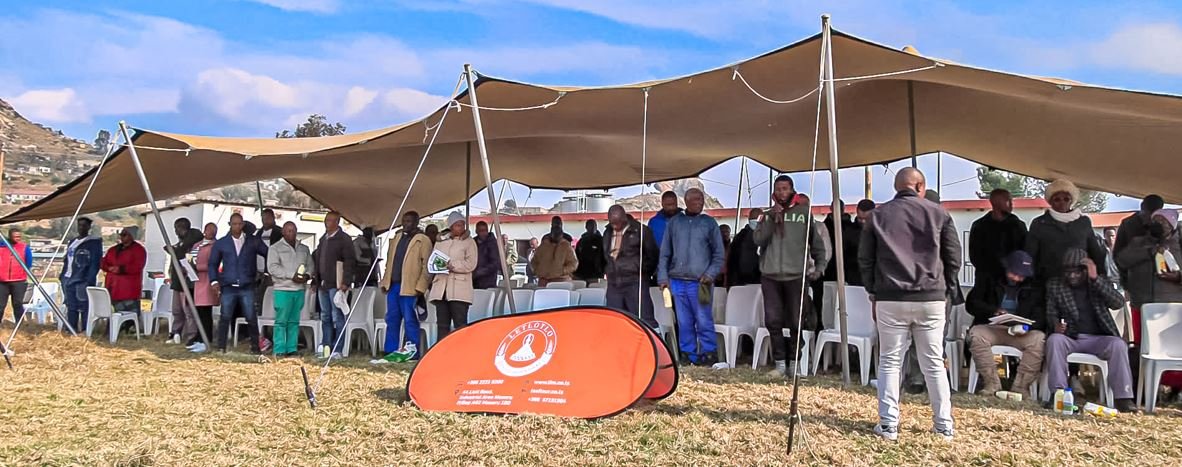
That paradox dominated discussions during the Lesotho Dairy Industry Stakeholder Consultation Seminar held in Maseru on June 3, where government officials, dairy farmers, processors, researchers and development partners gathered to examine why an industry with such a long investment history continues to struggle to meet domestic demand.
Their conclusion was sobering: Lesotho possesses many of the ingredients required for a thriving dairy industry, but fragmented implementation, declining productivity and long-standing production constraints continue to undermine progress.
The country’s dairy development journey began in the early 1980s through collaboration between the Government of Lesotho and the Canadian International Development Agency (CIDA), culminating in the establishment of Lesotho Dairy Products (LDP) in 1983.
Over the years, the industry has expanded to include institutions such as the Lesotho National Dairy Board (LNDB), the Department of Livestock Services (DLS), the Lesotho National Farmers Union (LENAFU), Lesotho Flour Mills (LFM) and a range of development partners working to strengthen dairy production.
Those investments have built institutional capacity and laid the foundations for a modern dairy value chain. However, they have not translated into sufficient milk production.
Presenting an overview of the industry’s performance, Lesotho National Dairy Board Technical Consultant Nchele Kuleile revealed that national milk production has almost halved in recent years, declining from 5.5 million litres in the 2019/20 season to just 2.88 million litres in 2026.
The decline, he said, has widened the country’s dependence on imported dairy products at a time when demand for fresh milk continues to grow, limiting opportunities for Basotho farmers while increasing the national import bill.
Kuleile attributed the decline to a combination of interconnected constraints rather than a single underlying problem.
“Challenges faced include feed shortages, breeding constraints, market limitations, quality issues and coordination gaps,” he said.
He revealed that the sector remains dominated by smallholder farmers, most of whom keep between one and five dairy cows.
“While these farmers form the backbone of domestic milk production, many operate under conditions that make commercial expansion difficult. Feed availability remains perhaps the greatest obstacle,” he said.
According to Kuleile, 74 per cent of dairy farmers lack adequate fodder reserves, while 62 per cent experience recurring feed shortages throughout the year.
“The result of that is reduced milk yields, poor animal condition and lower farm profitability.”
He added, “Breeding presents another challenge. Although artificial insemination services have been introduced to improve herd genetics, access remains limited, preventing many farmers from improving productivity by adopting higher-quality dairy breeds.”
He further indicated that market access also continues to discourage expansion, particularly among small-scale producers who struggle to secure reliable buyers and competitive prices for their milk.
Opening the seminar, Principal Secretary in the Ministry of Agriculture, Food Security and Nutrition, Dr Khothatso Ts’oana, described dairy farming as one of the country’s strategic agricultural subsectors, capable of improving rural livelihoods, strengthening food security and reducing dependence on imported dairy products.
He acknowledged, however, that progress will depend on stronger collaboration across government institutions, farmers, processors, researchers and development partners.
“Challenges farmers encounter include limited veterinary services, poor market infrastructure, lack of finance and low breeding capacity. The seminar today will work on creating a coordinated strategy, and we will have a project where we will all work together to transform our dairy sector,” Ts’oana said.
He said strengthening policy implementation and institutional cooperation would create opportunities for farmers while encouraging broader participation by women and young people throughout the dairy value chain.
Dai Harvey from Dairy for Development at the Royal Jersey Agricultural and Horticultural Society presented the organisation’s concept, which he explained promotes knowledge sharing, technical support, and collaboration among countries facing similar agricultural challenges.
Harvey also stressed that successful dairy industries are built on more than just cattle. He stressed that long-term success depends on sustained farmer training, technical support, strong institutions and continuous knowledge exchange.
“Partnerships are important because they equip farmers with the skills needed to improve productivity and grow their businesses,” Harvey said.
He noted that Jersey cattle are particularly suited to Lesotho’s production systems because they are fertile, efficient and capable of producing high-quality milk under relatively low-input conditions.
Beyond increasing milk supplies, Harvey argued that expanding domestic dairy production could improve household nutrition, generate employment, strengthen rural economies and reduce Lesotho’s dependence on imported dairy products.
Throughout the seminar, discussions repeatedly returned to one central message: the country’s dairy industry does not require a complete reinvention. Rather, it requires sustained implementation of interventions that address feed production, breeding, veterinary services, market development and institutional coordination in a coherent manner.
The seminar ended on a cautiously optimistic note. Stakeholders agreed that Lesotho already possesses the institutional framework, farming culture and technical knowledge needed to build a competitive dairy industry. What remains is the collective resolve to convert decades of investment into sustained production growth.