



MASERU-
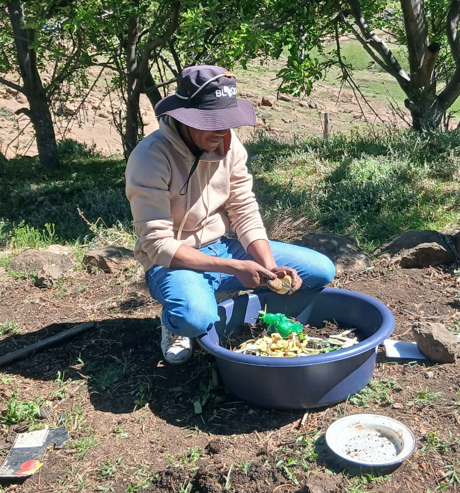
Seth Mojaki, a former lecturer at the Lesotho Agricultural College, has traded his geospatial maps for a microscope and a shovel, pivoting from a career in high-tech environmental monitoring to the ancient biological science of vermiculture.
He is navigating solutions to Lesotho’s pressing challenge of soil degradation, which threatens agricultural productivity.
Mojaki’s journey began not in a garden, but during regenerative agriculture research conducted under the Agricultural Productivity Programme for Southern Africa (APPSA) project.
As an ecologist and geospatial analyst, he was trained to understand the broader picture of environmental health. However, his research revealed that the key to restoring Lesotho’s degraded land lies in the microscopic details of the soil ecosystem.
“I became increasingly aware of the critical role soil organisms play in land restoration, and this inspired me to explore earthworm-based systems as a practical, scalable solution,” he explained.
Initially, Mojaki’s shift was met with scepticism.
To the uninitiated, worms are often viewed as pests or mere bait; however, Mojaki sees them as biological processors.
These organisms consume organic waste, ranging from kitchen scraps to kraal manure and transform it into two of the most potent agricultural inputs known to science: vermicompost and vermi-tea.
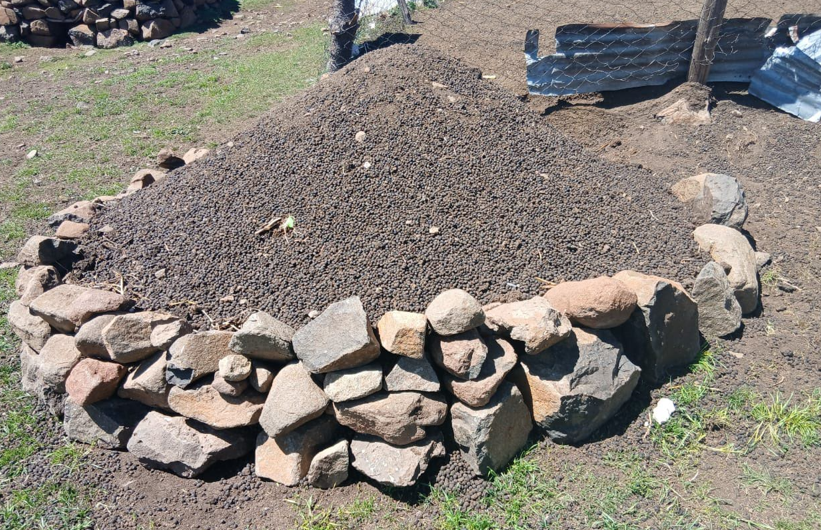
Unlike synthetic fertilisers, these products are living amendments. They are rich in plant-available nutrients and beneficial microorganisms that enhance soil structure and water retention.
“Maintaining a thriving worm population is a delicate balancing act.” Mojaki applies scientific rigour to ensure the worms remain in a stable environment, carefully regulating moisture, temperature and pH.
Worms are sensitive to their surroundings, so Mojaki avoids acidic, salty, or oily waste and instead prefers pre-composted organic materials.
He notes that proper airflow is vital; a healthy worm farm should smell like fresh, rich soil after rainfall, never sour or rotten.
“Even small deviations can reduce worm activity or cause mortality,” says Mojaki. His daily routine involves systematic observation of decomposition rates and moisture levels, treating the worm bin as a microcosm of a larger farm.
In a move that highlights his background in ecology, Mojaki is currently working on the taxonomic identification of his worms. By collecting specimens from various environmental hotspots, he aims to identify the most climate-resilient strains specifically suited for Lesotho’s diverse abiotic conditions.
This research is crucial for scaling the circular economy model. By converting waste into wealth, Mojaki is helping home gardeners and commercial farmers reduce their dependence on expensive, carbon-heavy synthetic chemicals.
For Mojaki, this career pivot is more than just a business; it is a mission to change how the public perceives the ground beneath their feet.
“I want people to understand that soil is alive,” he emphasises. “When we protect and restore our soils through simple biological systems, we are investing in food security for future generations.”