


MASERU –
The rights of women in agriculture took centre stage last week during a meeting convened by the Transformative Resource Centre (TRC) where multi-stakeholder looked in ways to strengthen partnerships for inclusive agricultural development, specifically advancing the rights of women farmers in Lesotho.
Held under the theme “Strengthening Partnerships for Inclusive Agricultural Development,” the meeting brought together key stakeholders, including Renoka, the Basotho Enterprise Development Corporation (BEDCO), the Wool and Mohair Value Chain Competitiveness Project (WAMPCOP), the Smallholder Agriculture Development Project II (SADP II), the Land Administration Authority (LAA), and officials from the Ministry of Local Government, Chieftainship, Home Affairs and Police.
TRC Executive Director, Tsikoane Peshoane, highlighted the persistent gender inequalities within agriculture-related laws and practices.
He noted that while women continue to advocate for their rights, existing agricultural laws and regulations still hinder their ability to fully own land and farming assets.
“Women remain central to food production at both household and community levels, yet leadership and ownership in agriculture are still dominated by men,” Peshoane stated, adding that, despite legal barriers, women continue to cultivate small plots that sustain families across the country.
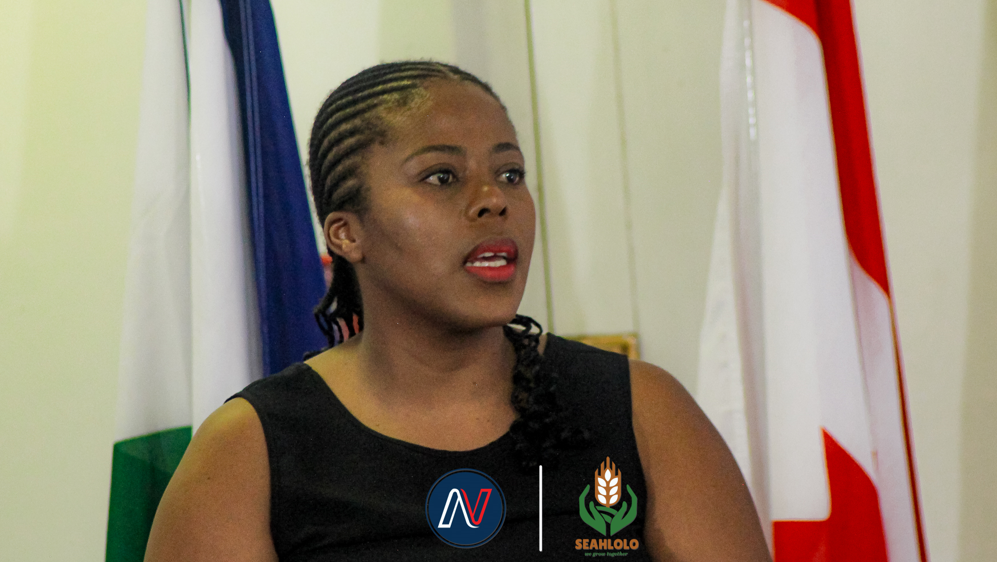
TRC Programme Manager Mabela Lehloenya presented findings from a pilot project implemented in Maseru, Mokhotlong, Leribe, and Quthing, which tested long-held assumptions about women farmers’ experiences.
She explained that the selected sites were chosen to reflect Lesotho’s diverse topography, encompassing urban, peri-urban, and rural areas across the northern, central, and southern regions.
“In Mokhotlong, for instance, climate conditions pose serious challenges with extended cold periods limiting vegetable production and resulting in low yields,” Lehloenya said.
She emphasised that the project was grounded in a baseline study to ensure evidence-based advocacy rather than relying on assumptions. The study examined women’s access to land, resources, finance, credit, and agricultural inputs.
“Our findings show that women are the backbone of crop production. Approximately 80 per cent of women farmers are actively producing crops, yet only 20 per cent have decision-making power over agricultural activities.”
Lehloenya stressed that TRC’s vision is to see women farmers enjoy equitable access to services and opportunities.
“We want women farmers’ rights to be protected not only on paper but also in practice,” she stated.
As part of its broader advocacy efforts, TRC has conducted training programmes for women farmers, journalists, and civil society organisations to deepen understanding of gender issues in agriculture and promote informed dialogue.
The meeting aimed to establish a structured platform for engagement between government and non-state actors to enhance collaboration in support of women farmers, cooperatives, and associations.
Mabosiu Seloanyane, representing the Department of Cooperatives within the Ministry of Trade, Industry and Business Development, indicated that women are increasingly visible in cooperatives, particularly in financial cooperatives and farming groups; “Women are at the forefront of cooperative activities and are performing exceptionally well.”
Masebele Mponye from the Ministry of Local Government, Chieftainship, Home Affairs and Police outlined the legal frameworks affecting women farmers, including the Land Act of 2010, the Land Husbandry Act of 1967, the Legal Capacity of Married Persons Act, and the Administration of Inheritance Act of 2024.
However, she acknowledged that the existence of these laws does not guarantee their effective implementation.
“While the laws exist, many are not fully functional on the ground,” Mponye said, highlighting that limited public understanding and the use of English-only legal texts pose challenges, particularly in rural areas.
She added that the ministry has undertaken nationwide efforts to train councillors on land and inheritance laws, but further monitoring and community education remain necessary.
Itumeleng Lengoasa, a representative from SADP, explained that the project supports women farmers through climate-smart agriculture, agribusiness promotion, and partnerships with organisations such as World Vision. She also mentioned that SADP runs nutrition clubs that benefit women farmers.
Libeo Monethi, the Monitoring and Evaluation Officer for WAMPCOP, stated that the project is gender-sensitive and targets women involved in wool and mohair production, a traditionally male-dominated sector.
He noted that the project aims to reach 45,000 households nationwide, focusing on 50 per cent of women and 35 per cent of youth, with priority districts including Mokhotlong, Maseru, Thaba Tseka, and Quthing.
He noted that WAMPCOP is also reducing women’s workloads by distributing 10,000 multifunctional solar cooking stoves and is establishing a wool and mohair fund to create new income opportunities.
Matseliso ‘Mota from the Land Administration Authority emphasised the importance of land verification before payment to avoid disputes, particularly for women.
Mamarabe Sello, a representative from BEDCO, outlined the corporation’s role in capacity building, mentorship, entrepreneurship promotion, and market readiness to attract investment.
Renoka Natural Resource Expert Ramatsoku Rampai highlighted gender imbalances in natural resource management, noting that men often dominate pasture and water governance structures despite women being the primary water users.
“Women walk long distances to fetch water and are exposed to safety risks, yet they are excluded from decision-making.”
He explained that Renoka has since incorporated gender mainstreaming in water and pasture management, collaborating with the Ministry of Gender.
The meeting concluded with a collective commitment by stakeholders to strengthen collaboration, expand training, and improve market access for women farmers. Participants agreed that empowering women in agriculture is critical to food security, economic inclusion, and sustainable development in Lesotho.