



Changing weather patterns are no longer a distant warning for cattle farmers in Lesotho, but have become a lived reality, reshaping farming seasons and accelerating disease outbreaks that threaten livestock, livelihoods and the broader agricultural sector.
Rising temperatures and increased rainfall are turning what was once a manageable livestock disease into a growing national crisis.
Lumpy skin disease, long present but limited in scale, is now spreading rapidly, exposing the deep links between climate change and animal health.
Across the lowland districts of Leribe, Berea, Butha-Buthe, Maseru, Mafeteng and Mohale’s Hoek, farmers are faced with a pandemic, a battle between a warming climate and the cattle that sustain rural households.
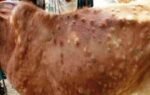
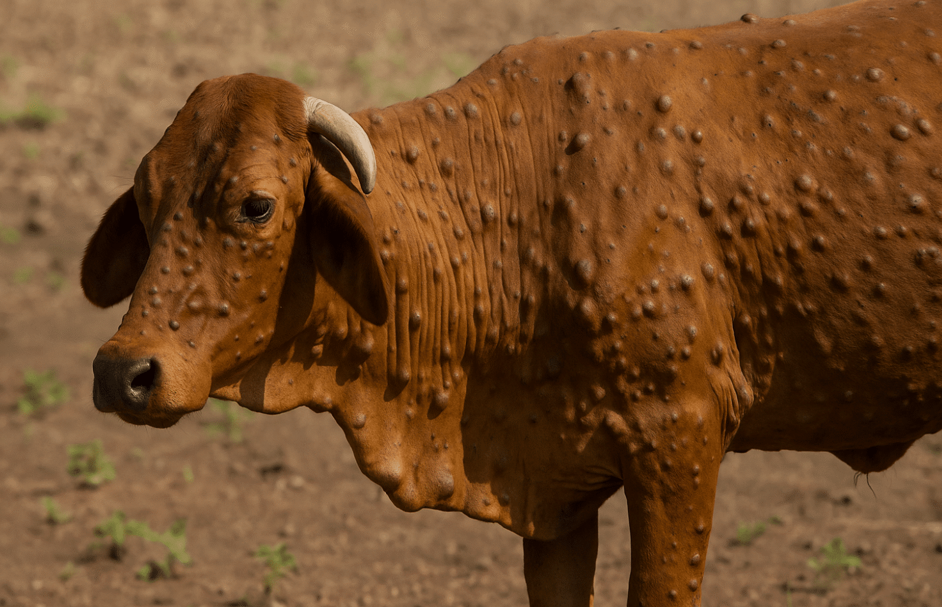
Farmers who have spent decades rearing livestock now find themselves watching helplessly as their animals weaken, scarred by painful nodules and unable to work, produce milk or reproduce.
In Mafeteng’s Ha Ramokhele village, cattle farmer Liau Melapi recalls the shock of discovering his animals infected.
Four of his cattle suddenly became weak, their bodies covered in lumps.
“In all my years of farming, this is the first time I have seen cattle like this in my kraal,” he said.
He added, “I was shocked and angry. I did not know what to use.”
With little information about the disease, Melapi tried traditional herbs, but the condition did not improve.
Elsewhere, some communities have managed to slow the disease through awareness and coordination.
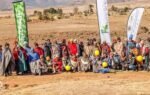
In Thaba Tsoana, in the Berea district, farmers have united to control grazing and work closely with extension officers.
Chief Mamoutloanyane Masupha said regular village gatherings on animal health have helped keep farmers informed.
When the outbreak began, the chief noted veterinary doctors and extension workers visited kraals to assess risks.
So far, the village has not recorded a confirmed case, a result Masupha attributes to early action and cooperation.
Meteorological data shows that rainfall in the lowlands has increased by up to 30 per cent, flooding pastures and extending disease transmission beyond the traditional rainy season.
For farmers like Melapi, the shift is bittersweet, “…our cattle suffer a lot during the dry season, so we were happy to see grass again. But now the moisture and heat are bringing disease. We are scared.”
Across Lesotho, farmers are reporting similar losses. Dairy cattle are developing bursting nodules, milk production is drying up overnight, and infertility is becoming more common.
‘Sesotho cattle’, vital for ploughing fields and household labour, are weakening rapidly.
Economically, farmers are losing animals faster than they can recover, as climate stress accelerates disease progression.
The Ministry of Agriculture and Food Security has confirmed 446 cases of lumpy skin disease and 19 cattle deaths nationwide. Leribe accounts for 142 cases, Maseru 163, Mafeteng 45, Berea 33, Butha-Buthe 36, Mohale’s Hoek 28 and Thaba-Tseka one case. The disease was first reported in Leribe in areas such as Tsifalimali, Lisemeng, Peka, Matlakeng and Mathokoane, before spreading to other districts.
Minister of Agriculture and Food Security Thabo Mofosi warned that the combination of heat and prolonged moisture has created ideal conditions for mosquitoes that transmit the virus.
“Heat and moisture allow mosquitoes to breed at a high rate, increasing the chances of the virus spreading,” he said.
While lumpy skin disease has no cure, treatment can help boost an animal’s immune system.
The ministry, Mofosi added, is working with stakeholders to contain the outbreak and has deployed 21 vehicles to enable veterinary teams to reach affected areas, revealing that medication is being procured from South Africa to be provided to farmers free of charge.
Mafeteng District Administration Officer Polao Tlali noted that the unusually green winter vegetation was an early warning sign.
“The grass stayed green because there was still moisture in the soil, and heavy rains have continued, creating wetlands that are a breeding ground for mosquitoes,” he said, noting even soils that normally lose moisture quickly have remained damp, signalling a clear shift in climate patterns.
Veterinary experts say Lesotho has crossed a critical threshold.
Dr Ntiea, a field veterinary officer, explained that while lumpy skin disease is endemic, cases were previously rare and seasonal, “this year it needs serious attention,” she said.
“The disease is viral, not curable, and climate change is amplifying its spread.”
She indicated that treatment focuses on managing symptoms, reducing stress and allowing infected cattle to rest in cool environments.
“After a few days of treatment, cattle can recover enough to eat,” she added.
Dr Pabalo, a senior veterinary officer, urged farmers not to consume meat from infected animals warning, “…Lumpy skin disease does not infect people, but eating sick animals exposes communities to other health risks.”
Farmers were also cautioned against administering injections without professional guidance.
Cattle remain central to Basotho livelihoods, providing milk, draught power and a store of wealth. As climate change intensifies, the losses are hitting vulnerable communities the hardest.
Reduced fertility, deaths and weakened animals are undermining food security, while isolation challenges in moisture-soaked pastures allow the disease to spread unchecked.
Global data from the World Organisation for Animal Health (WOAH) underscores the changing nature of the disease. Once largely confined to Africa, lumpy skin disease has spread to the Middle East, Asia and Europe.
In July 2025, Italy and France reported their first-ever cases, highlighting how warming climates are enabling disease vectors to expand into new regions. WOAH emphasises that effective control depends on biosecurity, early detection, movement control, rapid vaccination with high-quality vaccines, and cross-border cooperation.
Research by the International Centre for Tropical Agriculture and other institutions shows that climate change affects livestock diseases directly through heat stress and indirectly through extreme weather events that favour pathogens and vectors. When animals exceed their thermal comfort zones, their immune systems weaken, making them more vulnerable to infection and death.
Without climate-smart strategies such as early warning systems, resilient breeds, and strengthened veterinary services, experts warn that farmers in Lesotho would face deepening losses.