




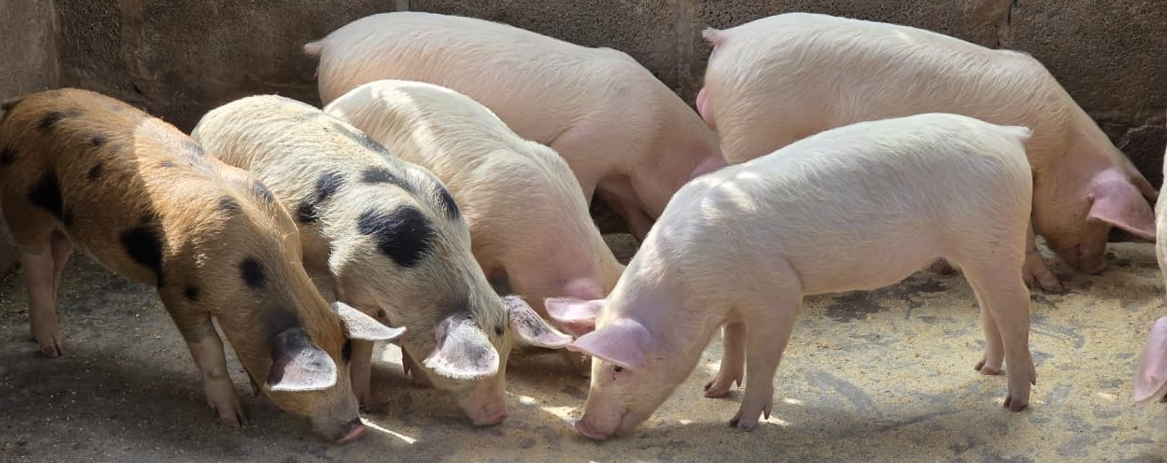

The growing demand for pork, combined with low domestic production, is creating new opportunities for women and youth farmers who are steadily reshaping Lesotho’s piggery sector.
Across the country, pig farming is emerging as an unexpected yet promising source of income, particularly in rural communities where unemployment remains high. With Lesotho heavily reliant on imported pork, young entrepreneurs and women farmers are increasingly filling the supply gap, supporting families, creating jobs and strengthening local economies.
According to Nyane Thabana from the Ministry of Agriculture, Food Security, and Nutrition, the pork value chain is still in its infancy stages, with producers operating below capacity and facing persistent challenges.
“Farmers are dealing with high feed costs, inadequate housing, poor slaughter facilities, and limited access to markets,” she said.
Despite these challenges, she noted that the limited pork produced locally is supplying informal markets such as catering companies, mines, chesa nyama businesses, and large projects like Polihali.
Thabana explained that the ministry is working to professionalise the sector by offering training programmes, workshops on market standards, stakeholder roundtable discussions, and a market-day platform for farmers to showcase their products. She added that the increasing participation of women and youth is a positive sign for the future.
She encouraged aspiring farmers to approach the ministry for guidance on breed selection, feeding, housing, disease management, and overall piggery production.
For 24-year-old farmer Nthati Nchulo, founder of Nchulo and Spitz Piggery Farming, pig production began as a passion developed during high school agriculture classes. In February 2025, he used M2,500 to buy two pigs in Maseru and officially started his business.
Nchulo said his biggest challenges have been housing standards and rising feed prices. However, he has avoided disease outbreaks by following good management practices and ensuring timely vaccinations.
He sources most of his feed locally and maintains close relationships with suppliers, which sometimes allows him to buy on credit. His customers include households, butcheries, and chesa nyamas in Maseru, and he markets his pigs mainly through Facebook and WhatsApp.
“I currently have two pigs. My goal is to breed them, raise them for six months, and sell both pork and piglets. My advice to young farmers is to maintain good standards, build proper housing, save for feed, and learn pig management,” he said.
For ’Mats’epo Khechane of Ha-Makhakhe Matelile, piggery became a livelihood in 2022 when unemployment pushed her to seek alternative ways to support her family. She chose pigs because they are relatively easy to manage and resilient.
Khechane said she has lost piglets due to poor pigsty conditions and still struggles with limited market access. As a woman farmer, she has also encountered buyers who refuse to pay on time or fail to take her seriously.
Despite balancing household responsibilities with farming, she said piggery has brought her financial relief, helping her manage daily expenses and pay her child’s school fees. She has received support from pig farmers in Maseru, women-led farming networks, and skills from workshops conducted by NGOs.
“What I find most difficult is the need for proper housing and reliable markets,” she said. “My pigsty makes it hard to produce pigs of the quality I want, and without a ready market, it becomes discouraging.”
Currently raising two pigs, she hopes to expand to more than 20, adding that piggery has boosted her confidence. “Knowing that my pigs grow and thrive under my care makes me believe I can manage any plant or animal.”
Her message to other women is straightforward: “It is worth it. Pig farming is enjoyable. I started with one pig, which became six, then eight, then nothing. I started again—and now I’m working toward owning more than 20. Anyone can do it.”
Although the sector continues to grapple with high production costs, weak infrastructure, and market access hurdles, the determination of women and young farmers signals a growing shift. Their persistence is positioning piggery as a viable and expanding enterprise—and one of the brightest opportunities in Lesotho’s agricultural landscape.