

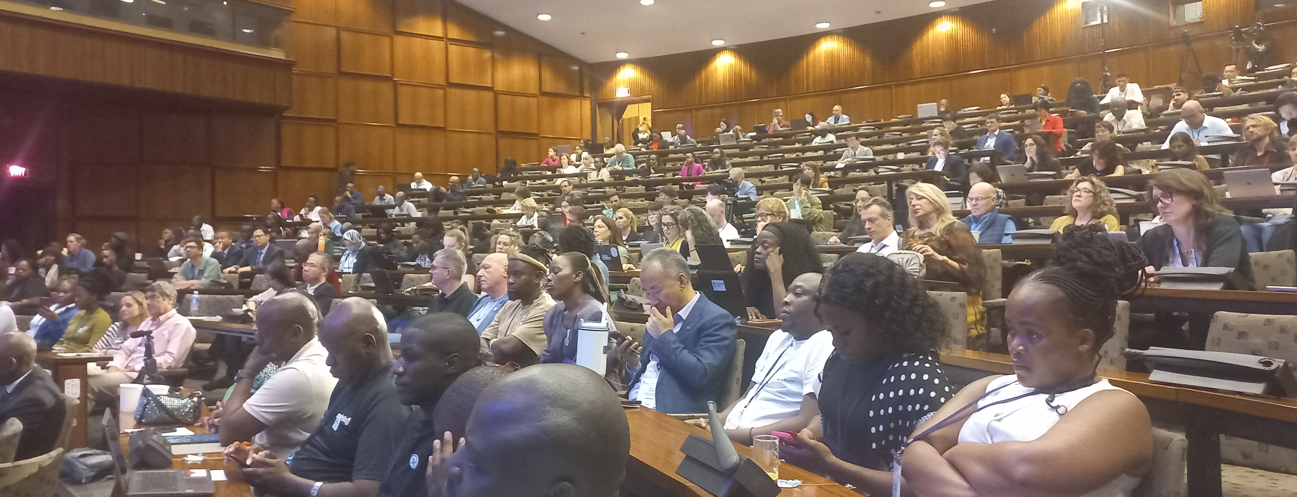
PRETORIA- Science journalists from around the world recently gathered in Africa for the 13th World Conference of Science Journalists (WCSJ), where experts called for accurate, accessible, and responsible reporting of science to empower societies to make informed decisions and foster resilience.
The five-day conference, held in Pretoria, was the first global gathering of science journalists to take place on African soil. It brought together scientists, academics, researchers, and science and environmental journalists to reflect on the increasing importance of science journalism in a world shaped by climate change, health crises, technology, and misinformation.
Under the theme “Science Journalism and Social Justice: Journalism that Builds Understanding and Resilience,” the conference featured keynote addresses and 58 parallel sessions, including seminars, workshops, and lectures. A total of 196 speakers participated, alongside 21 field trips designed to enhance participants’ engagement with science in practical contexts.
In his opening address, South Africa’s Minister of Science, Technology and Innovation, Professor Blade Nzimande, emphasised the vital role of science journalism in society, stating that science journalism is essential not only for fostering an appreciation of science but also for ensuring that scientific knowledge contributes to a just and humane world.
“Science journalism must actively challenge discrimination, stereotypes and bias while promoting human rights and the dignity of all people, especially marginalised groups, in its reporting,” said Prof Nzimande.
He warned that fake news and misinformation pose a serious threat to public trust in science and called on journalists to take a proactive role in countering false narratives.
The Minister also urged the responsible integration of emerging technologies, including artificial intelligence, without compromising journalistic integrity.
Prof Nzimande further highlighted the capacity gaps in science journalism across Africa and between the Global South and the Global North, calling for concerted efforts to bridge these divides. He suggested that science journalism could serve as a bridge for science diplomacy and help strengthen global solidarity in the face of shared challenges.
Throughout the conference, discussions underscored the importance of building trust between journalists and scientists and the need for clear, simple explanations of science to enable public understanding and action. Participants from various regions shared experiences in navigating political pressures, limited access to data and public scepticism towards science.
The conference also provided opportunities for journalists to establish new professional networks, while strongly emphasising ethical journalism and data literacy. Panellists repeatedly cautioned that misinformation and disinformation undermine responsible journalism and erode public confidence in both the media and science.
Dr Ebrahim Samodien from the South African Medical Research Council warned that health journalists, in particular, must remain vigilant to avoid sensationalism that could incite unnecessary panic.
“The public can only make informed decisions if they access credible scientific information from trusted sources,” he said, challenging journalists to critically assess and verify the authenticity of information before disseminating it to the public.
Cross-border challenges and innovative methods for debunking misinformation and disinformation were also explored, with journalists encouraged to collaborate beyond national boundaries and adopt evidence-based strategies to counter false narratives in their respective countries.
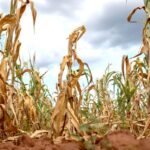
One participant, Barbra Sehlule Muzata, highlighted the devastating impact of climate change on smallholder farmers in Africa. She explained that these farmers rely heavily on rainfall but are now facing prolonged droughts, extreme heat, and increasingly unpredictable weather patterns.
“This threatens livelihoods and exacerbates food insecurity and poverty,” she said, noting that many smallholder farmers lack the resources to recover from climate shocks. She stressed that climate-smart agriculture and adaptation strategies are becoming more urgent than ever.
Muzata emphasised that supporting smallholder farmers is not only an African issue but a global one, linked to fairness, sustainable development, and global food security. Calling for greater media attention, she said: “This is a science story that demands immediate attention.”
Duncan Mboyah, chairperson of the Kenya Environment and Science Journalists Association, reflected on the unique nature of science journalism compared to other areas of reporting. He explained that while politics, business, and sport are driven by fast-moving breaking news, science journalism operates on a different timeline.
“A climate study that takes five years cannot be rushed, and a medical breakthrough cannot be condensed into a few characters without losing its essence,” he said.
Mboyah advised young and emerging journalists to read widely, learn from experienced science reporters, and cultivate genuine relationships with scientists. He encouraged journalists to view scientists not merely as sources of quotes but as partners in the storytelling process.
“For me, the strongest science stories are built on trust, allowing scientists to convey the detail and complexity that truly matter,” he said.
The conference also celebrated excellence in African science reporting through the African Science Journalism Awards, highlighting the growing quality and impact of science journalism on the continent.
Kenyan journalist Scovian Lillian was recognised for her investigation into climate-driven disease patterns in Turkana, while South Africa’s Leonie Joubert was honoured for her long-term documentation of environmental injustice and what she described as “slow violence” unfolding over decades.
Ghanaian journalist Ibrahim Khalilulah Usman received an award for his work on verification challenges in the age of artificial intelligence, a story that involved four months of rigorous fact-checking.
The judging panel, which included seasoned science journalist Joseph Joslain Mbeng Boum alongside Roselyne Sachiti and Dr Paul Adepoju, noted that selecting the winners was particularly challenging due to the exceptionally high standard of entries. They described spending many sleepless nights deliberating before reaching their final decisions.
The next World Conference of Science Journalists is scheduled to take place in 2027 in the United Kingdom and the People’s Republic of China.