

PRETORIA – Healthy ecosystems are essential for the survival of both humans and animals. Soils, vegetation, and wildlife form an interconnected system that sustains life by providing food, clean water, shelter, and environmental stability. When one element is damaged, the entire system begins to unravel, leading to serious consequences for biodiversity and livelihoods.
Fertile soils underpin food production and support rangelands on which animals depend for grazing, while vegetation protects the land from erosion and improves air quality. Wildlife, in turn, plays a crucial role in maintaining ecological balance and supporting tourism-based economies. When these systems are compromised, both plant and animal ecosystems suffer, often with long-lasting effects.
Professor GP Nortjé of the University of South Africa’s School of Ecological and Human Sustainability has warned that unsustainable land-use practices, particularly off-road driving, pose a serious threat to fragile ecosystems.
He stated that the uncontrolled use of off-road vehicles is not ecologically sustainable and should be permitted only under strict regulation.
“If it is to be allowed, it should be according to rigorously enforced rules, underpinned by sound scientific evidence,” Prof Nortjé said.
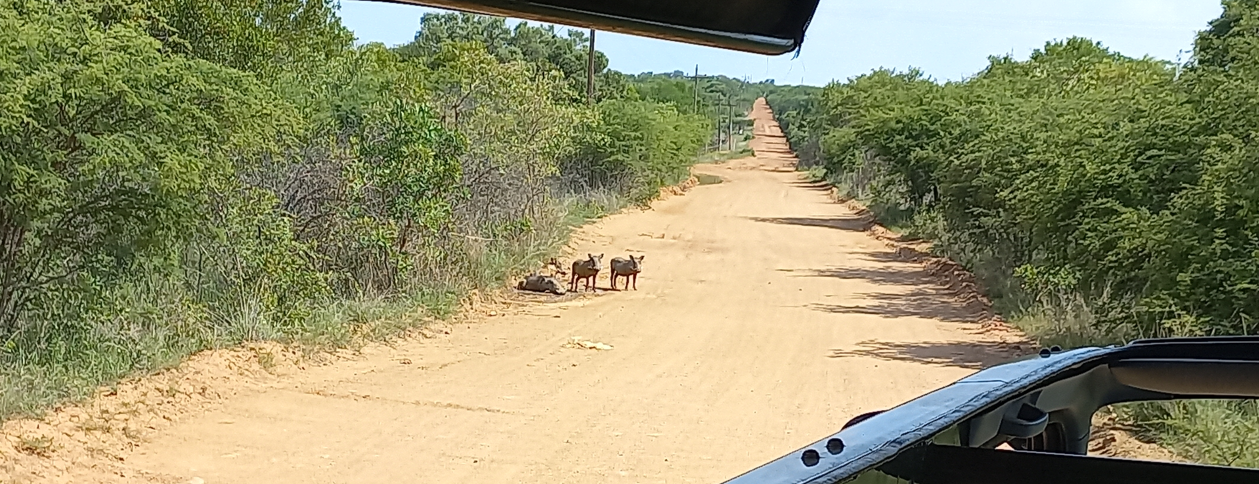
He explained that soils, vegetation and wildlife are not only ecological assets but also the backbone of the tourism industry. Wildlife attracts tourists through guided tours, photography, conservation-focused travel, and accommodation, while entrance fees and tourism-related services contribute significantly to economic growth in protected areas.
However, Prof Nortjé cautioned that tourism activities can place immense pressure on sensitive ecosystems. He pointed out that soil compaction and crusting are common problems in game farms, national parks, and protected conservation areas.
“Soil compaction and crusting are caused by physical forces applied to the soil surface, such as raindrop impact, vehicles driving across the soil, and animal traffic,” he explained.
While both wet and dry soils can be affected, he noted that moist soils are particularly vulnerable to damage from vehicles. He added that the impact of off-road driving extends far beyond the narrow wheel tracks visible on the ground.
“The effects are not confined to a strip under the wheel tracks; they extend much wider due to a significant lateral effect on both sides of the vehicle tracks,” he said.
Prof Nortjé added, “This lateral effect, both outside the vehicle tracks and between them, increases the total area of compacted soil.”
Animal movement also contributes significantly to soil crusting, especially in areas with high stocking rates or concentrated grazing. The combined impact of human and animal activity accelerates soil erosion, reducing land productivity and damaging vegetation cover.
He explained that soil sensitivity determines how easily land can be damaged by activities such as off-road driving. “In general, sandy soils are very sensitive but also quite resilient — damage occurs easily, but recovery is relatively quick. However, soils such as sodic soils are sensitive and have low resilience,” he said.
Prof Nortjé noted that countries in the world’s third major soil region are particularly vulnerable to soil degradation, citing that the soils of this region are old and found in semi-arid areas. These soils are inherently extremely vulnerable to soil crusting, compaction, and erosion,” he said.
“This region is located in the mid-latitudes of the Southern Hemisphere. The dominant soils here differ significantly from those of the high-latitude continents in the Northern Hemisphere and the soils of the humid tropics.”
He further explained that sub-surface soil compaction has severe consequences for plant growth. When the soil beneath the surface becomes compacted, roots are unable to penetrate deeper layers to access water.
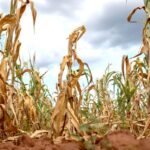
“When roots are confined to the shallow soil layer above the compacted layer, they cannot reach the water stored in the subsoil,” he said. “As a result, plants can suffer drought stress even when there is more than enough plant-available water below. This subsoil is often referred to as the ‘water trough’ for plants.”
According to Prof Nortjé, sub-surface soil compaction does not recover naturally. He stated that research has shown that the damage can persist for 42 to 200 years, thereby inducing long-term drought conditions and permanently reducing land productivity if left unaddressed.
To rehabilitate degraded land, Prof. Nortjé outlined three key approaches: chemical, physical, and biological.
The chemical approach focuses on rebuilding soil structure so that the soil can bind together and remain healthy. Physical methods aim to slow down water flow to prevent soil erosion, while biological methods rely on living organisms to restore the land.
“These include replanting grass, using compost tea to nourish the soil, and placing palm-leaf mats and sisal in deep erosion channels, known as dongas, to protect the soil,” he explained.
Additional rehabilitation measures include packing dry branches in eroded areas, constructing small grass barriers to slow water movement, laying stone bunds to stabilise slopes, and building durable structures such as gabions to control erosion in dongas.
“These methods help keep the soil in place and allow vegetation to re-establish,” he said.
Prof Nortjé also warned that tourism, while economically beneficial, can exert increasing pressure on protected areas. He noted that this pressure is often reflected in rising visitor numbers, increased intensity of game drives, expansion of off-road driving, and hidden but cumulative ecological impacts.
Despite these risks, he emphasised that tourism remains a vital source of funding for conservation. He stated that the challenge lies in managing tourism activities responsibly to balance economic benefits with environmental protection.
“Tourism has measurable ecological impacts, but it also finances conservation. With proper management, these impacts can be controlled or reversed,” he said.
He emphasised that decisions by park and reserve managers should be guided by scientific research and long-term ecological sustainability rather than short-term profit.
“Sustainability depends on science-led decision-making,” he said.
Prof Nortjé also highlighted the critical role of science journalists in protecting ecosystems. He stated that journalists are essential for improving the accuracy of ecological reporting, translating complex research into accessible public narratives, and building public support for sustainable tourism and conservation policies.
By responsibly telling these stories, he said, journalists can help ensure that soils, vegetation, and wildlife are safeguarded not only for tourism and economic gain but also for the survival of future generations.