


Agriculture experts linked animal nutrition, breeding, healthy rangelands, and financial records to a question that matters across rural Lesotho: Is livestock ownership delivering a sustainable return?
A large herd can be a source of pride, but the number of animals a farmer owns does not, on its own, reveal whether the enterprise is productive, profitable or capable of supporting the next generation.
Profitability requires a closer look: at what the animals eat, how they grow and reproduce, the quality of their products, the condition of their grazing land, and the money spent keeping them alive.
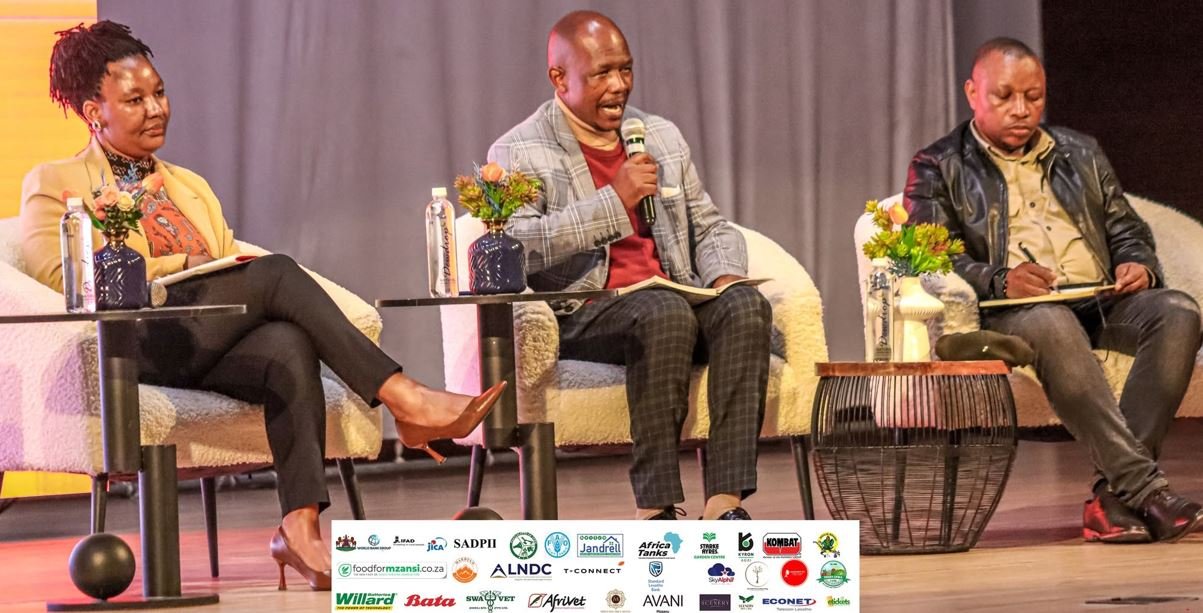
At the livestock session of the National Farmers Knowledge Exchange, held during Farmers Pitso Agriculture Week, specialists urged Basotho producers to make those connections.
Their message was that livestock’s cultural importance should be matched by management that protects its economic value.
The discussion brought together expertise from the National University of Lesotho (NUL), government departments, agricultural support programmes and accounting professionals.
It examined how research and everyday farm decisions can strengthen an industry central to rural livelihoods.
Moderator, Maoala Khesa, urged farmers to take practical lessons from the exchange.
“Farmers, to gain practical value from today, listen to research-backed steps you can apply on your farms; science-based changes accumulate into greater profits and resilience,” he said.
The discussions offered a way to assess livestock production: breeding, feeding, health, grazing, and finances, which must all work together. Weakness in one can undermine investment in the others, the experts stressed.
Professor Setsumi Molapo, Dean of the Agriculture Faculty at NUL, said research must play a stronger role in agricultural decisions, particularly as Lesotho seeks to strengthen local production and reduce dependence on imported products, including animal feed.
“A recurring problem we have observed is that our practices are not research-backed. Consequently, our agricultural sector continues to struggle; we need to invest in research and adapt to contemporary approaches,” he said.
He added, “It is equally important for us to understand genetics and the components of feed before distribution. This understanding can only be achieved through research.”
Molapo argued that sound management matters even where a farmer does not initially regard livestock ownership as a commercial venture.
“Although many do not farm with commercial intent, understanding that livestock is a business is key to maintaining good farming practices. We need to acknowledge climate change and recognise that institutions exist to help us progress from one level to another.”
The discussion returned repeatedly to nutrition. Buying a promising animal is only the beginning, but its performance also depends on the feeding and care that follow.
NUL animal science senior lecturer, Motselisi Mahlehla, said farmers must understand the relationship between feed and the quality of livestock products.
“We must ensure that what we feed our animals is appropriate to produce high-quality output. For this reason, our farmers must adopt strategies that align with proper animal nutrition. For our livestock to flourish, we need to ensure they receive a balanced diet.”
Mahlehla encouraged farmers to adapt their practices, using evidence to support changes in production conditions.
“My message is that adaptability is key for our farmers’ growth,” she said.
“To increase food production, the livestock value chain must be managed correctly, based on research conducted by institutions like universities and researchers.”
A veterinarian, Dr Mookho Ntiea, from the Ministry of Agriculture, connected feeding directly to animal health, saying diseases caused by a lack of nutrients in animal feeds can weaken an animal’s immune system.
She also warned that neglected animal care can affect offspring.
“With what other experts have said, I want to stress that in livestock farming, farmers need to treat nutrition and veterinary attention as continuing responsibilities, rather than waiting until an animal’s condition becomes visibly serious, and I highly encourage farmers to immediately report any signs of illnesses to their resource centres and the ministry; being proactive goes a long way for the country,” she said.
For grazing livestock, however, feeding also depends on land that many producers share. An individual farmer’s decisions therefore sit within a community’s management of its rangelands.
“Communal land requires clear regulations to allow pastures to recover and sustain future herds,” Khesa pointed out, and Mofihli Motsetsero, from the Ministry of Environment, argued that inherited livestock practices need to be examined alongside their effect on grazing resources.
“For too long, Basotho have viewed animal rearing as a hobby passed down through generations.
“The vital importance of these animals has been overlooked, leading to a lack of clear pasture management, specifically when, for how long and how many animals should graze a particular area,” he said.
His remarks placed rangeland protection within the livestock business itself: the land’s ability to provide forage helps determine whether herds can remain productive.
“We must ensure the quality of forage for livestock, which means our communities need to care for the land for the benefit of all,” Motsetsero said.
Itumeleng Pule, from the Ministry of Agriculture’s Small Stock Wool and Mohair Production Department, linked breeding decisions to the market.
Farmers, she said, should select animals with the products and customers they intend to serve in mind.
“Farming is a business; to measure its productivity, a farmer must invest in good breeds because they contribute significantly to the animals’ value.
She stressed, “Farmers with quality breeds consistently achieve better market prices, which in turn increases demand for their products.”
Pule emphasised that breeding cannot be separated from nutrition and health.
“After selecting a good breed, master nutrition because animals are products of what they eat. Quality fodder enhances animal productivity. Following nutrition, prioritise animal health by seeking veterinary services and understanding your animals’ needs.”
She also raised an institutional question: how will farmers continue to receive services when time-bound agricultural projects end?
Pule called for stronger ministry systems and more efficient digital services, rather than dependence on information held by individual programmes. She welcomed providing tablets to veterinary personnel assisting communities as a step toward more accessible services.
Her concern extended beyond technology, noting farmers need continuity, “…institutions that know who they are, understand their enterprises and remain able to serve them after a project closes.”
Agricultural economist Moleboheng Bohloa turned the discussion towards the decisions made when establishing and running an enterprise.
“Farming is a business, and when first entering into animal rearing, careful consideration is paramount. Select the right breed, ensure proper animal nutrition, purchase appropriate feeds, and maintain thorough records to track progress.”
Bohloa said sheep and goat production can offer opportunities to farmers who manage it commercially. She challenged the habit of measuring achievement mainly by herd size.
“Basotho often fall into the negative stereotype of boasting about owning more animals than others. This approach is ineffective if the animals are not properly cared for, but with proper animal care, a business can genuinely flourish,” she said.
“We should prioritise investment in value above all in order to achieve higher returns. Understanding those returns requires records. Money received from sales can look encouraging while concealing expenses accumulated throughout the production period,” she said.
Brandon Nkwuelle Ekole, speaking from an auditing perspective on behalf of Esong Firm of Chartered Accountants, urged farmers to record expenditure from the beginning of an enterprise.
“You might report a profit that, in reality, you haven’t made. Why? Because you haven’t comprehensively accounted for all the expenses you have incurred,” he said.
Good records help farmers understand past performance and plan what they can afford next.
“If you possess detailed records from a previous period, budgeting becomes straightforward, as records inherently inform the budgeting process. One can then accurately determine the costs required to run the project, at what capacity, and intentionally decide whether to increase capacity or not.”
Ekole said records also give an accountant or auditor useful information when assessing the business and advising on its future. But farmers need not wait for professional assistance to begin.
“Record-keeping is not a complex process; sometimes we get intimidated, wondering, ‘How am I going to do it?’ But it is easy: simply write down what you spend and what you earn, and we understand you are not an accountant, but write simply and clearly,” he said.
The livestock session made the case for changes farmers can begin themselves, alongside support that requires research, veterinary services and collective land management. Farmers can review feeding, seek credible advice and start recording expenditure. Universities, government and communities have responsibilities in making those decisions easier to carry out.
Closing the discussion, Khesa urged producers to use available services and question assumptions.
“Transform farming into a business, actively seek information, discard assumptions, and utilise available services to expand your enterprise,” he said.