




Building a Stronger, More Resilient and Inclusive Poultry Sector for National Growth
Lesotho’s poultry sector is entering a new phase with the official establishment of the Lesotho Poultry Industry Association (LePIA), a national body formed to strengthen local production, enhance sector coordination, and advance food security and economic development.
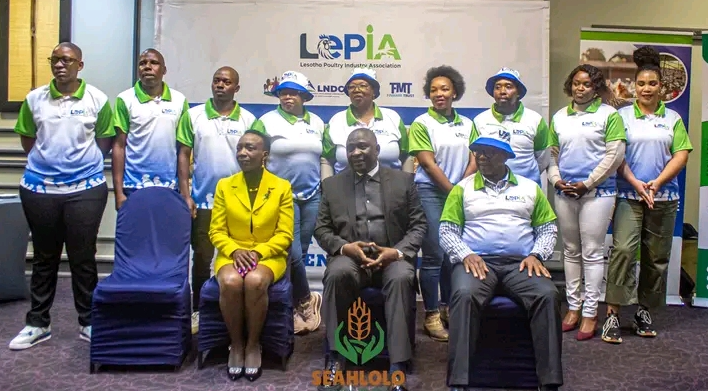
The association was launched at a national event at Avani Maseru, where the Minister of Agriculture, Food Security and Nutrition, Hon. Selibe Mochoboroane, also signed the Poultry Development Policy.
This launch marks a key step in reducing reliance on imported poultry products and empowering local producers to contribute more to national food security and job creation.
A Sector with Untapped Potential
Poultry farming is one of the most accessible agricultural activities for Basotho households, especially for women, youth, and smallholder farmers seeking income and improved food security.
The poultry value chain, from production to retail, offers diverse economic opportunities that can drive rural development and entrepreneurship.
Despite its potential, the poultry sector has faced significant challenges for years, including:
- High feed and production costs
- Limited access to finance and investment
- Disease outbreaks and biosecurity risks
- Inconsistent production systems
- Weak market coordination
- Heavy dependence on imported poultry products and inputs
These challenges have limited local production capacity and reduced the competitiveness of Basotho poultry farmers.
Why LePIA Matters
LePIA’s establishment is a strategic move to address these persistent challenges through improved industry coordination and collective representation.
Poultry farmers have long operated in fragmented structures with limited support and bargaining power. LePIA seeks to unify producers, government, development partners, financial institutions, processors, suppliers, and private sector stakeholders on a single platform.
The association is expected to:
- Advocate for the interests of poultry farmers.
- Strengthen communication within the industry.
- Promote knowledge-sharing and technical training.
- Improve access to markets and investment opportunities.
- Support policy implementation and sector development
- Encourage collaboration across the poultry value chain.
Through coordination, LePIA aims to build a more organized, competitive, and sustainable poultry industry that contributes to Lesotho’s economic growth and food system resilience.
Reducing Import Dependence
Lesotho currently imports most of its poultry products and inputs, such as day-old chicks, fertilised eggs, feed, and processed chicken, primarily from South Africa.
This dependence exposes local farmers to external shocks, price fluctuations, and supply disruptions.
Recent avian influenza outbreaks in the region have highlighted the risks of heavy import reliance, as shortages and rising prices have affected producers and consumers in Lesotho.
Strengthening domestic poultry production is now seen as both an economic and food security priority.
LePIA will support national efforts to increase local production, stabilize supply chains, and retain more economic value within Lesotho.
Creating Jobs and Supporting Rural Livelihoods
The poultry sector offers strong potential for job creation, particularly for youth and women in rural areas.
By strengthening farmer support and industry partnerships, LePIA aims to promote entrepreneurship and enterprise development throughout the poultry value chain.
Emerging poultry farmers often face barriers to growth due to limited technical knowledge and business support. LePIA plans to address this through training, networking, mentorship, and collaboration with development partners.
Enhancing local poultry production is also expected to improve household nutrition by increasing access to affordable protein.
Promoting Biosecurity and Industry Standards
With global agriculture facing threats from climate change, disease, and rising costs, stronger industry coordination is increasingly important.
LePIA is expected to play an active role in promoting:
- Responsible poultry farming practices
- Biosecurity awareness and disease prevention
- Compliance with production and quality standards
- Consumer confidence in locally produced poultry products
The association also aims to encourage innovation and improved production systems to strengthen long-term resilience in the poultry industry.
Partnership for Agricultural Transformation
LePIA’s establishment has received support from institutions dedicated to advancing agricultural development and food security in Lesotho.
Partners supporting the initiative include:
- Ministry of Agriculture, Food Security and Nutrition
- UNDP Lesotho
- Standard Lesotho Bank
- FinMark Trust
- Lesotho National Development Corporation (LNDC)
Stakeholders at the launch emphasized the need for collaboration among government, financial institutions, development agencies, and producers to create an enabling environment for industry growth.
Looking Ahead
While challenges persist, LePIA’s establishment signals renewed momentum for Lesotho’s poultry sector.
The association is expected to drive efforts to strengthen farmer representation, improve production systems, attract investment, and build a more resilient and sustainable poultry value chain.
For Basotho poultry farmers, a dedicated industry association offers renewed hope for stronger support, better market opportunities, and a more coordinated future.
As Lesotho addresses unemployment, food insecurity, and economic vulnerability, the poultry sector is increasingly recognized as a strategic industry for inclusive growth and national development.
LePIA now carries the responsibility of turning this vision into measurable progress for farmers, communities, and the nation.