




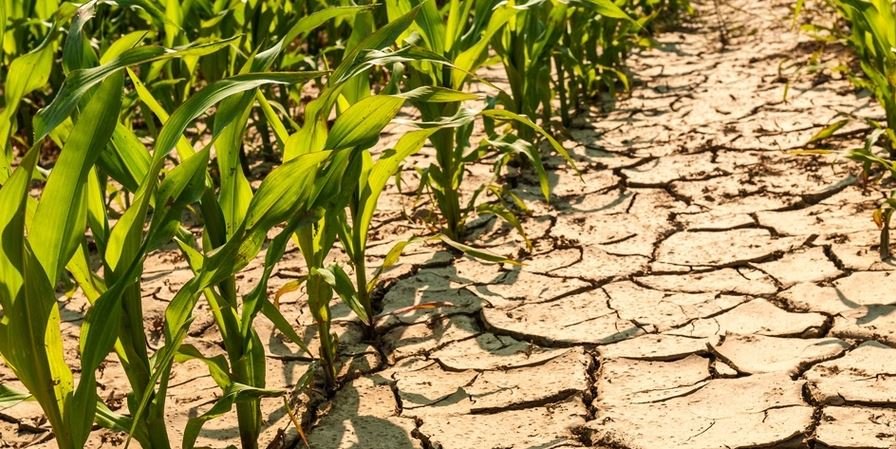

Rising climate-related crop losses are pushing smallholder farmers in Lesotho to seek crop insurance to manage growing agricultural risks.
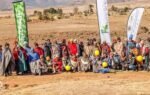
Government and development partner initiatives, through the Smallholder Agriculture Development Project II (SADP II), are supporting efforts to improve resilience in the agricultural sector, and crop insurance is among the mechanisms under discussion to help farmers recover from losses caused by drought, floods, pests, frost and other climate-related events.
The insurance model is designed to compensate farmers after insured crop losses, with the aim of stabilising farm incomes and reducing financial shocks linked to climate variability.
Farmers in several rural communities report repeated losses linked to changing weather patterns.
“The weather changes all the time now. Sometimes you plant expecting rain, but get drought, or heavy rain that destroys crops,” said small-scale farmer Ntone Mohale from Maseru.
“We also struggle with pests and diseases because conditions are changing. When you are a small farmer, every loss affects your family because farming is not just a business — it is survival. If your crops fail, it means you lose income and food at the same time.”
Mohale said he had limited knowledge of agricultural insurance before recent discussions in his area.
“I honestly did not know farmers could even have insurance. I have only heard about it for cars and businesses, not for crops. If it exists and really helps after losses, I want to understand it better because many of us are struggling. The problem is that most farmers are not informed—we do not know where to get it, how it works, or whether we can even afford it,” he said.
“But if it exists and really helps farmers after losses, I would want to understand it better because many of us are struggling. The problem is that most farmers are not informed. We do not know where to get it, how it works, or whether we can even afford it.”
The Lesotho National Farmers Union says repeated climate shocks are affecting productivity and farmer stability.
“Smallholder farmers are suffering repeated losses from changing weather patterns—seasonal drought, excessive rainfall, frost, or pests all affect production,” said Executive Director Khotso Leaphene.
“When farmers lose crops, many fail to recover financially before the next planting season begins. Some are forced into debt, while others reduce production out of fear of losing investments again. Insurance has the potential to reduce that pressure and help farmers recover faster.”
Leaphene said climate variability is now a continuous challenge for farmers and not an occasional event.
“We cannot continue treating climate shocks as temporary problems because they are now happening almost every season. Farmers need systems that protect them consistently,” he said.
He also pointed to access and affordability as key barriers.
“Most smallholder farmers have low and unstable incomes. If insurance products are too expensive or too complicated, farmers will simply remain excluded,” he said.
“There needs to be discussion around subsidies, farmer education, and policies that make these services practical for rural communities.”
He added that awareness remains limited.
“Many farmers still do not fully understand what insurance means and assume it’s only for wealthy people or large commercial farmers. Before implementation, there must be grassroots education so farmers understand coverage, claims, and policyholder responsibilities,” he said.
“So before implementation, there has to be education at the grassroots level. Farmers need to understand how claims work, what risks are covered, and what responsibilities they would have as policyholders.”
Dr Daniel Lederman of the World Bank said agricultural insurance systems must reflect the complex risks and diverse farming systems.
He explained that risks differ by region, climate, and farm type, making coverage selection important.
“Farmers must decide what exactly they want protection against — whether it is drought, hail, excessive rainfall, frost, or multiple risks combined. Naturally, broader protection means higher premiums, and that becomes difficult for low-income farmers.”
He said insurance scheme sustainability requires balancing affordability and viability.
He noted that insurance cannot pay out more than it collects and requires financial stability to avoid collapse.
“That is why agricultural insurance often requires careful balancing between affordability for farmers and sustainability for insurers. In many countries, governments support agricultural insurance through subsidies because, without public support, premiums can become too expensive for smallholder farmers.”
He emphasised the need for clear coverage and claim communication with farmers.
While crop insurance is still developing in Lesotho’s agricultural sector, it is recognised as a crucial part of strengthening resilience against climate risks and is increasingly discussed alongside other measures, such as SADP II.
Farmers like Mohale say financial protection could reduce the impact of recurring losses.
“If there was something that could help farmers recover after losing crops, it would make a big difference,” he said.
“Right now, when crops fail, farmers carry all the losses alone.”